Ikon vehicle security is a dealer-installed connected-vehicle program with two jobs that share the same hardware. Before delivery, the store uses it for lot visibility and key control; after delivery, the buyer uses an app for active theft recovery, geofences, speed alerts, and trip history. The same signal serves both sides.
Don't pitch this as a theft-proof shield, because it isn't one. Treat it as active recovery and operational control: you get lot visibility while the unit is inventory, and your buyer gets app-based security after delivery. When the customer asks where support starts, the F&I manager should be ready to walk through app activation and show the price clearly on the paperwork.
Here is the tension worth naming up front: a recovery program only earns its keep when the dealership process around it moves fast.
Ikon vehicle security includes an installed connected-vehicle device, a consumer app, theft-recovery tools, driver alerts, and dealership workflows that use the same vehicle signal before and after the sale. The device feeds live location into your dealer view while the unit sits in inventory, then powers the owner's Ikon Connect experience after delivery.
The buyer-facing side is easiest to explain in practical terms, and the consumer app carries six core functions you can show on the menu.
The dealership side matters because the same program tracks units, keys, movement, and lot readiness. That is the difference between selling a generic tracker and selling a protection program your store actually runs on.
Recovery starts the moment a missing vehicle becomes a tracked case. The dealer process is straightforward: report the theft, get the officer's email and phone, mark the vehicle stolen in the app, and send the officer a live tracking link.
Speed is the whole game. A stolen unit loses value the minute it leaves the lot or the buyer's driveway, so the program has to move from suspicion to police coordination without a long internal search. Honestly, that is where most recovery programs lose: not in the technology, but in the 40 minutes the store burns asking around before anyone calls it in.
Ikon reports a recovery rate of approximately 99.7% to 99.8% with an 18-minute average recovery time, which is the strongest proof point behind the active-recovery claim. The number only matters if your team triggers the process fast, which is why a written SOP belongs next to the dashboard. For a wider category view, our breakdown of what franchise stores should expect from a recovery system sets the benchmarks.
Passive deterrence tries to discourage or slow a theft before it happens. Active recovery starts when the vehicle is already gone. At that point the only things that matter are location data, police coordination, and the workflow that puts both in the officer's hands.
A camera, a sticker, a steering-wheel lock, or a lot alarm may change a thief's decision before the theft starts. Once the vehicle is rolling, none of those tools give an officer a live location. Ikon sits in the active-recovery layer, and good lot discipline, lighting, key control, and perimeter awareness still matter around it. No dealer should promise that any product makes a vehicle impossible to steal.
Dealers use Ikon workflows in the places where lost time and missing information cost gross: locating vehicles, finding keys, watching lot movement, checking battery readiness, and tightening inventory audits. Each one is a small fix that shows up on the monthly P&L.
Start with the sales floor, because that is where the customer feels the delay first. If the shopper already found the car online, your store cannot afford a 15-minute scramble for the unit or the fob. CDK's 2025 Friction Points Study found 55% of shoppers had to wait on the test drive, with vehicle location a common source of that wait, so lot tools belong in your appointment-readiness conversation. Our team has walked through the operational details in how Find the Car, Find the Keys runs on the floor.
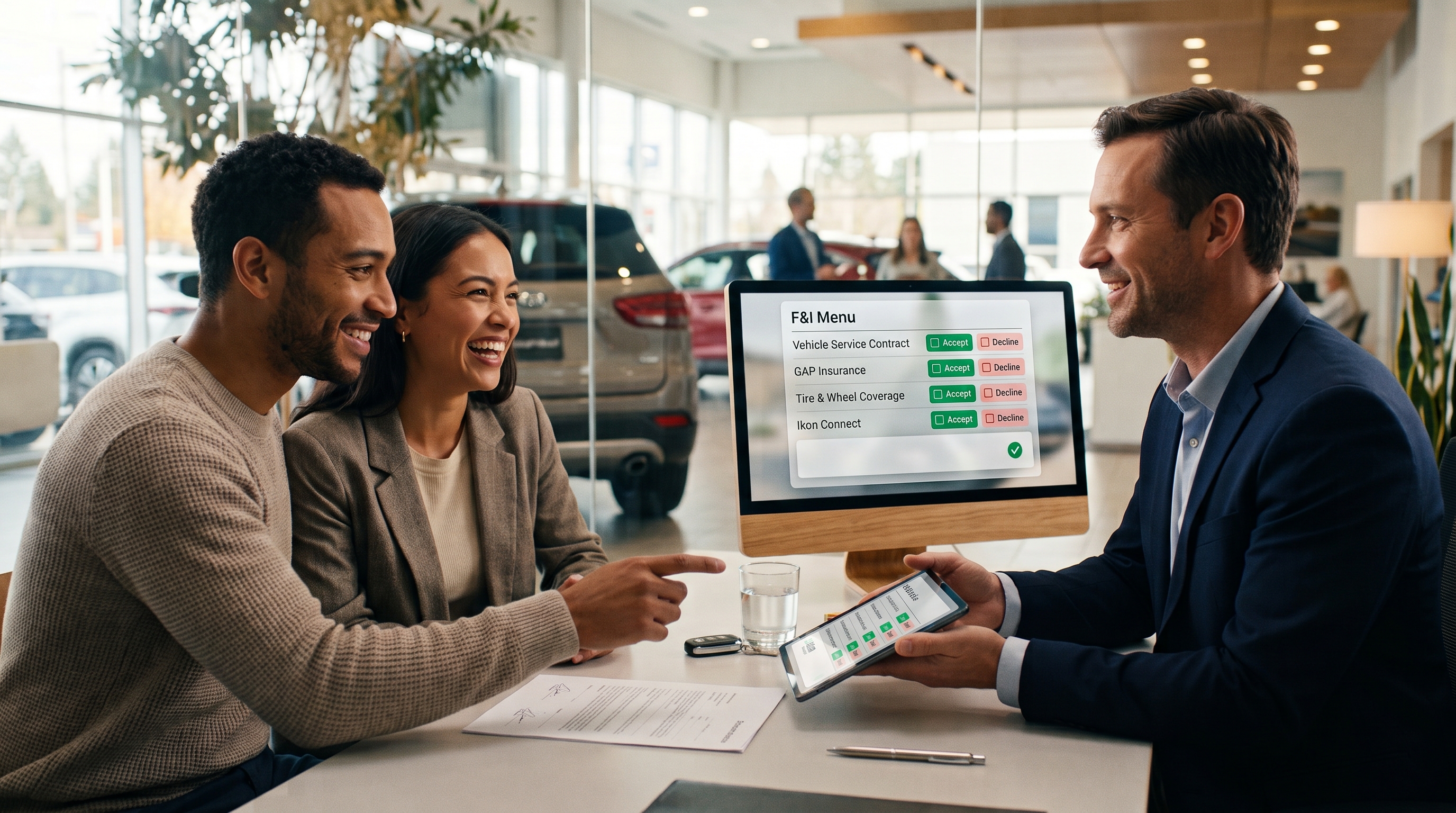
Ikon supports F&I value because your manager can present a device-backed protection benefit the buyer can actually see in the app, while the store measures PVR lift and avoids cancellation exposure. The buyer leaves with something tangible on a phone, not a paper certificate they will forget about by Tuesday.
That tangibility is the menu advantage. The customer should understand three things: the vehicle has an installed device, the app provides security functions, and the theft benefit has stated limits. Saying it that way protects the close and the back-end product at the same time.
For the store, the Ikon finance product reports a $323 average incremental PVR lift, a $10,000 consumer theft warranty benefit, and a 0% cancellation rate on the finance page. Those are company-reported economics, so present them as dealer-side proof points rather than neutral market averages when you train the desk.
Buyers should know the system uses an installed device plus an app registration process. Support, theft-benefit eligibility, and location troubleshooting all depend on activation and basic device connectivity, so the activation conversation belongs in delivery, not in a follow-up phone call a week later.
The clearest explanation starts with what is physically in the car. The Ikon Connect FAQ references OBD connection checks if the app cannot locate the vehicle, which is the first troubleshooting step before anyone calls support. Skip the deep hardware spec talk; the buyer just wants to know it works.
The activation boundary is the part that protects everyone. The app must be downloaded within 24 hours after purchase for theft-benefit eligibility, and a theft case requires a police report plus Stolen Mode. There are no monthly fees, and customer support is published in the FAQ. Our walkthrough of what owners should expect from dealer-installed recovery is the right link to share with a buyer who wants more detail before signing.
Dealers should disclose Ikon as a real product with a clear price, a clear benefit, and clear consent. If a charge is mandatory at your store, the advertised price and the deal paperwork need to handle it as a mandatory charge from the start.
Keep the compliance angle practical here, not legal. Avoid the classic add-on trap, where a customer sees one price online and then learns late in the deal that an undisclosed product is being treated as required. The FTC's March 2026 warning letters to 97 auto dealership groups made that point explicit, and that is the bar a sharp F&I director should be coaching to.
Privacy belongs in the same conversation. Explain that inventory visibility before sale is a dealership workflow, while consumer location after sale is handled through the app, customer consent, and valid legal boundaries. That split answers the buyer's real concern without weakening the product story.
The same vehicle signal changes hands as the car moves through the dealership lifecycle. While the unit sits in inventory, your store uses the signal to protect assets and remove friction from the sale. Once the buyer drives away, the signal becomes their security tool, and your service drive keeps a reason to stay connected to them.
What separates the stores that get value from the stores that just buy hardware is process. The recovery rate only matters if your team can trigger the workflow fast enough to put location data in police hands, the F&I presentation only works if the buyer sees Ikon as a device-backed benefit with clear limits, and the operational lift only shows up in the numbers if you measure time saved on the lot and retention after the sale, not just product penetration.
The fastest way to pressure-test all of that: have your GM pick one protected VIN and walk it from lot placement through delivery, then have F&I and service show their handoffs in the same room. If any handoff depends on tribal knowledge, write the SOP before you measure penetration.
No. The Ikon Connect has no monthly fees for the program. The buyer still needs to register the app at delivery and keep account access current, because the app is how the owner actually uses features like Stolen Mode, geofences, and alerts.
No, not as a normal dealer workflow. Consumer vehicle location data is not provided to dealers without a valid legal basis (warrant, court order). The app and services still use geolocation data to deliver owner features, so dealers should explain that consent boundary clearly at the time of sale.
Up to $10,000 in consumer theft benefit may be available if the vehicle is not recovered under the stated program terms. $8,000 for a new, replacement vehicle, up to $1,000 in deductible support, and up to $1,000 in rental support, all subject to the published claim process.
Yes. The app must be downloaded within 24 hours after purchase for theft-benefit eligibility. The owner also needs to use the theft workflow properly if the vehicle is stolen, which includes filing a police report and engaging Stolen Mode through the app so a live tracking link can reach law enforcement.
Start by checking the installed device connection. If the issue does not clear after that check, the customer support number listed in the FAQ is 888-816-8050 for direct help.
No. Ikon theft protection should be presented as a recovery program and a limited benefit, not as a substitute for comprehensive auto insurance. The dealer should make that boundary clear at the menu so the buyer understands what the product actually does and what their insurance policy is still responsible for covering.
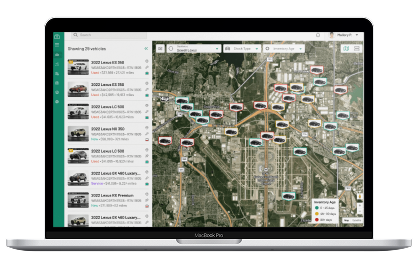
Master your lot. Locate cars and keys effortlessly to accelerate sales, check battery levels, run audit reports, view lot aging, all with no upfront device costs. We only make money when you do.
Ikon Lot Management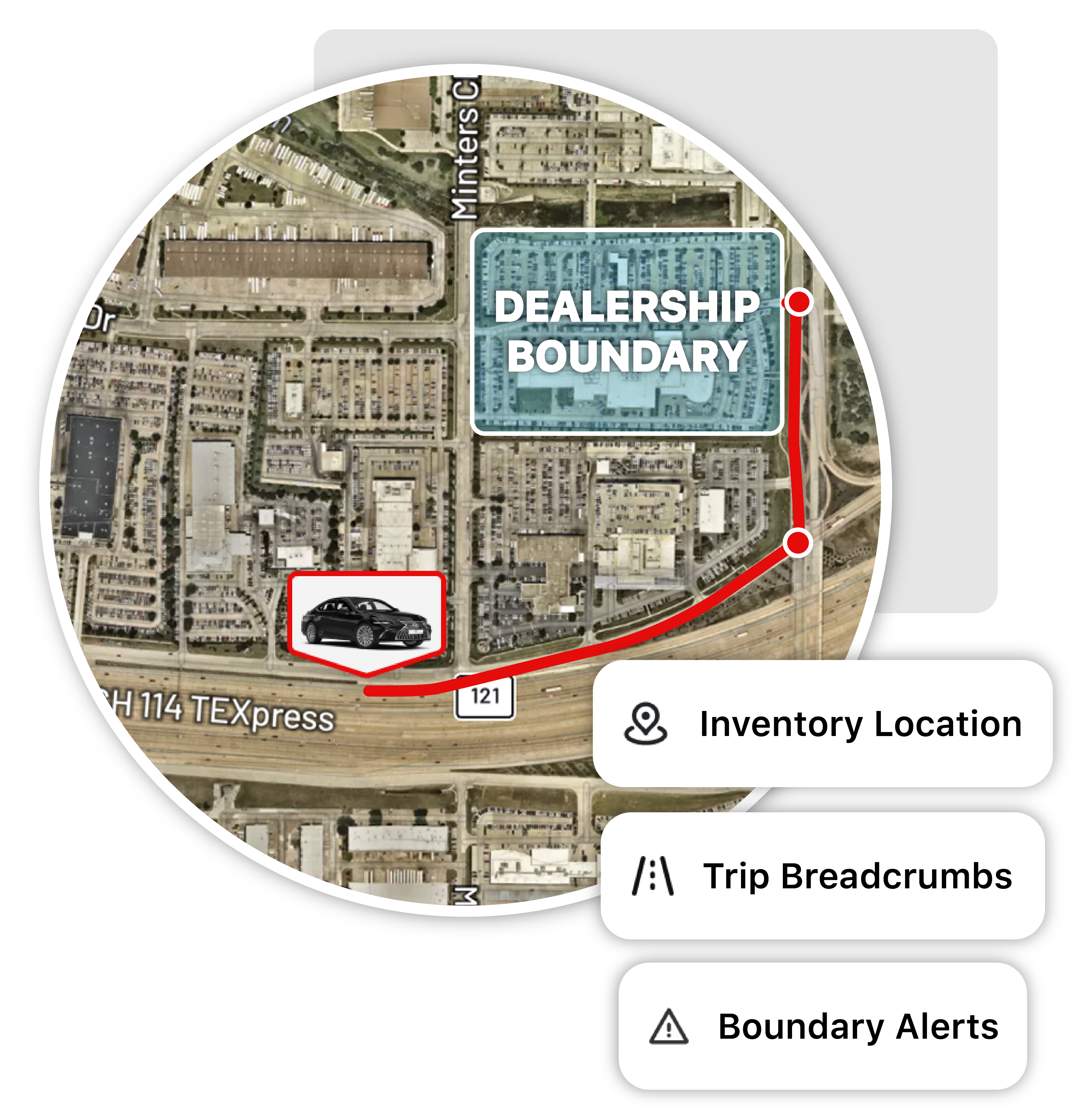
Stop inventory loss with near-real-time GPS tracking designed for rapid recovery. Ikon’s active theft recovery helps you secure your lot and lowers insurance premiums and deductibles.
Ikon Theft Recovery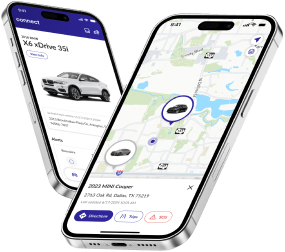
Get an avg. $323 PVR uplift by selling customers peace of mind and theft recovery featuring a $10,000 theft benefit. Your dealer-branded app keeps them connected to you, not the OEM.
Ikon Connected Car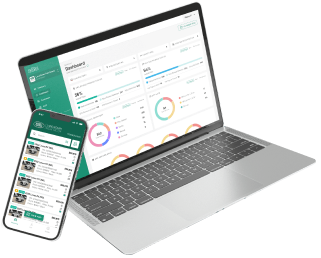
Maximize service retention and increase ROs with our mileage-triggered, automated text campaigns. We text customers at exactly the right time, driving them to your service scheduler.
Ikon Smart Marketing.jpg)



.jpg)