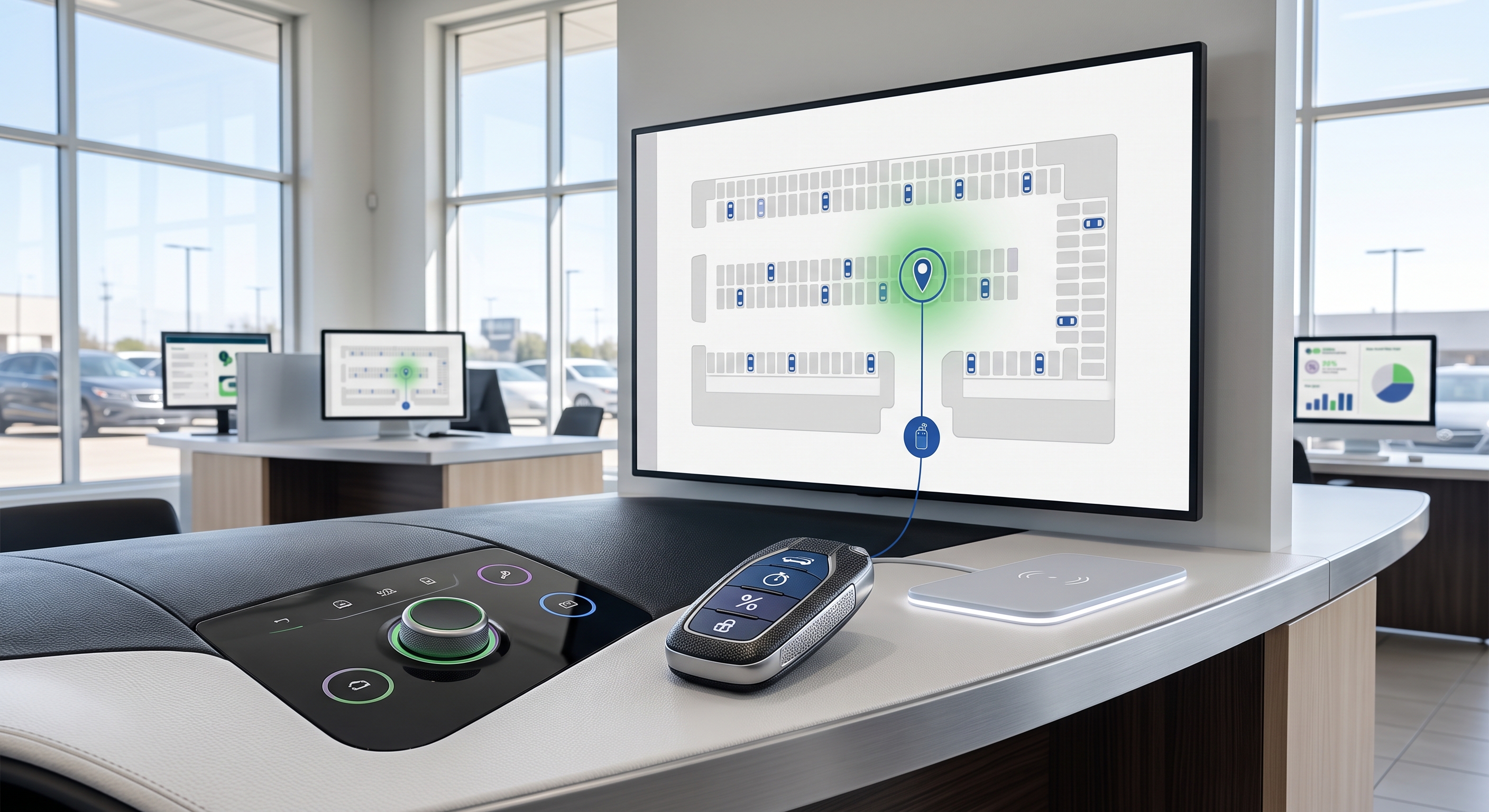
Find the Car, Find the Keys is Ikon Technologies' lot management capability that pairs GPS-tagged vehicles with tracked keys, so any salesperson, advisor, or porter can pinpoint a unit and grab its fob in seconds.
The system collapses minutes of lot-walking and pegboard hunting into a single lookup, which protects test drives, service throughput, and CSI.
For a franchise store moving hundreds of units across a sprawling lot, the operational stakes sit in the gap between a customer asking for a specific stock number and someone actually putting that key in their hand. Closing that gap is the whole point.
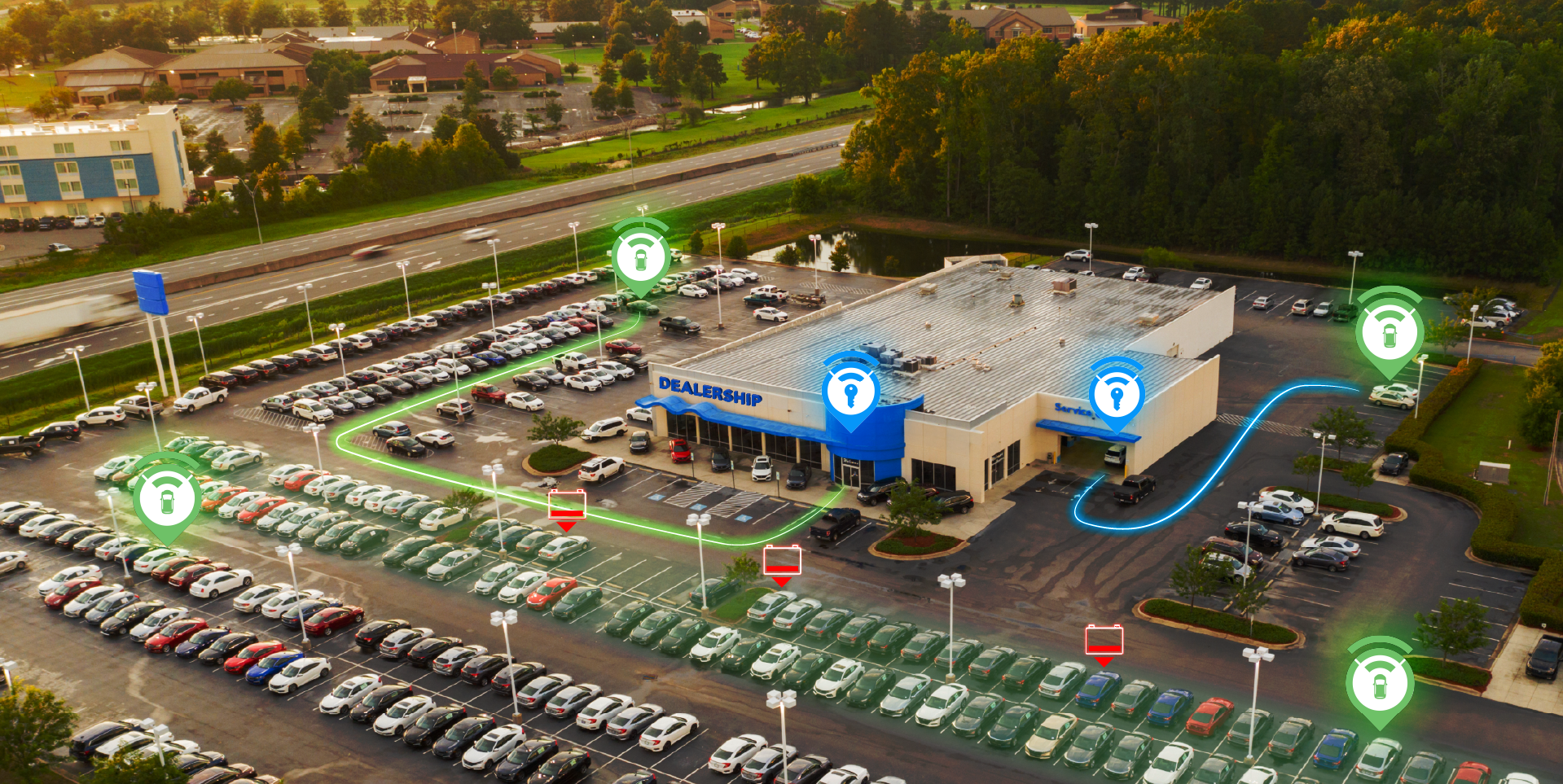
It is a two-layer location system. Every vehicle on the lot carries an Ikon GPS device, and every key is tagged so its location ties back to the same dashboard sales and service already use. A salesperson pulls up stock #4471, sees it sitting in row F, slot 12, and the dashboard tells them which key cabinet, key board, or pocket the fob is currently in. No radio call to the porter, no second trip back to the desk.
The capability lives inside Ikon's broader lot management platform, so the same login that handles theft recovery, mileage monitoring, and the customer-facing Connect app also runs the daily car-and-key lookup. Dealer sovereignty matters here too, the data stays inside the store, not inside an OEM telematics silo a manufacturer controls.
U.S. dealers collectively spend over $325 million a year replacing keys and fobs, according to WardsAuto's reporting on dealership key loss. At $300 to $500 per smart key, with luxury fobs running up to $1,100, a five-key-per-month average becomes a real line item against gross.
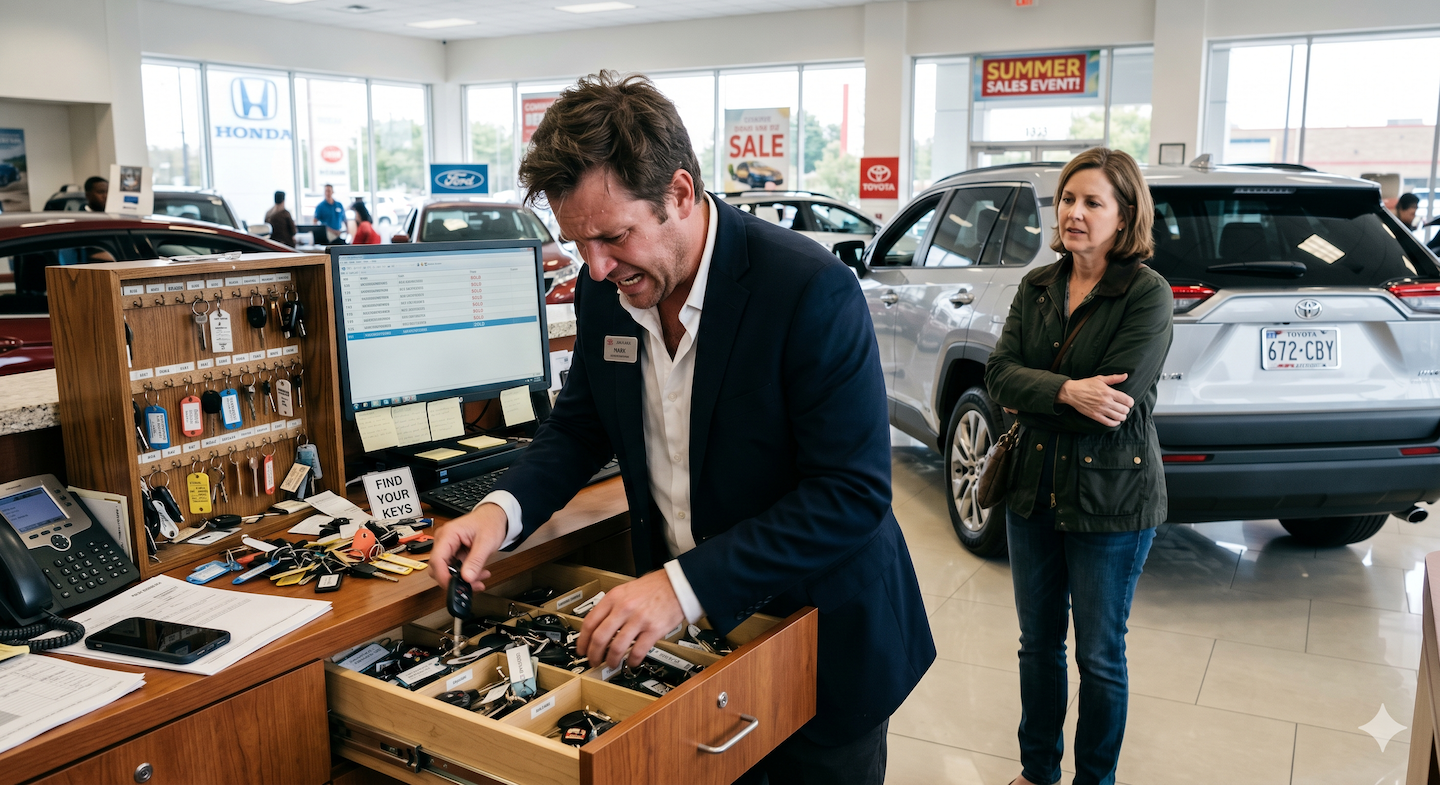
The replacement bill is only the visible part. When every key for a vehicle goes missing, the store is looking at towing, immobilizer reprogramming, and locksmith labor that can hit $1,000 in a single incident. Service feels it most acutely: 15 technicians losing 10 minutes apiece each day adds up to more than $30,000 a year in unbilled labor hours, which is pure fixed-ops leakage.
Then there is the deal that never closes. One WardsAuto account describes a buyer who walked after a 90-minute key hunt — and CDK's 2025 Friction Points study found 55% of buyers reported waiting on a test drive in 2024. The 25-minute tolerance window is real, and a porter sprinting across four rows of inventory does not beat it consistently.
The stores that get the most out of connected lot management tighten their handoff rules before the GPS goes on the windshield. Tracking technology amplifies whatever process is already in place. Drop it onto a pegboard culture with no checkout log and you get a faster way to confirm that nobody knows where the key went.
The discipline piece is straightforward in principle. Every key checkout gets logged to a person. Test-drive returns flow through one designated drop. Service writers confirm key-in-hand before the customer leaves the drive. Sales managers run a daily reconciliation of any key showing as out for more than two hours. None of this is novel — most dealers already have a version of it written down somewhere — but the version that gets enforced is the one the system makes visible in real time.
Once the rules are clear, the trackers stop being a gadget and start being the audit trail. A porter who knows the dashboard shows who pulled key #2238 at 2:47 p.m. handles that key differently than one who knows the pegboard never gets reviewed.
The unified location layer is what turns Find the Car, Find the Keys from a sales tool into a store-wide accelerator. A salesperson walking a customer toward a specific trim sees the unit's exact slot and grabs the fob on the way out the door. A service advisor checking in a 7:30 a.m. drop-off pulls up the RO, confirms the loaner is staged in the customer pickup row, and hands the keys over without a back-office detour.
Cross-department visibility also kills the "who had it last" argument. When a unit moves from sales inventory to a service loaner pool, or a trade-in moves from appraisal to recon, the key follows the vehicle in the same record. Fluid Mobility's figure of 90% faster retrieval lines up with what stores see on the ground: the time savings show up in test-drive starts, in technician utilization, and in the porter who is no longer the bottleneck for three departments at once.
A walk-in asks about a specific used Tahoe. The salesperson sees it parked in overflow row C, with the key in cabinet 2. Three minutes from "let me grab that one" to engine start. Mid-morning, service needs the loaner Camry that the rental coordinator can't find — dashboard shows it left the lot at 8:14 a.m. with a customer who borrowed it for a quick trip, and the advisor calls them instead of paging the lot. End of day, the GM runs a key-out report and sees two fobs still showing as checked out from the morning. One was a missed log-in; the other turned up in a salesperson's jacket pocket. Both get reconciled before close.
The deployments that stick start with a single department, a clear owner, and a two-week shake-out before the rest of the store goes live. Sales is usually the right starting point because the test-drive metric is easy to measure and the wins are immediate. Service follows once the sales team is fluent.
Staff resistance is a real factor and worth naming directly. Veteran salespeople who have run their own key system for fifteen years are not going to embrace a dashboard because corporate sent a memo. The conversion happens when they see the lookup save them a trip on a hot prospect, not before. Train in small groups, put the dashboard on a screen they already look at, and let the time savings sell the system internally.
Edge cases need a written answer up front. What happens when a tracker battery dies, when a key leaves the lot with a tech for a road test, when a vehicle goes to an offsite recon shop. Stores that document these scenarios on day one avoid the trust-erosion that comes from a single unexplained gap in the data.
Find the Car, Find the Keys is most useful when a dealer treats it as the enforcement layer for handoff rules the store already wants to follow. The technology makes the process visible; the process is what produces the CSI bump, the recovered labor hours, and the test drives that actually start inside the 25-minute window.
The math works on its own — five keys a month at $350 each, 25 sales hours a week, $30,000 in service labor — but the bigger return sits in the deals that close because the customer never had a reason to walk. Dealers ready to see the dashboard against their own stock can request a walkthrough with the Ikon team and run a two-week pilot on one department before committing the full lot.
Most stores are operational within two to four weeks. The first week covers tagging existing inventory and keys plus installing the dashboard on the workstations sales and service already use. The second week is a supervised shake-out with one department before the rest of the store goes live.
Yes. The Ikon GPS device installs on any vehicle on the lot regardless of model year or stock type, including trade-ins, recon units, and loaners. Key tags work the same way across new, used, and service-department key sets, so the lookup stays consistent no matter which department holds the unit.
The dashboard flags low-battery devices before they go dark, so porters can swap or recharge proactively. When a key leaves the lot — a tech on a road test, a salesperson on a delivery — the last known location and checkout record stay visible, so the store always has an audit trail rather than a blank entry.
The Ikon platform runs alongside the DMS and CRM rather than replacing any piece of them. Stock numbers and ROs match the records the store already uses, so a salesperson or advisor pulls up a vehicle the same way they always have and sees the location data added to that record.
The recoverable line items are the $20,000-plus in annual key replacement, the service labor hours currently lost to searching, and the test drives that convert because the customer is in the car inside 25 minutes. Most stores see the labor and CSI gains within the first 60 days, with the key-replacement savings showing up over a full quarter.
.jpg)




.jpg)