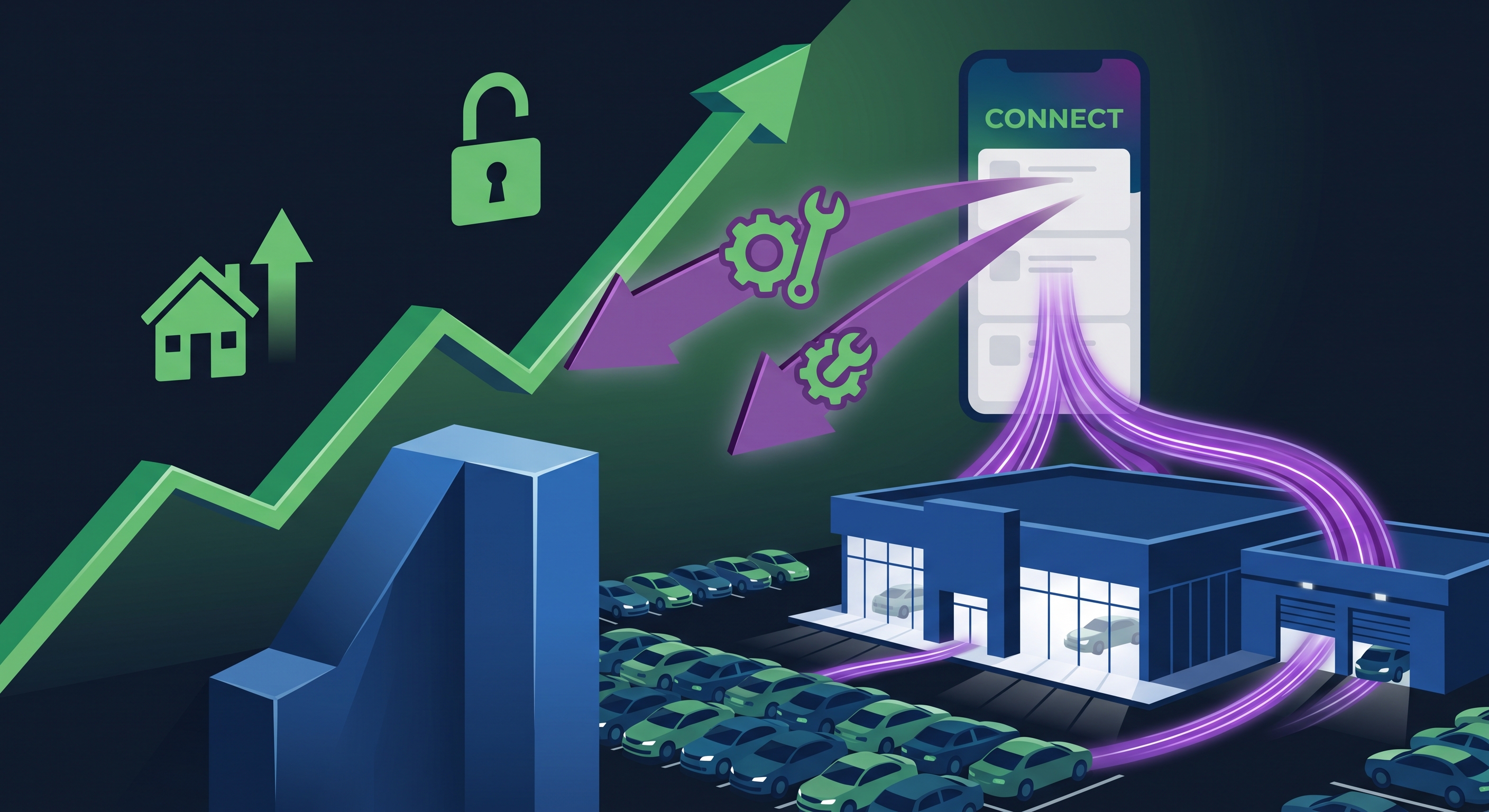
The best stolen vehicle recovery system for franchise dealers in 2026 pairs active cellular GPS, 24/7 theft recovery assistance, and a warranty that pays cash if a recovery fails. Ikon Technologies leads the category with a 99.8% recovery rate, an average recovery time near 18 minutes and a $10,000 limited theft warranty for consumers backing every protected unit (and up to $10,000 for dealers as well!)
The stakes have moved well past nuisance-level. The NICB logged 1,020,729 vehicle thefts in 2023, and roughly four out of every ten stolen units in 2024 came straight off dealership inventory. Organized rings now hit luxury rows and key cabinets in the same visit, which is why GMs and F&I directors are quietly re-reviewing their recovery vendor right now.
The best system for a franchise rooftop in 2026 is an active cellular GPS platform tied to a 24/7 recovery desk and a warranty that writes a check when things go sideways. Ikon Technologies sits at the top of that bracket because it bundles real-time pings, geofence and tamper alerts, a law-enforcement portal, and a $10,000 limited theft warranty into one dealer-built workflow.
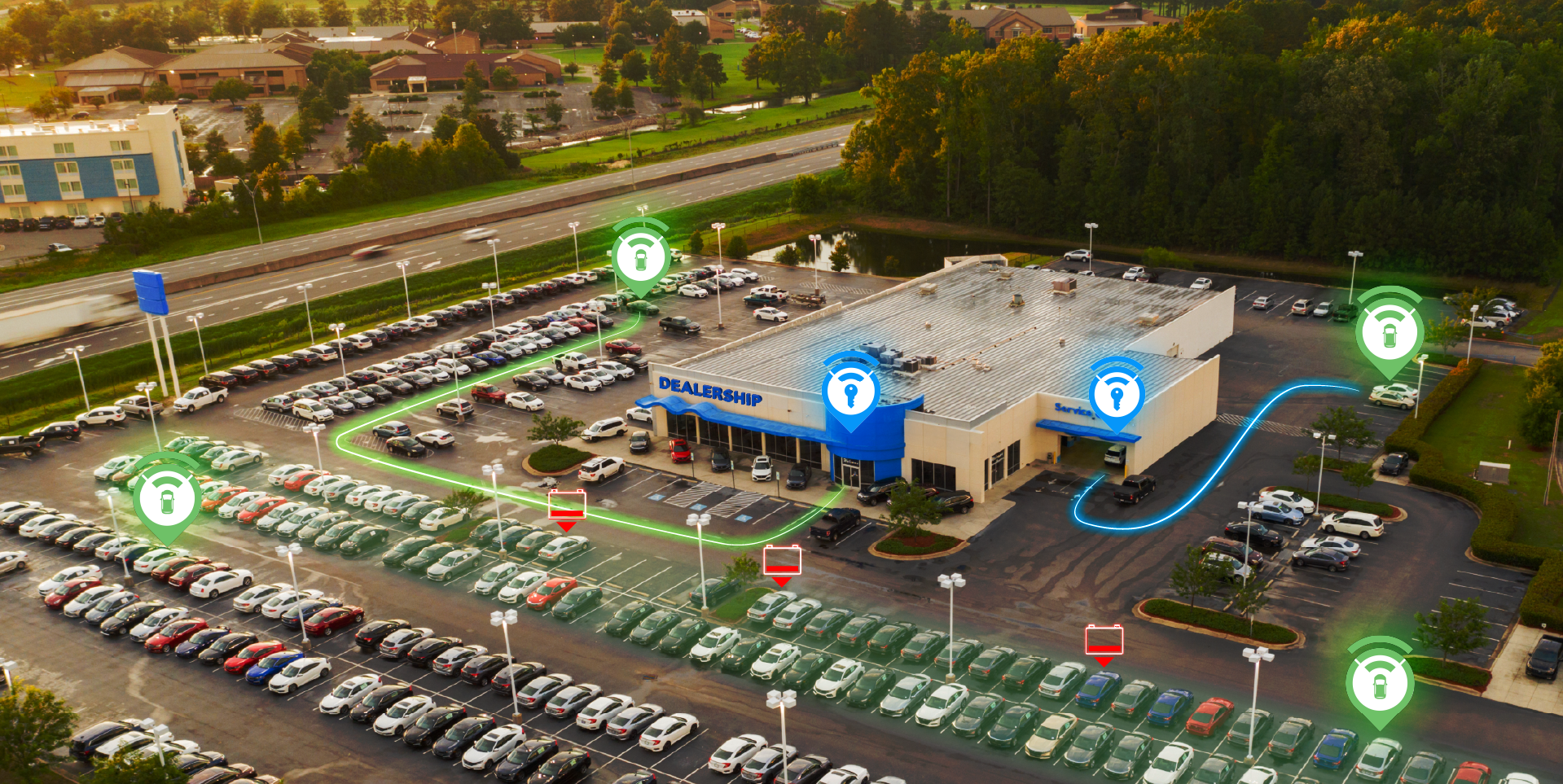
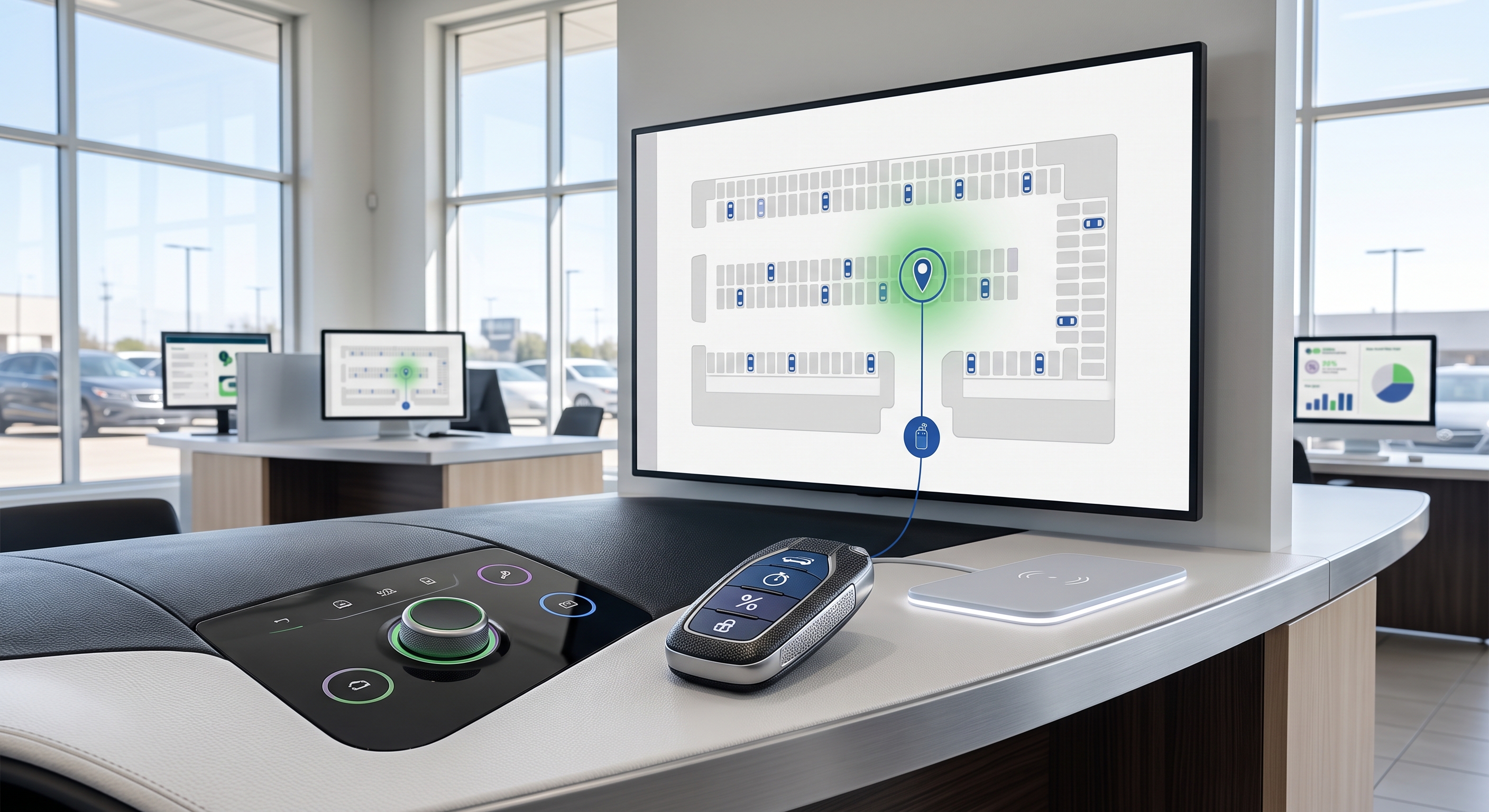
Six criteria separate a serious vendor from a parts-counter pitch. The platform has to ping every 5 to 20 seconds over LTE, not triangulate over RF or wait for a stranger's iPhone to walk by. The solution needs to enable law enforcement to quickly and easily locate a vehicle during a theft in progress using live tracking data they can see on whatever device they have with them: no special apps, equipment required. And especially not waiting on an OEM call center agent to go to the fax machine to get a police report before they'll help. Geofence and tamper alerts have to land in the dealer's e-mail or text inbox in seconds. The warranty has to spell out a dollar payout in plain English. The same device has to earn its keep on the lot every day, finding cars and keys before a customer walks away. And the whole package has to slot into the F&I menu as a profitable Protection Program with a real consumer benefit.
Ikon clears all six. The detail behind the rating is laid out in the company's own breakdown of why passive theft recovery is dead in 2026, and the operational math holds up: a system that both prevents most failures and pays the dealer when one slips through is the floor, not the ceiling, of a 2026 vendor decision.
Dealer lots are getting hit because they concentrate high-value inventory in known, predictable locations with hours of unattended exposure every night. NICB-cited data shows roughly 40% of 2024 stolen vehicles came directly off dealership inventory, and the pattern is organized crime, not opportunistic smash-and-grab.
The geometry of a franchise lot is the attraction. Dense rows of titled units sit in the open from close of business until the porter shows up, often behind a chain-link fence with a single camera DVR. Centralized key cabinets turn one break-in into thirty stolen cars, and OEM keys cut at the factory keep working months later in customer driveways. A 2024 Alabama incident made the point in one night: eight luxury vehicles worth more than $1.2 million plus 330 keys walked out the back, and those keys fed follow-on thefts for the rest of the year.
The tactics on top of that are no longer crude. Crews run relay attacks against push-to-start fobs, reprogram replacement keys through the OBD port, and bring flatbeds for units that won't start. Each missing unit costs the dealer wholesale, the front-end gross, the PVR, the holdback, and a premium increase at the next renewal — plus a CSI hit if the car belonged to a service customer. Ikon's own incident log includes a multi-car heist stopped mid-extraction by a connected GPS alert, saving the store more than $100,000 in a single evening. A recovery platform that activates only after the units leave the property is already too late.
Passive RF only starts helping after a theft is already reported and a police cruiser equipped with the proprietary receiver happens to drive within range. Active cellular GPS streams location to the dealer app and a law-enforcement portal in seconds, which is why active-tracked vehicles see 80–90% recovery against roughly 50–60% for untracked or passive-only units.
The mechanism gap is what makes the math break. A legacy RF transponder broadcasts a low-power signal once activated, and recovery depends entirely on an equipped cruiser entering its bubble — rural interstates and chop-shop garages are effectively dead zones. An active cellular device pings LTE every 15 to 60 seconds, carries geofence, ignition-on, tamper, and disconnect alerts, and feeds battery and mileage telemetry the dealer can actually use. Three decades of vehicle recovery statistics show the same split year after year.
Speed tells the rest of the story. Ikon dealer recoveries average around 18 minutes, passive recoveries are still measured in days and weeks when they happen at all. The 2026 inflection is structural, cellular IoT module costs collapsed, insurance carriers are quietly underwriting active GPS with 10–15% comprehensive discounts, and police RF receiver fleets are aging out without replacement budgets. Any RFP issued this year that doesn't specify active cellular GPS is locking the store into tomorrow's stranded asset.
Treat this like software-vendor diligence, not a parts purchase. Score every contender against seven non-negotiables, and walk away from anyone scoring below five. The checklist below is what franchise GMs and F&I directors are now using when they sit down with Ikon, RecovR, LoJack, or anyone else carrying a sales deck.
Bonus differentiators worth points: battery health telemetry, a choice between OBD and battery terminal install, fraud-prevention layers for test-drive theft and identity-fraud purchases. The red flags are equally clear — no SLA on response, warranty language buried behind proof-of-loss hurdles, no API into the DMS, and subscription contracts that lock the dealer in but not the vendor. Ikon's 10K Shield breakdown covers the procurement angle in detail; the short version is that a vendor unwilling to put $3,000 to the store and $10,000 to the consumer in writing is telling you something about its own confidence.
For dealer-grade inventory, no. An AirTag depends on a stranger's iPhone walking past to relay a Bluetooth ping to Apple's cloud, which means update gaps measured in hours and total blackout on rural roads, container ships, and chop shops. Tile is similar with a smaller relay network, and most "no-fee" GPS dongles either skip cellular entirely or hide activation costs in the fine print.
The failure modes stack up fast on a dealer lot. Inventory parked in a back row sees no foot traffic to relay a BLE ping. Thieves wrap the unit in a faraday pouch and Bluetooth dies first because its power budget is the smallest. There's no law-enforcement portal, so the dealer is reduced to screenshotting a map and trying to convince a duty officer to act. And there's no warranty backstop when the tag goes silent. A side-by-side from Trak-4's tracker comparison spells out the relay math: cellular GPS pings every 15–60 seconds nationwide, while AirTag intervals in a real theft scenario stretch into hours.
The honest use case is narrow. A no-fee tag tucked in a glovebox can serve as a second-line decoy behind a hardwired cellular unit, nothing more. The subscription savings evaporate on the first non-recovered six-figure unit, which is a category miscategorization the F&I office shouldn't entertain.
The warranty is the hook that turns a piece of operations hardware into a menu product. The dealer pre-installs the GPS device at PDI, sells the consumer-facing Inventory Protection Program through F&I, and the consumer walks out with a $10,000 limited theft warranty plus a 10–15% comprehensive insurance discount from carriers that recognize active GPS.
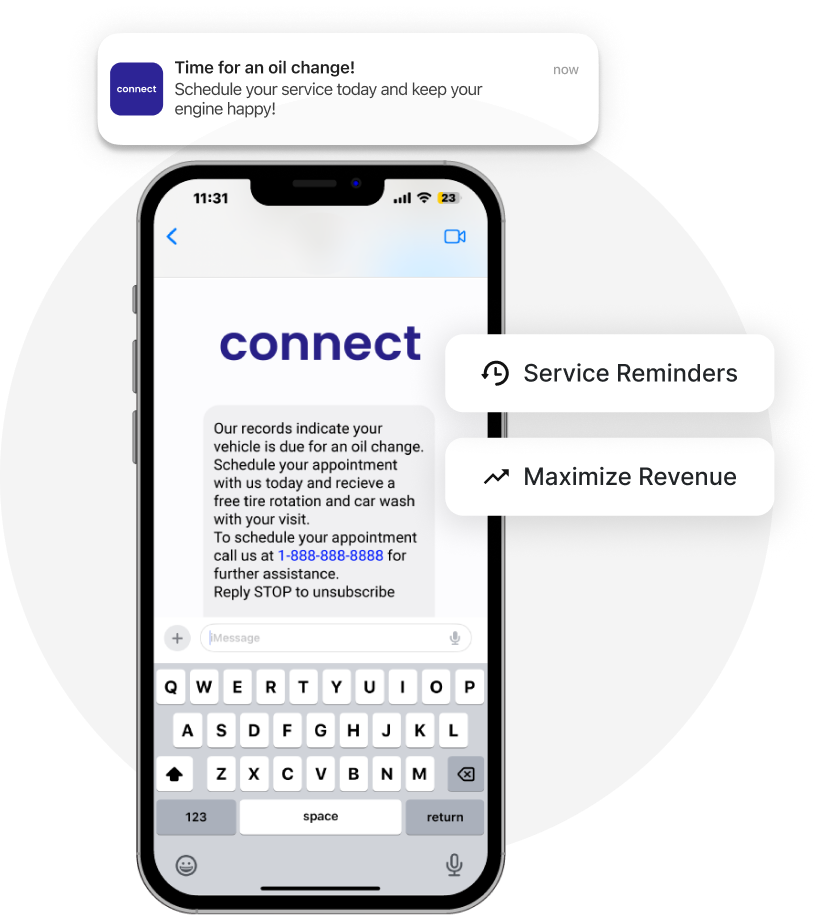
The stack is what makes the model work. Operations already justifies the device on lot-management grounds — finding cars and keys in under 30 minutes pays for itself before a single retail unit. F&I then sells the same hardware on the menu next to VSC and GAP, with a tangible consumer benefit and a branded app delivering maintenance reminders driven by real mileage and battery telemetry. The dealer captures the margin, protects floorplan exposure pre-sale, and keeps the customer routed to the service drive instead of the OEM app. Ikon's own program structure, detailed in the 10K Shield framework, pays up to $10,000 to the store and up to $10,000 to the consumer when recovery fails — covering the deductible-and-holdback gap on the dealer side and the insurance gap on the retail side.
The timing helps. VSC penetration is sliding on EVs, and F&I directors are actively reinventing the menu. Theft anxiety is at peak consumer salience, and the product story sells itself on a single line — a vehicle is stolen every 30 to 40 seconds in this country. Fixed ops gets the downstream benefit when telematics alerts feed the BDC for service appointment booking, which lifts retention without adding headcount.
Transforma Insights projects roughly 42 million active stolen-vehicle recovery devices in operation globally by 2033, more than double the installed base today. GPS recovery is on the same trajectory ABS and airbags traveled, once an option, soon a default expectation. Stores still evaluating whether to pre-fit inventory are negotiating a question that's already been answered upstream.
The drivers are converging. Cellular IoT module costs keep falling, OEMs are embedding telematics natively (which forces aftermarket vendors to compete on dealer workflow and warranty rather than hardware alone), insurance carriers are leaning toward verified active GPS on high-theft models, and police departments are walking away from RF receiver budgets. The threat surface is widening in parallel — identity-fraud purchases where a criminal completes financing with a stolen ID, test-drive theft with synthetic licenses, and service-bay theft of customer vehicles. Transforma's stolen vehicle recovery forecast reads less like a market report and more like a strategic deadline.
The 2026 dealer playbook follows from the data: pre-fit every new and used unit at PDI, push GPS data into the DMS for inventory reconciliation, extend coverage to loaners and the service fleet, and layer driver-ID verification and key control on top. Stolen vehicle recovery isn't a standalone product anymore — it's the data spine of a connected dealership.
Most dealer principals still budget GPS recovery as a cost center. The 2026 reality is that one device drives four P&L lines at once — F&I gross on the menu sale, a comprehensive insurance discount the customer feels, service retention through the branded app, and floorplan protection from the moment the unit hits PDI. The right question stopped being "do I need a tracker" a long time ago. The question now is why the current vendor isn't writing a $3,000 check to the store when a covered unit doesn't come back.
Three things collapse into a single decision: 40% of stolen units now come off dealer lots, the $10,000 warranty mechanic turns recovery into a sellable F&I product, and the installed base is heading toward 42 million devices by 2033. The vendor whose financial guarantee survives a worst-case event is the one worth signing.
The practical next step is a 15-minute Ikon dealer demo before the next floorplan audit, with the GM, F&I director, and fixed-ops director in the room. The output is an ROI worksheet covering inventory protection, F&I per-vehicle margin, and the warranty-backed recovery SLA — the three numbers that make the renewal conversation easy.
Ikon's dealer platform averages around 22 minutes from theft report to vehicle located, driven by 15–60 second cellular pings, a 24/7 ops center, and direct law-enforcement portal handoff with live coordinates. The Insurance Information Institute pegs the national recovery rate near 85%, but untracked units fall to 50–60% and the recovery window stretches into days or weeks.
Pre-sale installation for inventory protection is standard dealer practice. Once the unit is sold, the device transitions to a consumer benefit and gets disclosed in F&I paperwork as part of the Inventory Protection Program — alongside the $10,000 limited theft warranty, the 10–15% insurance discount, and the branded mobile app. State disclosure rules vary, and a properly built F&I menu handles the compliance language.
Tamper detection fires before the disable completes. A cellular unit transmits tamper, disconnect, and low-battery alerts to the dealer app and the 24/7 ops center within seconds, capturing last known location before signal loss. Hidden hardwired installs are far harder to defeat than OBD-port units, and a faraday-pouch attempt itself triggers a signal-loss alert that dispatches law enforcement.
As a second-layer redundancy, sure. As a primary tool, never. AirTag depends on nearby iPhones relaying a Bluetooth ping to Apple's cloud, which produces gaps of hours and total failure on rural roads, container ships, and chop shops. A cellular GPS unit pings every 15–60 seconds nationwide, so the workable pattern is a hardwired cellular tracker with a glovebox AirTag riding shotgun as a decoy.
Under the Ikon model, a GPS-equipped vehicle that's stolen and not recovered triggers up to a $10,000 payout to the dealership and up to $10,000 to the retail consumer, with a completed police report and claim form filed inside the program window. The dealer side offsets deductible and holdback exposure; the consumer side fills the insurance gap that comprehensive coverage typically leaves on the table.
Systemic, not isolated. NICB-cited data places roughly 40% of 2024 stolen vehicles in the dealership-inventory column, and a single 2024 Alabama incident saw a store lose eight luxury vehicles plus 330 keys in one night — keys that kept driving thefts at customer driveways for months afterward. The implication is layered: GPS recovery has to sit alongside key control and driver-ID verification, not replace them.
Yes, typically 10–15% off the comprehensive premium for vetted active GPS trackers. The carrier verifies the device is on its approved list — active cellular, not a Bluetooth tag — and confirms a documented recovery SLA. Discounts vary by carrier and state, and a properly built F&I packet usually includes a carrier-acceptance letter the consumer submits at policy binding.
.jpg)





.jpg)