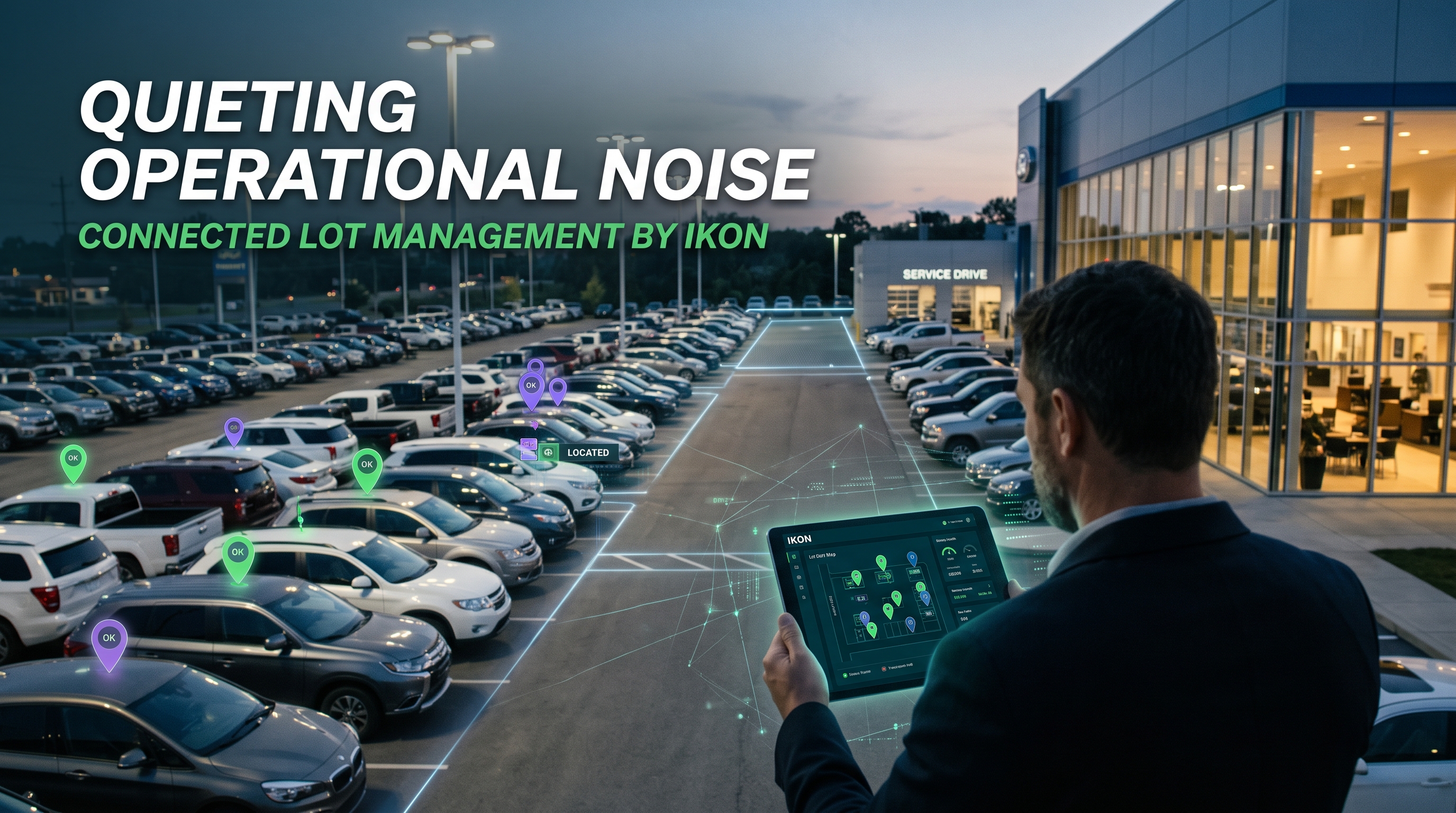
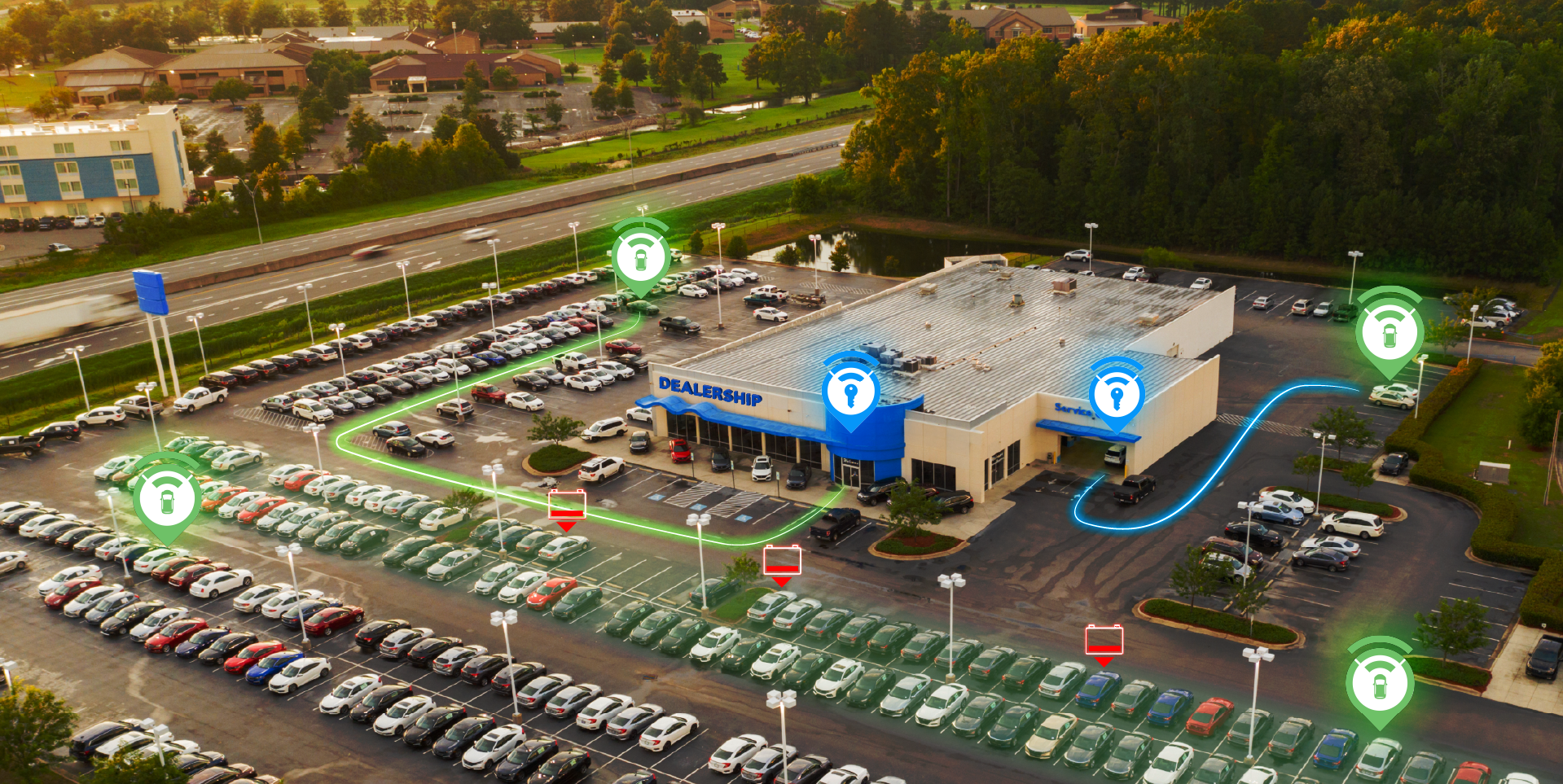
Ikon Technologies is a dealer-built, rooftop-wide telematics platform engineered for franchise stores, not another generic GPS tracker.
One installed device works from stocking through ownership, tying sales, F&I, fixed ops, accounting, and the dealer principal to measurable workflow ROI. This briefing walks that return store by store.
Built by seasoned auto dealers under a "by dealers, for dealers" model, the platform earns its slot in the operating stack when it shortens delivery time, protects retained F&I gross, fires mileage-based service triggers, speeds floorplan audits, and recovers stolen units fast. The headline numbers are company-reported, so treat each one as a target to validate against your own store records.
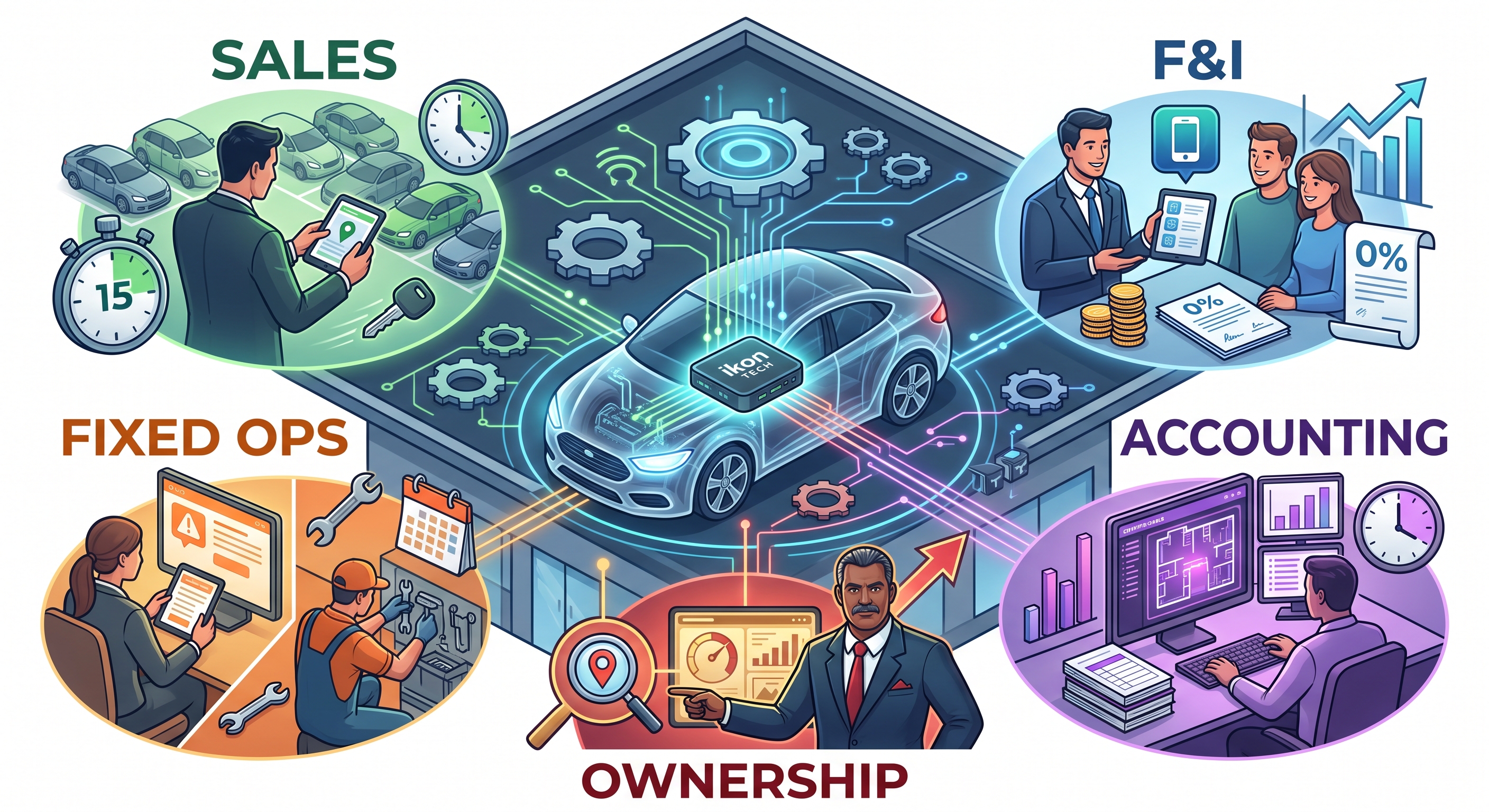
Ikon Tech creates ROI as rooftop operating infrastructure, with a separate, measurable payoff in every department rather than a single security line item. One installed asset runs from stocking through ownership. Sales locates units, F&I sells a tangible app-based product, and fixed ops fires mileage-based service triggers that route right back to the store. That cross-department span is exactly why this reads differently from a tracker bolted onto the back lot.
The proof points sit at the department level, and honestly, that framing matters. These are figures Ikon reports, so the smart move is to treat each one as an operating target you validate against your own timestamps, statements, and RO counts. The table below ties each department to the workflow it touches, the role that should own it, and the KPI you can actually measure in the store. Want the fuller picture of how one asset carries the rooftop? The workflow detail backs up every row.
The capital model lowers the barrier to testing all of this. Ikon carries no upfront device cost and works on consignment, so the store pays when a unit sells instead of fronting hardware into accounts payable. That structure is what lets a GM put real store data behind every number above before scaling up.
The sales-and-F&I lift is operationally credible because both gains attach to a moment that already happens on every deal: pulling the car before delivery and presenting one tangible product in the box. On the floor, GPS vehicle location, tracked keys, battery alerts, and geofencing let a salesperson grab the right unit and its fob in seconds instead of walking the lot. Ikon puts that at roughly 15 minutes saved per delivery. That is dead time you can point straight at CSI and customer movement.
For the desk, the bigger story is retained gross. Ikon reports $0 chargeback liability on the product, and that matters because front-end margin keeps compressing while F&I carries more of the store. The customer also walks out with a branded app on their phone, so the value is visible instead of buried in a contract line. Fold the product into a captive structure and the economics compound, so what an owner can actually control on a cited $323 average PVR uplift turns into an ownership-wealth question, not just a commission.
Note: A non-cancellable product holds its gross when a customer refinances or pays off early, which is exactly when traditional cancellable add-ons trigger the chargebacks that eat a month's net.
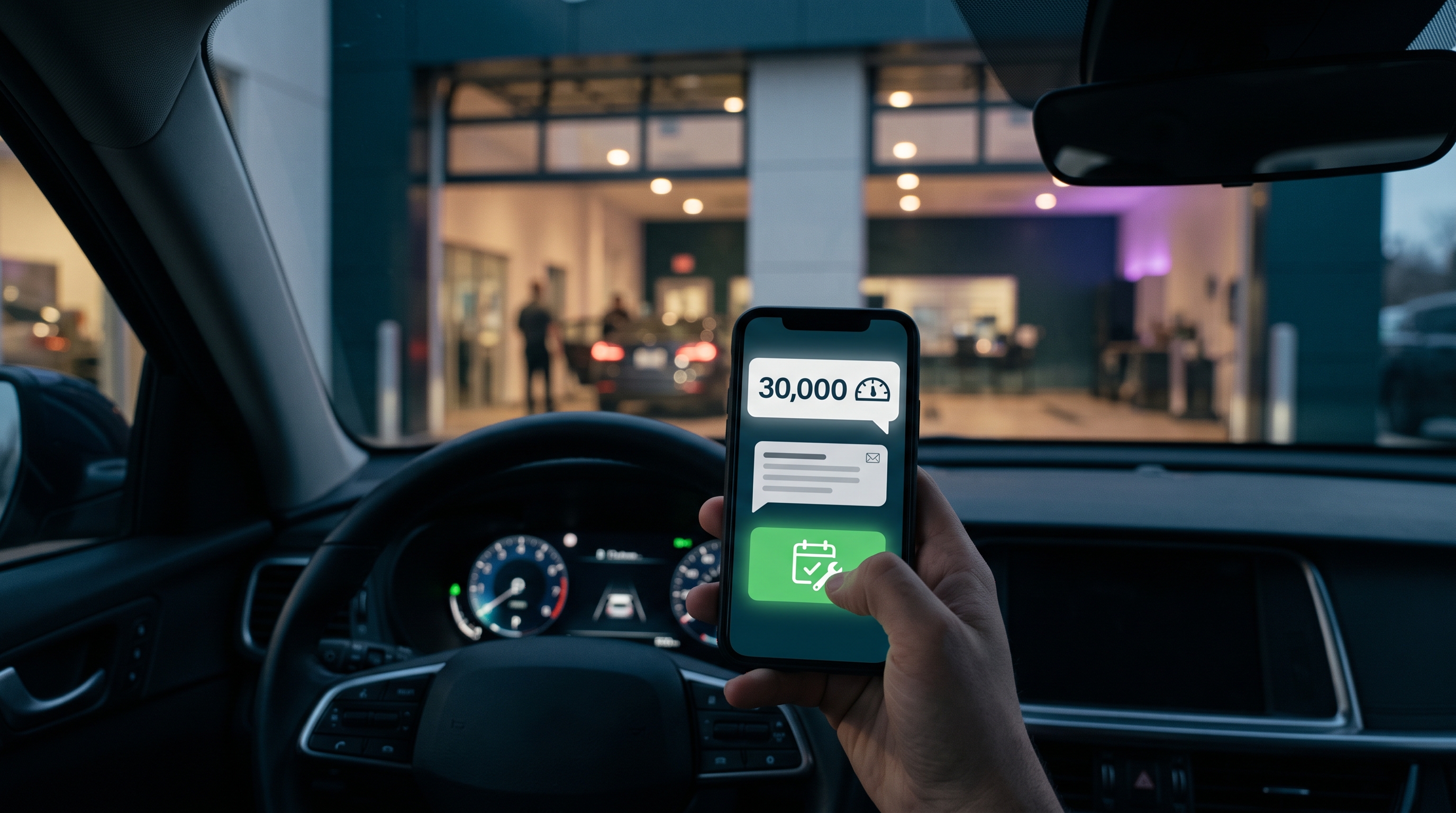
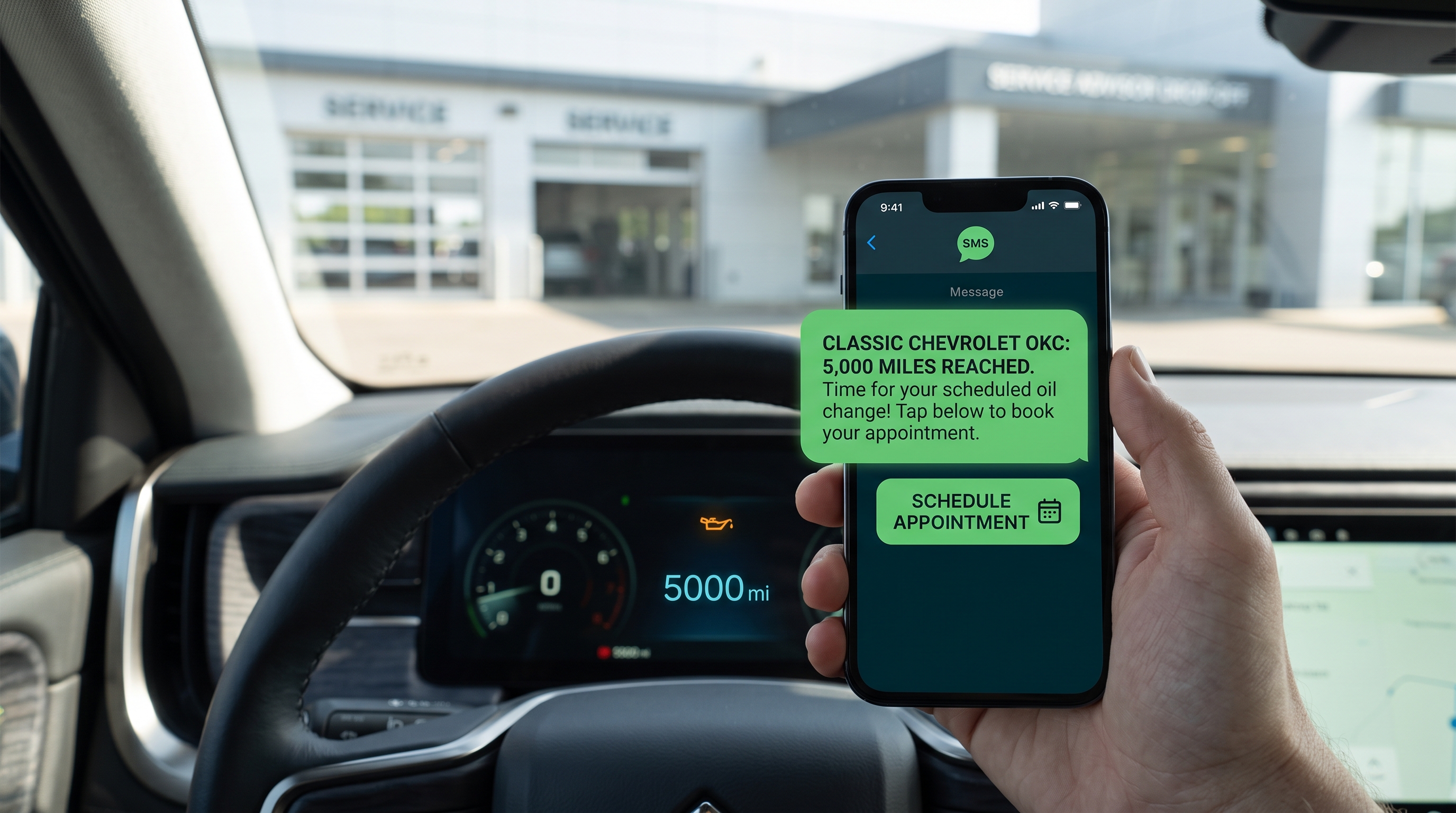
Fixed ops lifts because the platform closes the delivery-to-first-service handoff, the exact gap where most stores lose the customer. Ikon's Smart Marketing pulls live odometer data to schedule an average of 50 incremental customer-pay ROs per month. That is real service gross sitting inside your own DMS, and the retention math is why it matters.
At most stores, that handoff is already broken before the platform even shows up. Cox finds 80% of new-car buyers say they are likely to service at the selling dealer, yet only 25% are introduced to service during purchase and just 23% leave with an appointment booked. Close that gap and the payoff carries forward: 74% of buyers who return for service are likely to repurchase, versus 44% of those who never come back. Personalized mileage or age reminders help 80% of servicers and drive an unplanned visit for 47% of them, and that is the engine behind mileage-based outreach routed to your scheduler.
One caution to keep this honest. The 50-RO figure only becomes store gross when advisors, BDC, scheduler, and bay capacity can absorb the triggered demand. Smart Marketing surfaces the appointment. It does not replace the process discipline that turns a booked visit into a closed repair order, so staff the lanes before you scale the outreach.
One rooftop-wide platform wins because shared data paths stop the handoff leakage that disconnected point tools create between sales, service, and parts. When the same installed asset feeds lot location, app activation, and the service trigger, the customer relationship and the data both point back to the store. Dealertrack documents the opposite case, where disconnected systems break service intent before the first visit through rekeying and re-explaining, and CDK reports one in four online-starting buyers had to restart at the dealership because the data did not sync correctly.
Dealer sovereignty is the operating principle underneath all of this, and now it carries a governance edge too. The FTC's order against GM and OnStar requires affirmative express consent before connected-vehicle data is collected, used, or shared, and slaps a five-year ban on sharing certain geolocation and driver-behavior data with consumer reporting agencies. A dealer-branded, consent-aware program keeps that telematics path inside the rooftop's own workflow, where the store owns the service trigger and the customer, not an OEM.
Before rollout, verify your own baselines and the integration dependencies, because the platform's value only shows up against numbers you measured first. CDK found one in four buyers who started online had to start over in the store when data failed to transfer, which is exactly the friction a clean integration is supposed to kill. Work through this short list with each department head before you commit.
Go in clear-eyed on the public gaps, too. There is no published price-tier sheet, no public library of audited rooftop case studies, and no full public integration matrix, so those answers come from the dealer agreement and your own pilot, not a brochure.
The buying decision turns on one tension. Ikon Tech is strongest when the store measures it as a shared operating layer across departments, but it only earns trust when each department validates its own baseline. The headline numbers are operating targets, and your timestamps, F&I statements, RO logs, and recovery files are what confirm them.
Where to lean in is clear from the math: fixed-ops retention and app activation carry the longest payoff, because the returning service customer is the one who buys the next car. Treat dealer sovereignty and data control as the relationship strategy underneath all of it, not a security footnote.
For a GM or dealer principal, the next step is straightforward. Pick the departmental KPIs, assign the owners, and review the integration and consent requirements before you sign. Run a measured pilot, and let your own records make the call.
No, there is no upfront device cost. Ikon supplies hardware on consignment, so the store pays when a vehicle sells instead of fronting capital for inventory. That model keeps devices out of accounts payable and lets a rooftop test the platform without a big hardware invoice sitting on the books.
Measure it against your own floor data instead of taking the 15-minute figure at face value. Pull delivery-log timestamps, log key-search incidents, and track CSI friction before and after install. The number is company-reported, so your before-and-after on real deliveries is what confirms whether the saved time actually shows up in your store.
Not exactly. Smart Marketing is mileage-triggered service outreach that uses live odometer data to fire dealer-branded reminders and route customers to your scheduler, which is narrower and more precise than a blanket CRM. It targets the roughly 50 incremental customer-pay ROs the platform claims, and works best alongside your CRM as the workflow that points service intent back to the rooftop.
Present it as the optional product it is, with the price and value explained clearly. The customer walks out with a dealer-branded app, so consent for connected-vehicle data collection and use should be part of the conversation. Clean, transparent presentation protects the $0 chargeback structure and keeps the deal aligned with current disclosure expectations, though this is presentation discipline, not legal advice.
Ask how the read-only DMS integration handles device activation and deactivation, automated inventory reconciliation, and billing accuracy. Confirm who owns the data-sync workflow and how exceptions get resolved. These dependencies decide whether the platform feeds clean data into accounting and service from day one, so nail them down in the dealer agreement before launch instead of finding the gaps mid-rollout.
.jpg)





.jpg)