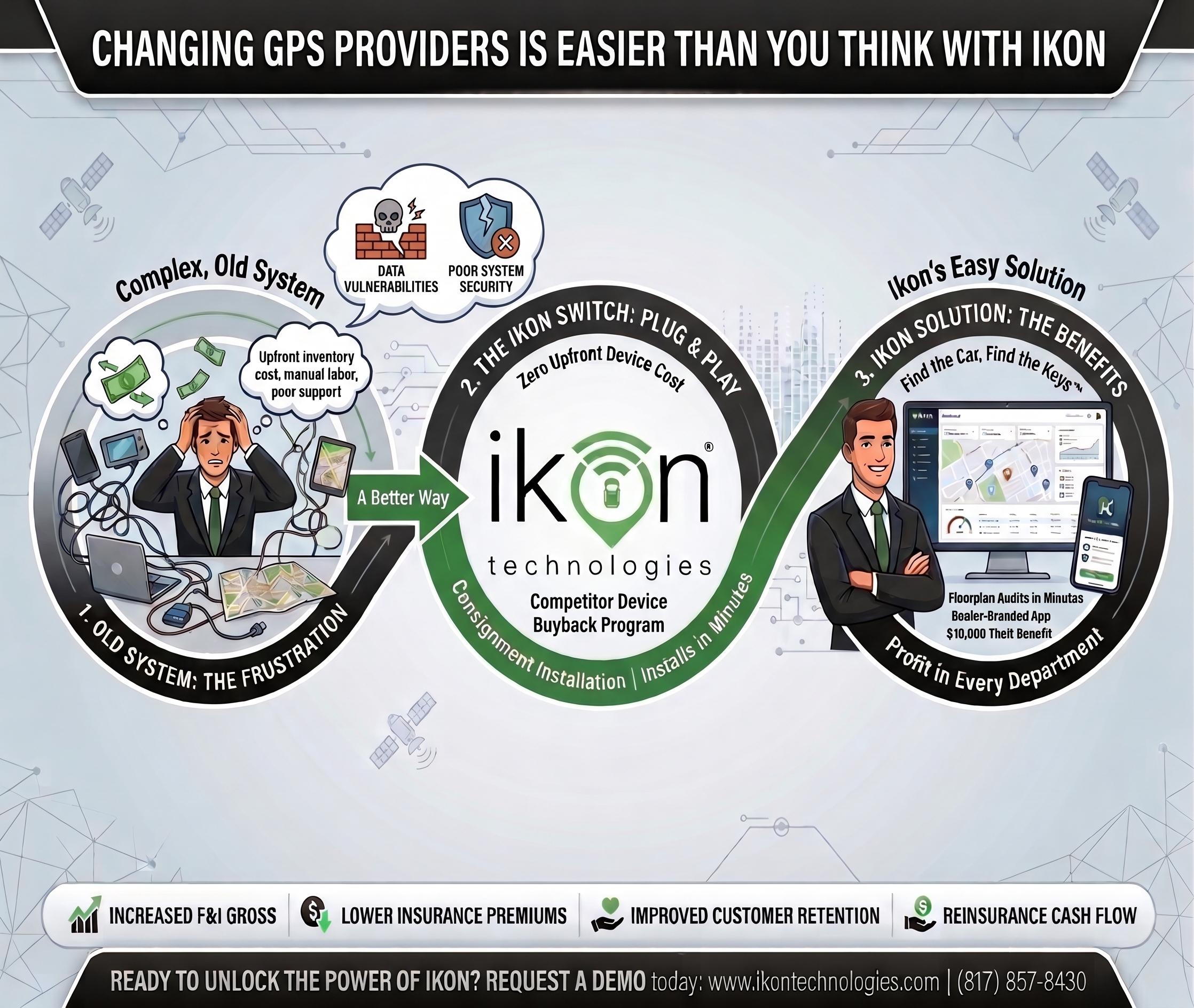
An Ikon Technologies GPS tracker is the installed telematics device that shows a franchise store where a stocked unit sits, signals the moment it moves, and keeps it ready for the next customer.
The hardware is just the entry point, not the product. What a store actually buys are the lot, protection, and retention workflows running behind that device.
Plenty of dealers hear "GPS" and think theft recovery, full stop. But a franchise store gets a lot more out of the signal by looking at the whole vehicle life inside the rooftop, from the day a unit hits the lot to the service relationship years later. The same location feed kills friction long before a theft ever happens. Keep two screens straight in your head: the salesperson in the Ikon Toolbox and the owner on Ikon Connect are solving completely different problems.
The real question for leadership isn't whether the dot moves on a map. It's which department acts on which signal, and whether the program actually moves a number you already track.
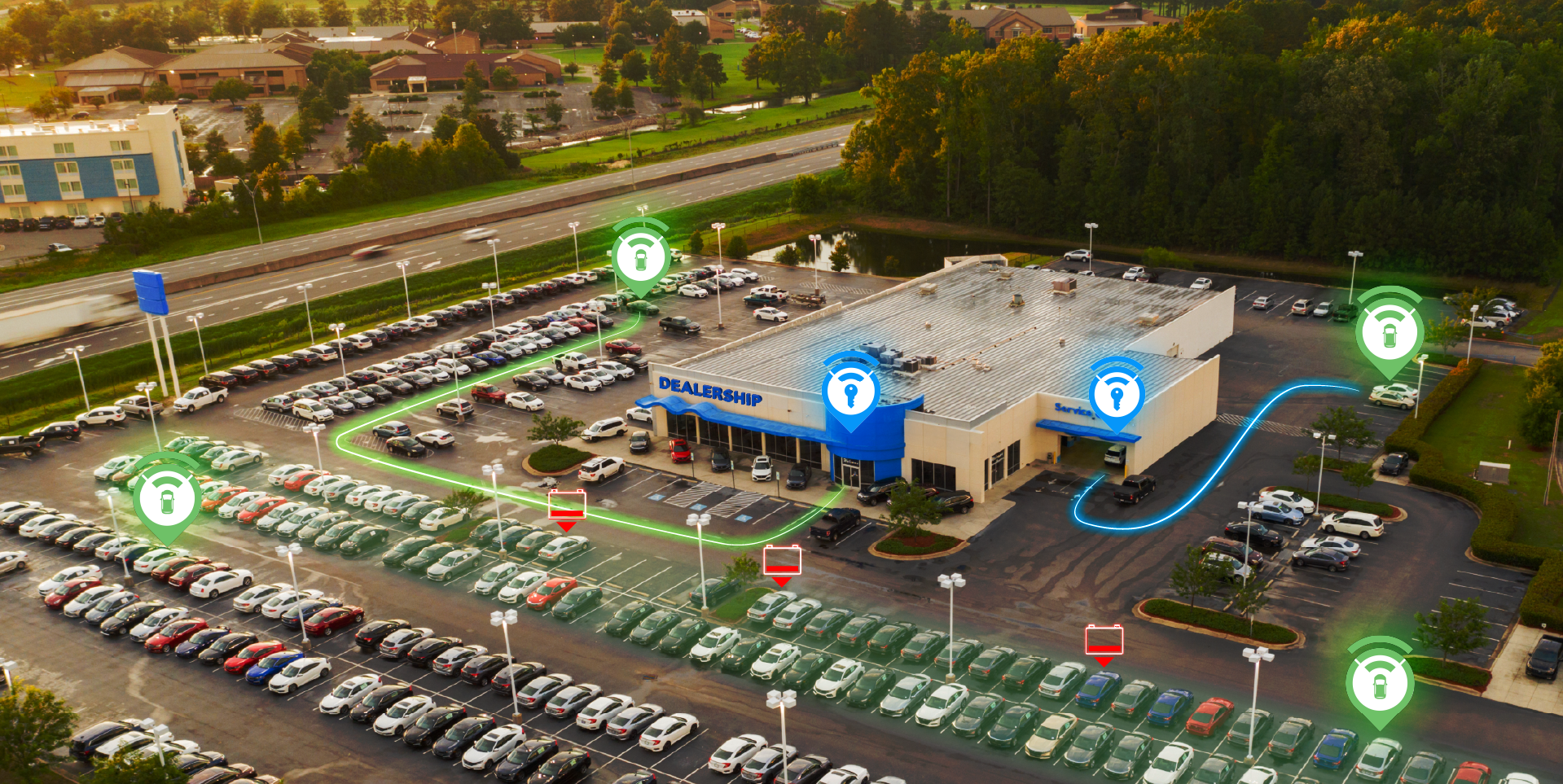
On the lot, an Ikon tracker turns each stocked VIN into a visible asset inside the store's workflow. That one installed device feeds Ikon's lot, recovery, connected-car, and service-retention use cases. It earns its keep before delivery and long after it.
When a unit lands, you need the VIN, the stock record, and the installed device tied together before that car disappears into recon or the back row. Every later action depends on that link, because the team has to trust both the location signal and the vehicle record behind it. Ikon pitches the program as a dealer-built telematics platform, not a generic tracker, and that's the whole point: one device, several jobs.
Treat theft recovery as one workflow, not the reason the device exists. The same installed asset drives Connected Car and Smart Marketing too, so the tracker moves from pure lot control into customer-facing value after the sale. Want the longer view on how the platform was built around lot ops, protection, and retention? The foundation behind the system spells it out. The program breaks into four solution areas:
Ikon helps the sales floor the second it shortens the path from customer interest to a pulled-up vehicle with the right key in hand. Dealer Toolbox hands your users the VIN and stock number, then shows where the car and its key actually are when the handoff matters.
The daily win is delivery speed. When a salesperson can find the vehicle and the fob without sending two porters across the lot, the customer waits less and the deal stays warm. The Toolbox app listing lays out exactly what a dealership user sees: lot location, key location, mileage, stock number, and CARFAX access on the unit. Ikon claims 15 minutes saved per sale in its dealer material. That's the kind of number you test against your own appointment check-in and delivery timestamps, not take on faith.
That same visibility carries into floorplan audits and frontline readiness. An audit moves faster when the system can prove where units are, and a low-battery exception should hit the person who can put the car on a charger before the next test drive, not after a customer is already standing at the bumper. The mechanics of pairing a tagged vehicle with a tracked key are worth a closer look, and Ikon's breakdown of how the workflow plays out on the floor shows where the minutes actually disappear today.
Dealer Toolbox is built for inventory work before the sale. Ikon Connect is the customer-facing app after delivery. The split matters in real life because each user needs a different screen and a different support path.
For the store, the job is physical control: find the unit, find the key, and act when a vehicle moves or sits unready. For the customer, the job is ownership support through Ikon Connect, where the buyer leans on geofences, speed alerts, trip history, battery indicators, and Stolen Mode. When something looks broken, the team has to separate app confusion from device trouble. If a customer can't see current location, check the device connection and known signal blockers first before anyone calls it a recovery failure.
No single dot on a map proves ROI. Leadership has to tie the data to dealership outcomes that show up in a manager meeting and hold up against the store's own baseline.
The signals worth watching are the ones a manager can act on the same day:
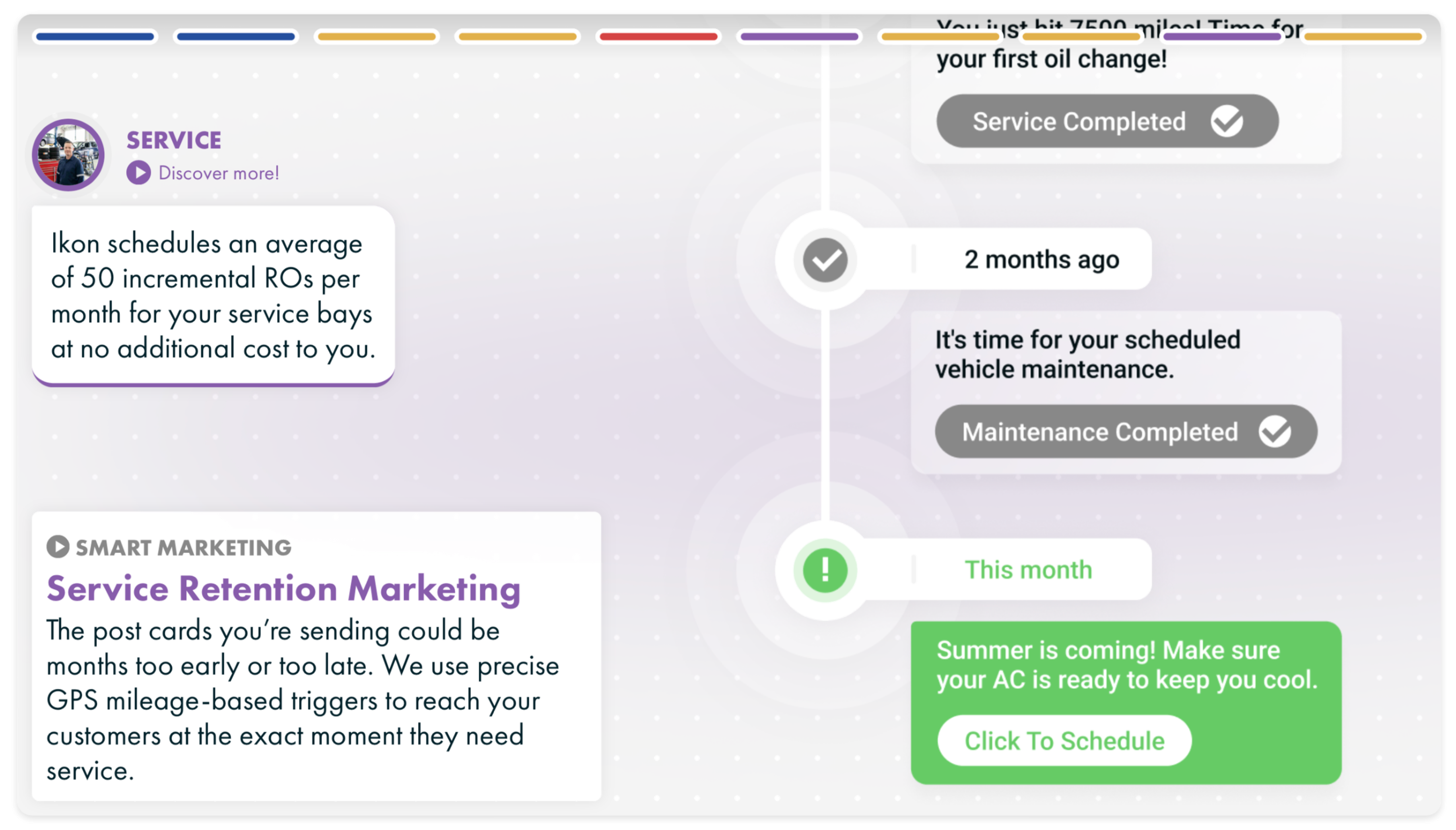
The published dealer numbers are useful as targets, not trophies. Ikon's owner and GM material ties the program to 15 minutes saved per delivery, a 99.8% recovery rate, an 18-minute average recovery, PVR lift, and roughly 50 additional customer-pay ROs a month. Treat those as operating targets you verify in your own store, not audited guarantees. Public research doesn't surface an independent ROI study or a full dealer price sheet, so the honest leadership posture is store-by-store proof.
Ikon links sales to fixed ops by keeping the dealer in the picture after delivery, through the store-branded owner app and mileage-based outreach. The rooftop value runs from inventory control before delivery all the way to the service relationship that follows.
On the sales desk, the payoff reads as less waiting during the test drive and delivery. In F&I, the customer can actually see connected-car value in the app instead of just hearing a product pitch. Service can use authorized mileage signals to time outreach for when the vehicle truly needs work. And for ownership, the real question becomes whether one installed asset earns its keep across more than one department.
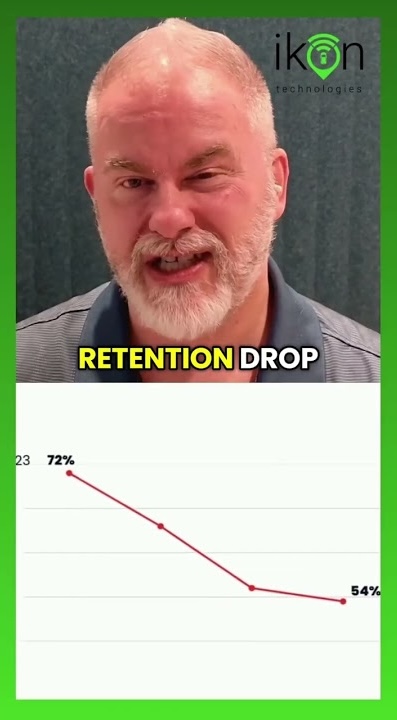
Retention data gives that handoff real weight. Cox Automotive's ownership study puts repurchase likelihood at 74% among buyers who came back for service, against 44% for those who drifted away after delivery. That gap is why dealer-controlled vehicle data belongs in the same conversation as PVR and RO count, a point laid out in Ikon's case for keeping the customer relationship under the rooftop.
What we'd watch: Cox also reports only about a quarter of buyers are introduced to service at purchase, even though most new-car buyers say they intend to service where they bought. A mileage-triggered, dealer-branded reminder is one of the few tools that closes that gap automatically.
Here's the counterintuitive part: an Ikon tracker earns the most when it gets the least attention. Once staff stop hunting for cars, stop explaining missing keys, stop chasing audit proof, and stop guessing at service timing, the rooftop has quietly turned a device into operating discipline.
The strongest case shows up when the same installed asset carries both jobs: pre-sale visibility on the lot and post-sale retention in the service lane. A trusted vehicle signal should change what your managers do each morning, not just what they can pull up on a screen.
Before you roll out or renew, ask each department head for one weekly metric, then review those numbers for the first 60 days. A 60-day scorecard keeps the conversation anchored to dealership outcomes instead of vendor language. If the device can't move a measured workflow in that window, challenge the setup before you blame the hardware.
Ikon offers a $0 upfront device-cost model for dealer programs, built around consignment-style positioning rather than a hardware invoice.
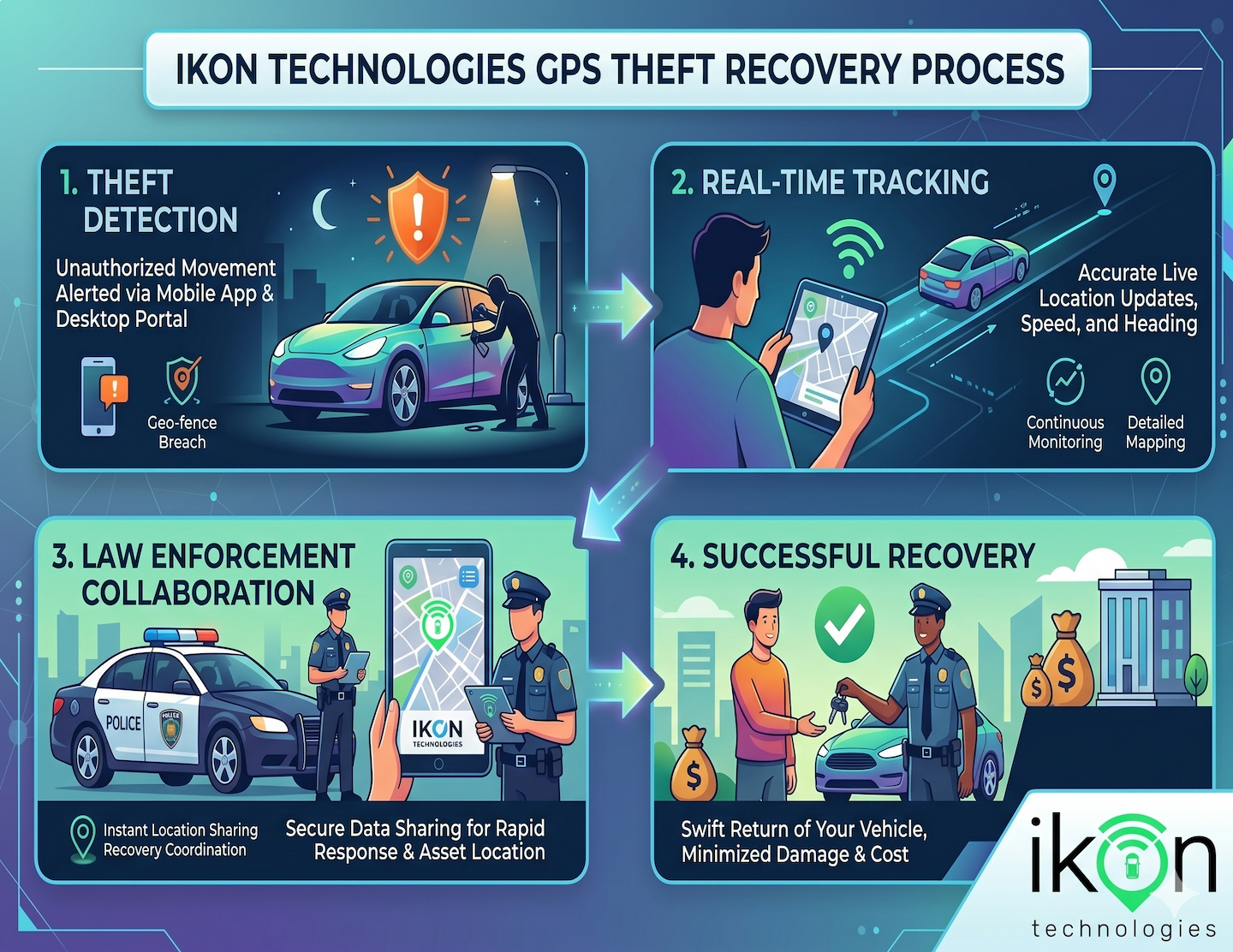
File a police report first, then activate Stolen Mode through the Ikon Connect process. Stolen Mode kicks off the recovery workflow, which can generate a live tracking link for law enforcement. Claim-related steps carry timing requirements, including a 30-day window to file after the date of loss, so move fast.
Ikon services use location-based data when the customer uses connected-vehicle features. The store should explain plainly what the customer gets, how app access works, and which communications or recovery steps may involve the dealer or law enforcement. Treat that disclosure as part of the delivery, not a footnote buried in fine print.
Yes. The dealer workflow pairs vehicle location with key location through Find the Car, Find the Keys. That pairing matters because a warm deal stalls just as fast from a missing fob as from a missing vehicle, and the salesperson stays at the desk instead of walking the lot for a key.
Yes. Smart Marketing is built around GPS-based, mileage-triggered outreach. The practical value is timing: the store reaches the customer when the vehicle is actually near a service need, instead of firing a generic reminder on a calendar guess. That precision is what turns a reminder into a booked appointment under the dealer's brand.

.jpg)



.jpg)