Fixed Ops Retention Playbook

Automotive Service Retention. The Modern Outreach Playbook.

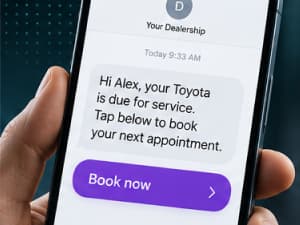
Your reminders are going out - text gets them booked. How franchise dealers send at the right mileage, start a text conversation instead of an email blast, and make service booking take seconds.

The same service reminder, two ways

Automated text
S
Dealership ServiceText conversation
Text message
20.3%average click rate
Can they reply? Yes — questions go straight to your team.

Industry benchmark: Omnisend 2025 data across 27,000+ brands, automated messages on both channels. Illustrative interfaces and conversation; actual results vary.

Executive Summary

The Service Retention Paradox

Dealers wrote more than $164 billion in service and parts in 2025. Yet they now handle 12% fewer service visits than they did in 2018.

Total service visits are going up. Dealers just aren't getting them. Quick lubes and independent shops win on speed and convenience, and they're catching customers earlier than ever, even owners of nearly new vehicles.

For franchise dealers, that's a balance-sheet problem, not just a marketing one.

Service and parts are the steadiest profit in the store, and the customers who keep servicing with you are the ones who buy from you again: 74% of owners who service with their dealer buy their next vehicle there. That's why strong automotive service retention strategies start with outreach.

Email-only Outreach
~2.6%
average email click rate, and open rates you can't trust

Privacy features like Apple Mail Privacy Protection load emails automatically, so many "opens" were never actually read.

→
Text-first outreach
Customers want service updates by text

💬 42% of service customers prefer text, vs. 29% email and 18% phone
🔧 Nearly half want maintenance reminders by text
📈 In automotive, 20–30% of customers reply to texts, on average within about 90 seconds
🔧 12.65% of customers sent a declined-service text reminder opened a repair order within 30 days
↩️ Customers can reply, ask, reschedule or book in the same thread

Part ONE

Where service outreach breaks down

Reminders don't fail because customers don't need service. They fail at four predictable points:

Breakdown #01

The calendar picks the timing

🚨 What happens: Reminders go out every 90–180 days, no matter how much the car was driven.
🔧 Why it hurts: High-mileage drivers are already overdue. Low-mileage drivers learn to ignore you.
✅ The fix: Send when real mileage says the service is due.
Breakdown #02

The email gets buried

🚨 What happens: The reminder lands in a crowded inbox or promotions tab, next to dozens of retail offers.
🔧 Why it hurts: Few emails get clicked, and open rates are inflated, so you can't even tell who saw it.
✅ The fix: Text anything that needs action. Keep email for receipts and service history.
Breakdown #03

The click goes nowhere fast

🚨 What happens: The link opens a long web form: logins, VIN, mileage, contact details.
🔧 Why it hurts: Every extra screen is a chance to quit. At a quick lube there's nothing to book.
✅ The fix: A link that opens already filled in, with the next open time first.
Breakdown #04

Nobody's there to answer

🚨 What happens: Reminders come from "do-not-reply" addresses or one-way blasts.
🔧 Why it hurts: "Can I do Thursday?" or "What does it cost?" is a customer raising their hand. Unanswered, it's a lost RO.
✅ The fix: Two-way text conversations that route replies to your BDC or advisor.
Part TWO

Text conversation vs. email blast

Send the same 30,000-mile reminder both ways and watch what the customer has to do.

Text conversationSent when mileage says it's due
  1. 1Shows up on the lock screen, from your store's number
  2. 2Taps the link. It opens instantly, no app or login
  3. 3Name, vehicle, VIN and mileage are already filled in
  4. 4Books the next open time, or replies "Can I do Thursday?" and your team answers
3–4 taps · two-way · 20–30% typical response in automotive
Email Text conversation
Where it lands A crowded inbox, often the promotions tab The lock screen, next to messages from friends and family
What you can measure Opens (inflated by privacy features) and clicks Replies, bookings and closed repair orders
Can the customer reply? Rarely. Most come from do-not-reply addresses Yes. Questions and reschedules go straight to your team
Path to booking Website, then scheduler, then typing One link, pre-filled, next open time first
Typical click rate 4.7% for automated emails 20.3% for automated texts
Delivery Can land in spam or the promotions tab 98–99% delivered in automotive
What customers prefer 29% prefer email for dealer service updates 42% prefer text; nearly half for maintenance reminders
Rules to follow CAN-SPAM: clear sender and an unsubscribe link TCPA: clear opt-in consent, honor STOP instantly, registered business number

Use text to get action

  • Mileage-based service reminders
  • Recall and check-engine alerts
  • Appointment confirmations and changes
  • "Your car is ready" and quick questions

Sources: Omnisend 2025 email and SMS benchmarks (27,000+ brands); TextUs automotive SMS benchmarks (2025); TEXT2DRIVE survey of 1,000 U.S. service customers (2022). Benchmarks are cross-industry or vendor-reported; your results will vary.

Part Three

8-point retention audit

Before buying new tools, find out where your store is leaking. Click LEAKING or PROTECTED on each control to get your readiness score.

Full diagnostic

Complete the audit to build your diagnostic

Your result updates continuously as you assess the 12 dealership controls.

Recommended next steps

  • Open the first domain and begin assessing your controls.
Part Four

The 4-pillar outreach framework

Right time, right channel, no friction, and proof it worked.

Click on the pillars to discover the "Ikon Way"
01

Send when the car needs it

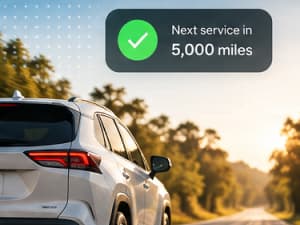
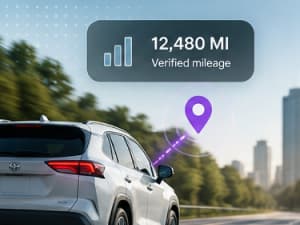
Calendar reminders guess. Mileage-triggered reminders know. With connected telematics for fixed ops, the reminder goes out the day the odometer crosses the service interval.

  • Real odometer readings: Verified mileage from the vehicle, not an estimate from the last visit.
  • OEM intervals: Reminders match the maintenance schedule for that make and model.
  • Urgent alerts first: Recalls and check-engine codes get their own message right away.
  • Fewer, better messages: A few well-timed texts a year beat a monthly blast that trains customers to ignore you.

Same calendar, two drivers

A reminder every 6 months, for a 7,500-mile service interval:

Driver Miles at 6 mo. Calendar text
Low mileage 4,000 Too early
Average 7,000 About right
High mileage 12,000 4,500 mi late

A mileage-triggered text lands at 7,500 miles for all three. (Illustrative example.)

Select a driver to see how calendar timing misses the mileage interval.

02

Start a conversation, not a blast

A text from your store's number invites a reply. That reply is the customer raising their hand. Try it on the phone.

  • Reply-able by design: Every reminder comes from a real local number your team monitors.
  • Replies routed to people: Questions about price, timing or rides go to your BDC or advisor, not a dead inbox.
  • Answer in minutes: Set a reply-time goal during business hours, and track it.
  • Keep it personal: Use the customer's name, vehicle and real mileage. Skip the coupons-for-everyone tone.
What service customers prefer
Phone Call
18%
EMAIL
29%
Text
42%
TEXT2DRIVE survey of 1,000 U.S. service customers, 2022.
SD
Sample Dealership ServiceText message
Hi Jane, your 2023 F-150 just passed 30,420 miles, so its 30,000-mile service is due. Next open time: Wed, Nov 11 at 8:00 AM. Reply 1 to book it, or ask us anything.Reply STOP to opt out

Tap a reply. Prices and times are illustrative.

03

Frictionless booking

Booking should be as easy as pulling into a quick lube. Try both paths on the phone.

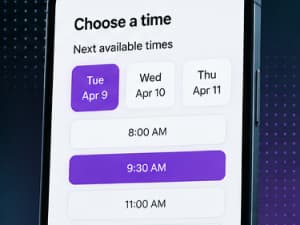
  • Nothing to download, nothing to type: The link opens a mini scheduler already filled in with name, vehicle, VIN and verified mileage.
  • Next open time first: One tap books it. Any other day is one more tap away.
  • Live shop capacity: Times come from your service scheduler (Xtime first), so you never book a slot you can't keep.
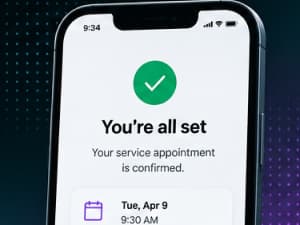
  • Straight onto the schedule: The appointment lands in your scheduler and DMS automatically, and the confirmation comes back in the same text thread.
  • Same flow in the app: Customers who use the Ikon Connect driver app book the same way.
Click to preview messages
SD
Sample Dealership ServiceText message
Hi Jane, your 2023 F-150 just passed 30,420 miles, so its 30,000-mile service is due. Book the next available time now: ikon.link/s/7Hq2xReply STOP to opt out
Estimate the 5-year value in the Service Retention ROI Calculator →
04

Prove it, and stay compliant

Count closed repair orders, not messages sent. And earn the right to text by doing it the right way.

  • Closed-loop attribution: Every booking is matched to the message that started it and the closed customer-pay RO in your DMS, within 24 hours.
  • Stop when they book: Reminders shut off automatically once the appointment is on the schedule.
  • Test and improve: Compare message wording and timing by bookings, not opens.
  • Know your numbers by department: See connected car ROI by department.
Opt-in at delivery
Texting consent is captured clearly and separately, with a record of when and how.
Stop means stop
Opt-outs apply instantly across every rooftop.
Registered number
Business texting runs on a registered number (10DLC) so messages get delivered.
Respectful hours
No texts late at night or early in the morning.
Click to preview messages

Sample attribution report

Campaign Sent Booked Closed CP ROs
30K mileage text 412 96 88
Recall alert 140 51 47
Email newsletter 3,200 18 15

Illustrative numbers. General guidance, not legal advice; review your texting program with counsel.

Select a campaign to inspect its illustrative booking and closed-RO conversion rates.

Mileage to Appointment

Booked in about a minute

How a text-first reminder plays out for one customer, from the moment her truck hits its service mileage.
Swipe through the response timeline
6:00 AM

Mileage verified

Jane's F-150 passes 30,420 miles. Her 30,000-mile service is now due.

9:33 AM

Text sent

A personal text goes out with a link to the next open time.

9:34 AM

Opens pre-filled

No app, no login. Name, vehicle, VIN and mileage are already there.

9:34 AM

Booked

She taps "Book this time" for Wednesday at 8:00 AM.

9:34 AM

On your schedule

The appointment drops into your service scheduler and DMS automatically.

After the visit

Loop closed

The repair order is matched back to the text that booked it, and reminders stop.

Times are illustrative.

Part Five

The financial impact

Plug in your numbers. See what leakage and lot chaos cost you now, and what you get back by fixing them.

Email-only reminders

Repair orders over 5 years
Service revenue in year 5
5-year service revenue

Text-first reminders

Repair orders over 5 years
Service revenue in year 5
5-year service revenue

Next: Service Retention ROI Calculator

Revenue left on the table with email-only outreach

Take these numbers into the Service Retention ROI Calculator for a year-by-year view you can share with your GM and fixed ops team.

Planning estimate using the same attrition-adjusted model as the Service Retention ROI Calculator: each year adds a new group of sold vehicles, discounted for ownership drop-off (95%, 86%, 74%, 58%, 45% by year 5). Results are estimates, not guaranteed revenue.

Action Plan

The 90-day retention rollout

Get consent and your sending number in order first, then move reminders to text, then prove the results. Check items off as your team finishes them.

1
Days 1–30

Get permission and a real number

Phase progress0 / 4 completed
Goal: texting consent on 100% of new deliveries
2
Days 31–60

Move reminders to text

Phase progress0 / 4 completed
Goal: every reminder sent by text first, at the right mileage
3
Days 61–90

Prove it and tune it

Phase progress0 / 3 completed
Goal: every campaign tied to closed repair orders in your DMS