Ikon Connect is a dealer-provided connected-car system, a GPS telematics device hardwired into the vehicle paired with a smartphone app that lets owners track, monitor, and protect their car.
It is activated by the selling dealership at the point of sale, not bought direct from Ikon by consumers.
That gating matters because the app is dealer-branded, not OEM-branded. Roughly 67% of buyers opt in at participating franchise dealers, and with two-thirds of owners now keeping cars for five years or more, the post-sale touchpoint becomes the bridge between the showroom and the service drive.
Ikon Connect is a dealer-provided connected-car system built around two pieces, a GPS telematics unit hardwired into the vehicle on the dealer lot, and the Ikon Connect app on the owner's phone. The selling dealership installs the hardware, provisions the account, and hands the buyer login credentials at delivery.
That structure is what separates it from FordPass, MyChevrolet, or the Toyota app. OEM apps tie the owner to the manufacturer; Ikon Connect ties the owner to the local dealer, with the dealer's logo on the interface, the dealer's service department one tap away, and the dealer's current inventory surfaced in-app. Consumers cannot self-subscribe — the dealer must be enrolled in the Ikon program first. The platform crossed the 1,000,000 vehicles protected milestone in December 2025, which gives a sense of the install base sitting under participating franchise stores. The full eligibility logic is laid out in the consumer FAQ on Ikon Connect.
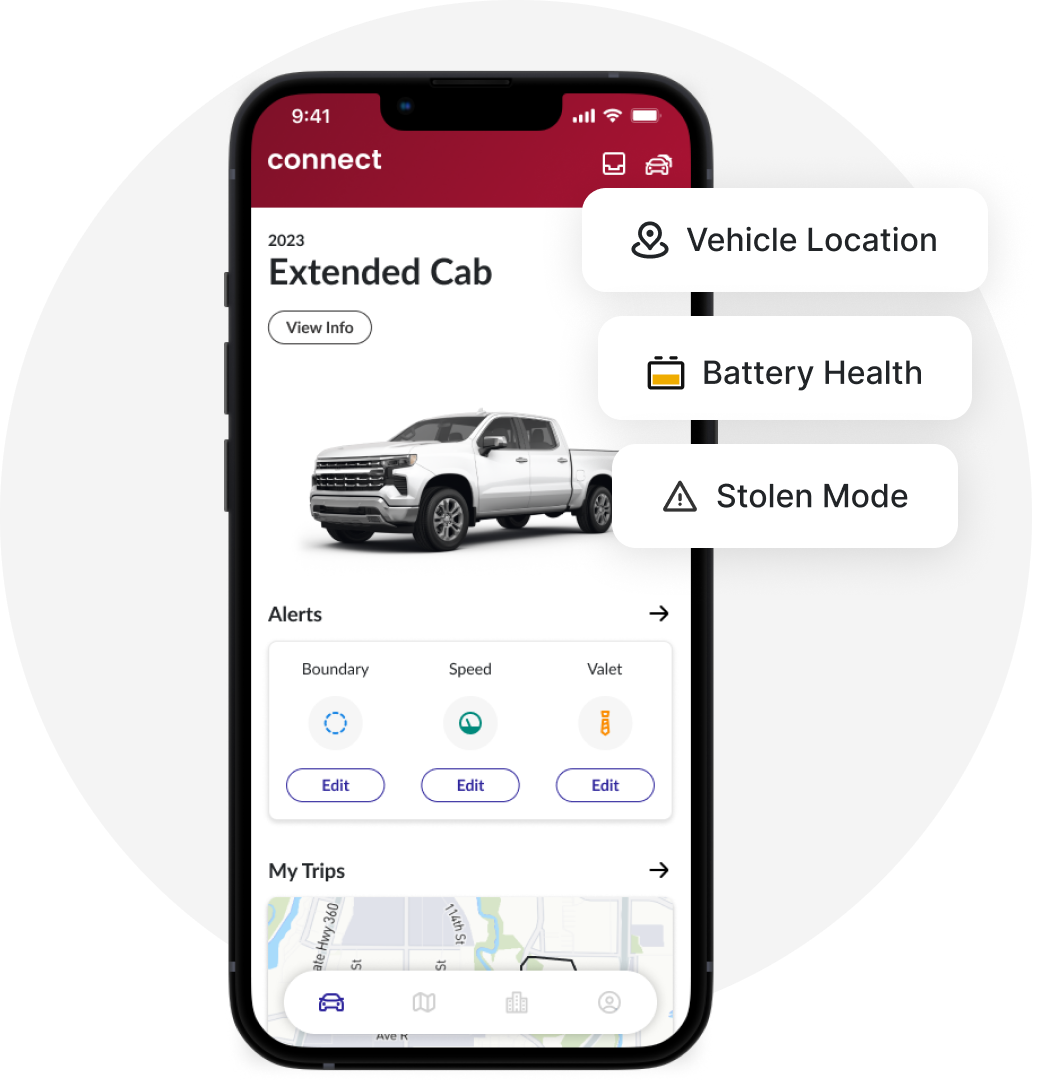
The owner-facing feature stack lives entirely on the smartphone. Once the dealer registers the VIN and the buyer logs in, the app delivers a tight set of tools built around real-time GPS, geofencing, and dealer service access.
Many dealers include their current lot inventory and promotions inside the app, keeping the showroom in front of the customer between visits.
If the car is stolen, the owner opens the app and activates Stolen Mode, which pings Ikon's 24/7 recovery team and starts law-enforcement coordination. Ikon reports a 99.7% recovery rate with an average recovery time of roughly 18 minutes, backed by a $10,000 theft warranty if the vehicle isn't recovered inside the eligibility window.
The speed comes from the GPS unit transmitting continuously; recovery doesn't depend on the owner pinpointing the car. For context, the NICB logged 1,020,729 vehicles stolen in the U.S. in 2023, and roughly four in ten stolen vehicles are taken from dealer lots, which is why Ikon also carries a separate dealer-side theft warranty that pays your actual insurance deductible up to $10,000.
Ikon Connect is not a retail product. Availability is gated entirely by whether the selling dealership runs the Ikon program, and there's no path for an individual to buy or self-activate the service.
The activation chain runs in one direction: the dealer enrolls with Ikon, installs the telematics unit on a lot vehicle, registers the buyer's VIN to its account at sale, and the buyer then downloads the app and logs in with credentials provisioned by the store. Login problems almost always trace back to the dealer side — account not set up, VIN not yet registered, paperwork stuck in finance. If the buyer's dealer isn't an Ikon partner, the app simply isn't available, and there's no consumer workaround. The business logic is documented in Ikon's own explainer on dealer-built telematics for franchise stores. Practical takeaway: for activation issues, login resets, or program-status questions, the call goes to the selling dealership, not to Ikon.
There's no published consumer MSRP because the price is bundled into the vehicle deal at the dealership. Packaging varies — sometimes a one-time fee, sometimes a multi-year term, often rolled into financing. On the dealer side, Ikon Connect adds an average of $323 in profit per vehicle retailed, and roughly 67% of buyers opt in at participating franchise stores.
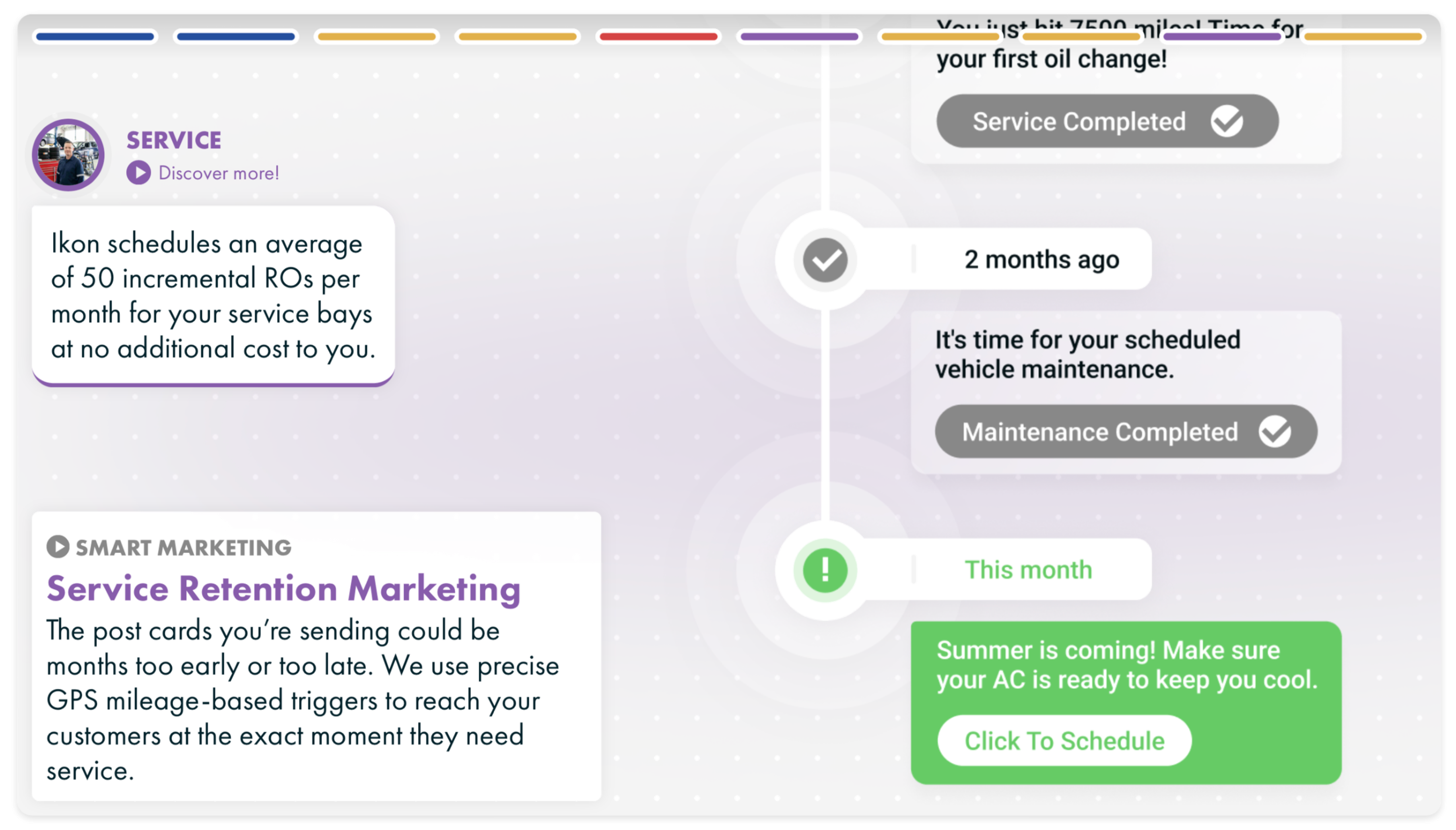
On insurance, anti-theft device discounts typically run 5% to 15% off the comprehensive portion of the premium, according to InsurancePanda. The discount isn't automatic; the driver has to submit device documentation to the carrier, and the actual figure depends on insurer and state. The retention angle is where the value gets quieter but heavier: mileage-triggered service reminders branded with the dealer's logo pull customers back into the service bay. Average dealer service-and-parts revenue hit $9.23 million in 2025, up 33% from 2017, even as dealer share of total service visits slipped from 33% to 29%.
The structural split is simple: OEM apps connect the owner to the automaker, Ikon Connect connects the owner to the selling dealer. Some features may overlap; ownership of the relationship does not.
An OEM app like FordPass or MyChevrolet talks to the factory telematics module — climate pre-conditioning, charging status, recall notices, OTA updates where supported, and brand-locked push messaging. Ikon Connect runs on a separate aftermarket GPS unit installed by the dealer, with a dealer-branded UI, dealer service reminders, dealer inventory promos, and dealer-controlled communications. Both can run on the same vehicle at the same time. The reason dealers adopt Ikon despite the OEM app already existing comes down to data: manufacturers don't usually share customer telemetry with the store, and OEM service prompts route to the factory app, not the local service drive. Ikon's pitch as dealer-built telematics, by dealers for dealers, is built around recovering that lost touchpoint. Driver-side: lean on the OEM app for vehicle-system depth, lean on Ikon for theft recovery and the dealer service workflow.
The real value of Ikon Connect sits at the intersection of two things owners actually use: serious theft-recovery muscle (99.8% recovery, ~18-minute average, $10K warranty) and a frictionless line back to the selling dealer's service department. It isn't a generic GPS tracker, and the operating leverage comes entirely from the dealer's enrollment in the program.
The dealership initiates activation at the point of sale; the buyer then downloads the Ikon Connect app from the App Store or Google Play and logs in with credentials tied to the VIN. Activation must happen within 24 hours of vehicle purchase to keep the theft warranty in force. If no credentials arrived, the selling dealer's service or finance department is the right contact.
There is no consumer workaround. Ikon is dealer-provisioned only and cannot be purchased directly by an individual owner. The vehicle would need an Ikon-enrolled dealer to install the hardware and provision the account. One option worth asking about: whether a different participating dealer in the network can retrofit, though the vast majority of installs happen at the original sale.
Potentially yes. Industry-standard anti-theft device discounts run roughly 5% to 15% off the comprehensive portion of the premium according to InsurancePanda, and Ikon markets the upper end of that range. The discount isn't automatic — the driver has to submit device documentation to the insurer, and the actual amount varies by carrier and state.
Open the Ikon Connect app and activate Stolen Mode immediately. Then file a police report, which is required to trigger the warranty and recovery protocol. From there, Ikon's 24/7 recovery team coordinates with law enforcement using the live GPS feed. Reported outcomes: an average recovery time of about 18 minutes and a 99.8% recovery rate.
The device transmits GPS continuously by design, which is what makes recovery and geofencing work in the first place. The owner sees the data through the app, but the dealer loses access the moment the vehicle is sold to the consumer. The privacy posture is set by the dealer's enrollment agreement and Ikon's terms; opting out generally means uninstalling the unit, which forfeits the theft warranty and recovery service.
No. OEM apps like FordPass, MyChevrolet, and the Toyota app connect to factory telematics and the manufacturer. Ikon Connect runs on a separate dealer-installed GPS unit and connects to the selling dealership. Both can run on the same vehicle simultaneously and serve different purposes — OEM for vehicle systems like climate or recalls, Ikon for theft recovery and the dealer service workflow.



.jpg)





.jpg)