The Ikon Blog
The Economics of Dealer Service Defection: How Telematics-Driven Retention Reclaims the Service Lane

The modern franchise automotive industry is experiencing a profound structural realignment. As new-vehicle sales flatten and front-end margins face intense pressure, a dealership's long-term financial viability is increasingly dictated by its fixed operations and service department absorption rates.
Fixed operations have emerged as the primary engine of dealership profitability, accounting for nearly 49% of overall dealer profits. Yet, precisely as fixed ops revenue has become critical, dealerships are facing an unprecedented threat: a steady and accelerating rise in dealer service defection.
Dealer service defection—defined as the migration of post-purchase customers to independent repair facilities and national maintenance chains—is eroding the foundational revenue of franchise networks. Industry data from the 2026 Cox Automotive Fixed Operations and Ownership Study reveals a troubling paradox: while average dealership parts and service revenue reached a record $9.23 million in 2025 (representing a 33% expansion over an eight-year period), the actual dealer market share of customer service visits dropped from 33% to 29%. Dealerships are capturing higher average spend per repair order due to increasingly expensive vehicle technology, but they are simultaneously losing their customer base to an expanding network of independent competitors.
To survive this market shift, dealerships must dismantle legacy, calendar-estimated service marketing and transition to real-time, telematics-enabled retention strategies. Platforms like Ikon Smart Marketing offer a direct path to reversing service defection by utilizing actual vehicle data to build lasting customer relationships and maximize lifetime value.
Understanding the mechanism of dealer service defection requires analyzing both operational friction and consumer psychology. A primary driver of customer drift is a deeply ingrained consumer misperception regarding service pricing.Many car buyers assume that franchise dealership service lanes are significantly more expensive than general repair shops. However, real-world transaction data reveals that the average spend per service visit at a dealership is $261, compared to $275 at independent general repair shops. Despite this competitive pricing reality, dealerships are failing to communicate their value proposition, allowing independent shops to capture the market.
This communication gap is worsened by rapid market expansion among independent competitors. The number of active independent auto mechanic businesses in the United States has risen to nearly 299,000—a 12% increase since 2018—while independent and original equipment manufacturer (OEM) mobile service fleets have introduced a new tier of convenience-driven competition. This proliferation of localized repair options has contributed to a decline in dealership Net Promoter Scores (NPS), which have recently dropped below 50, indicating that fewer consumers are willing to recommend dealership service departments to others.
Compounding this challenge is the "First-Appointment Gap". While 80% of new-vehicle buyers express an active intention to return to the selling dealership for maintenance, only 25% are introduced to the service department during the vehicle delivery process, and only 23% to 25% have their first service appointment scheduled at the time of purchase.This represents a massive drop-off in early-stage engagement, leaving the customer vulnerable to competitor acquisition.
Securing the first service visit is a critical operational tipping point: once a customer completes their initial maintenance at a dealership, 89% consider returning for future needs. Conversely, if a customer defects to an independent shop for their first visit, only 20% will ever consider returning to the dealership service lane.
The financial consequences of dealer service defection are far-reaching, impacting multiple departments across the dealership. When a dealership fails to retain a service customer, the loss is not merely the margin of a single oil change or tire rotation; it is the erosion of the customer's entire lifetime value. Industry calculations indicate that letting a customer defect represents an estimated loss of more than $12,000 in potential lifetime service spend per vehicle. On a micro-operational level, missing just one routine oil change appointment per day can cost a dealership over $1,700 per month in lost parts and labor revenue.
Furthermore, service defection rates vary significantly based on vehicle drivetrain type, meaning that dealerships must tailor their retention strategies accordingly. Internal combustion engine (ICE) vehicles present the highest defection rates, with dealerships capturing a mere 28% of their service visits. In contrast, hybrid vehicle owners prefer dealerships for 50% of their visits, and electric vehicle (EV) owners remain highly reliant on franchise dealer networks, accounting for a 67% share of service visits. EV service visits represent a highly lucrative segment, averaging a substantial $417 in out-of-pocket spend per visit due to complex diagnostic and technical requirements.
As the national vehicle fleet ages, the cost of defection climbs even higher. During the first five years of vehicle ownership, the average maintenance cost per mile is approximately $0.20. However, after ten years of ownership, this figure jumps to $1.10 per mile.
With nearly two-thirds of modern consumers owning their vehicles for five years or more (up from 54% in 2024), the window for high-value repairs is stretching longer than ever. If a dealership allows a customer to defect during the early years of ownership, they miss out on the most profitable phase of the vehicle's maintenance lifecycle.
This loss is magnified by customer acquisition economics: acquiring a new service customer can cost up to five times more than retaining an existing one. Conversely, a modest 5% increase in automotive service retention can boost overall dealership profits by 25% to 95%, underscoring the high return on investment of targeted retention strategies.
A dealership's service lane is not merely a repair facility; it is the primary pipeline for future vehicle sales and pre-owned inventory acquisition. Service retention directly fuels showroom sales velocity. Customers who consistently return to the selling dealer for vehicle service are 30 percentage points more likely to repurchase their next vehicle from that same dealership. Furthermore, 88% of consumers state that their experience in the service lane directly impacts their likelihood of buying another vehicle from that specific retailer.
This connection is highly visible in the national automotive landscape. The 2026 Automotive Brand Retention and Defection Report highlights a modest 43.9% national brand retention rate, with only 17 automotive brands successfully growing their year-over-year customer retention. Dealerships that protect their service base are far better positioned to beat these national averages, turning routine service visits into consistent repurchase opportunities.
Additionally, the service lane serves as an invaluable, cost-effective source for high-quality pre-owned inventory. Industry statistics indicate that consumers begin contemplating trading in their vehicle rather than paying for a repair when the estimated cost of service reaches approximately $3,195. Despite this trade-in trigger, only 14% of service customers report ever being offered a trade-in valuation during a maintenance visit, even though 33% of those customers express high interest in having those conversations.
By establishing a structured vehicle acquisition process in the service drive, dealerships can acquire high-demand, well-maintained pre-owned inventory directly from their own customer database, bypassing expensive wholesale auctions and generating significant front-end gross profit.
To combat service defection, dealerships must adopt the operational habits of high-performing retailers who treat the service department as an integrated strategic unit. High-performing dealerships utilize their service bays at 90% capacity or more, and 58% of them ensure their parts and service technology is fully integrated with the rest of the dealership's core software.
These top performers build trust through visual proof. Utilizing photos and videos of recommended repairs during digital vehicle inspections yields a 53% increase in consumer trust and 45% higher customer engagement. Customers who receive photo or video evidence spend an average of $230 more per repair order, with 49% of consumers stating that visual confirmation made them significantly more likely to approve recommended services.
Dealerships must also adapt to the shifting behavioral patterns of younger consumers, particularly Generation Z. While Gen Z exhibits strong baseline loyalty, they manage relationships very differently than older generations. Forty percent of Gen Z customers prefer scheduling their vehicle service online rather than calling the dealership, and they rely heavily on online reviews to guide their service decisions.
To capture this demographic, dealerships must eliminate manual, friction-filled outbound calling campaigns and transition to automated, digital-first communication channels.
Traditional service marketing is plagued by timing inaccuracies. Direct mail postcards and automated calendar-based emails are typically triggered by estimated mileage models that fail to match real-world driving habits. Consequently, service reminders often arrive months too early or weeks too late, resulting in wasted marketing budgets and missed service opportunities.
Ikon Technologies, founded by seasoned automotive dealers, developed Ikon Smart Marketing to solve this structural inefficiency. Ikon Smart Marketing is an automated service retention platform that replaces estimated outreach with real-time telematics data. By tracking actual vehicle mileage via GPS, the platform eliminates the guesswork from retention marketing.
The Ikon Smart Marketing system executes this automated retention process through a seamless, friction-free customer journey:
This telematics-driven approach delivers outstanding results. Dealerships utilizing Ikon Smart Marketing see an average campaign response rate of 32.7% and secure an average of 50+ incremental, customer-pay repair orders per month in their service bays.
Additionally, by maintaining a continuous, high-value connection with the customer, dealerships achieve a 74% higher repurchase rate for new cars, demonstrating how service loyalty directly drives showroom velocity.
Ikon Technologies offers more than just a marketing tool; it provides an integrated platform that connects sales, finance, and fixed operations. Legacy dealership software often struggles with integration, requiring manual data entries that create operational bottlenecks. Ikon's platform sits on top of existing DMS and CRM systems via live API connections, bypassing legacy software limitations and creating a unified customer database.
This platform integration begins in the showroom and F&I office, where dealerships can leverage Ikon’s consignment business model. Unlike traditional telematics providers that charge heavy upfront hardware and software fees, Ikon consigns its hardware to the dealership at no cost, only generating revenue when a vehicle is sold.
F&I departments can package Ikon's Connected Car program as a lifetime connected vehicle service with no ongoing monthly subscription fees. This model overcomes a common consumer objection to subscription services, allowing F&I managers to easily secure non-cancellable pre-packaged retail (PVR) margins, adding an average of $300 to $323 in front-end gross profit to every deal.
The consumer receives high-value connected car technology, including real-time location services, geofencing alerts, and a dealer-branded mobile app that puts the dealership's brand in front of the customer every single day. The app also includes a robust theft recovery service featuring a $10,000 theft benefit.
For the dealership, this connected app acts as a permanent marketing channel. Meanwhile, the sales team can utilize the lot management features to track inventory, run battery health reports, and locate vehicles and key fobs instantly via the "Find the Car, Find the Keys" technology, shaving an average of 15 to 45 minutes off the sales cycle and preventing dead-battery disasters on test drives.
Furthermore, Ikon's GPS tracking reduces dealership floorplan audit times by 56% and provides rapid theft recovery, maintaining a 99.8% recovery rate in an average of 18 minutes.
To successfully combat dealer service defection and drive fixed operations absorption, dealership executives and general managers should implement the following strategic steps:
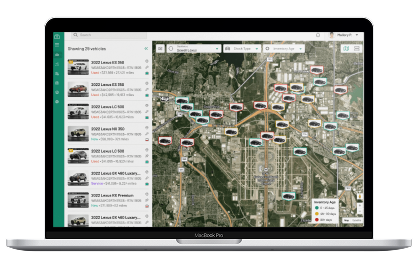
Master your lot. Locate cars and keys effortlessly to accelerate sales, check battery levels, run audit reports, view lot aging, all with no upfront device costs. We only make money when you do.
Ikon Lot Management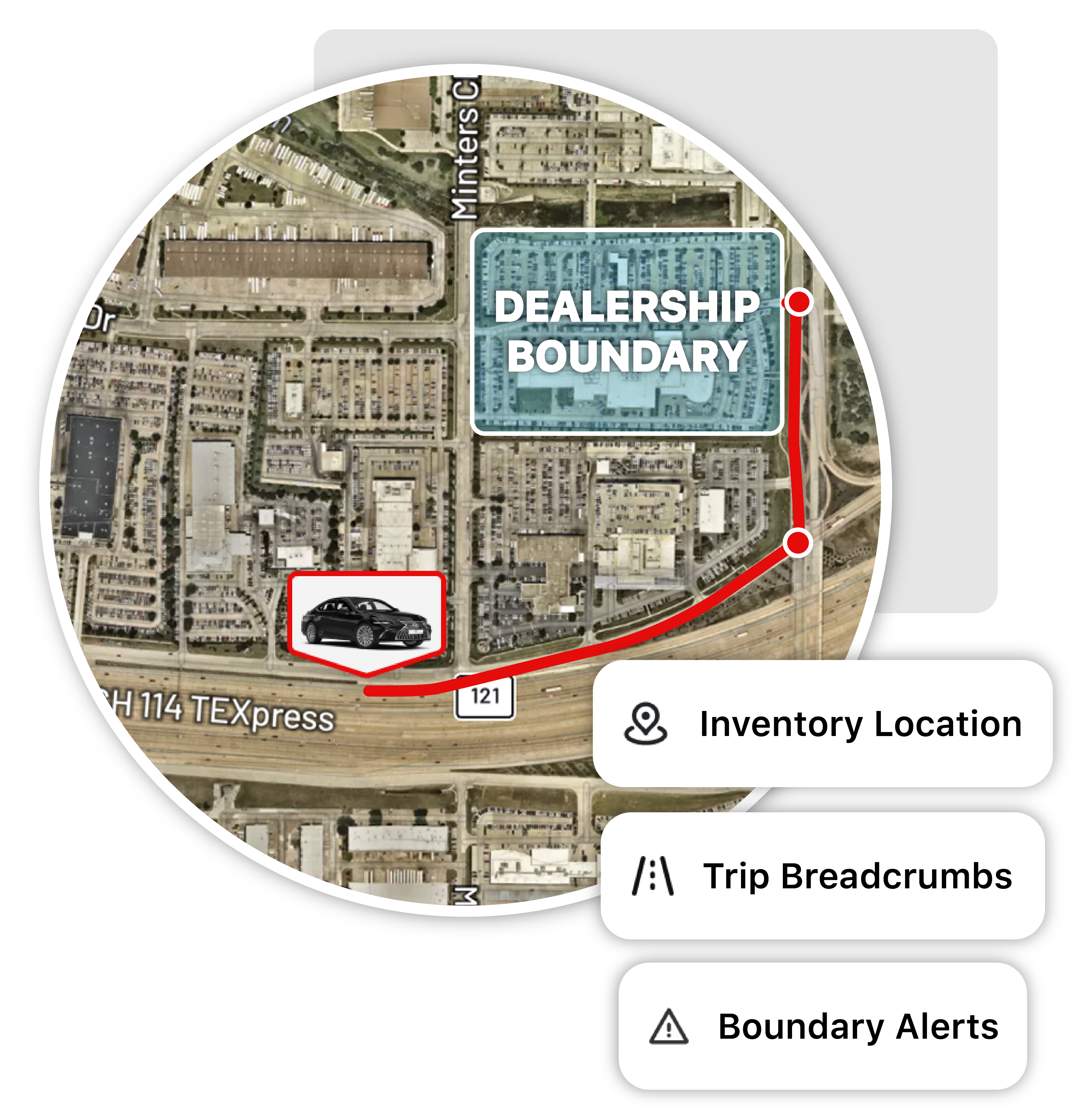
Stop inventory loss with near-real-time GPS tracking designed for rapid recovery. Ikon’s active theft recovery helps you secure your lot and lowers insurance premiums and deductibles.
Ikon Theft Recovery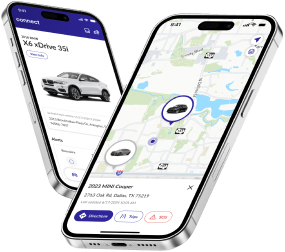
Get an avg. $323 PVR uplift by selling customers peace of mind and theft recovery featuring a $10,000 theft benefit. Your dealer-branded app keeps them connected to you, not the OEM.
Ikon Connected Car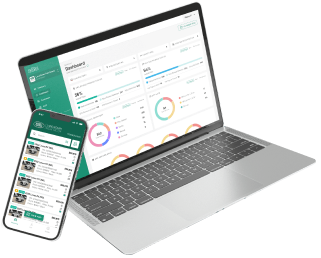
Maximize service retention and increase ROs with our mileage-triggered, automated text campaigns. We text customers at exactly the right time, driving them to your service scheduler.
Ikon Smart Marketing.jpg)





.jpg)