Ikon vehicle tracking earns its keep in daily lot decisions long before any theft event happens.
The platform's real value is faster answers on missing units and overdue loaners, plus a heads-up the moment something leaves the lot without authorization. That operational core matters more than any single feature list.
Used-vehicle days'-supply hit a multi-year low in early 2026, so every unit sitting idle, dead-battery, or unaccounted for costs more in carrying interest than it did two years ago. Ikon vehicle tracking works because it routes that urgency to the desk that can act on it, whether that's the used-car manager chasing a missing unit, the service coordinator tracking a loaner, or whoever's closing the floorplan audit. It pays off fastest when it connects sales, lot ops, and fixed ops into one feed, rather than sitting off to the side as a standalone security tool.
Four teams touch the same GPS feed for four different reasons, and the alert that matters to one department is background noise to another.
A missing-unit alert flags the last known GPS location and time stamp the moment a car falls outside its assigned lot zone, so the used-car manager can send a porter before the unit shows up as a discrepancy on a lender's audit.
Carrying cost is why this matters more than it used to. Used-vehicle days'-supply fell to 37 days in March 2026, the tightest reading since 2021, according to Cox Automotive's inventory tracking. A unit that can't be located for a same-day showing, or that sat behind the body shop for three days, burns floorplan interest the whole time nobody could find it.
Lenders build recurring physical audits into every credit line to catch that same books-versus-lot gap, and failing one can trigger a reduced credit line or an outright cut-off. Ikon vehicle tracking turns that audit from a walked lot count into a pulled report, the same discipline behind how top-performing stores run their lot. Selling a financed unit without paying off the lender, known in the trade as selling out of trust, is treated as theft or fraud in many states, and that same location log keeps the conversation from escalating.
Lost-key math: the average dealership misplaces about five keys a month across sales and service at roughly $350 to replace each one, close to $21,000 a year nobody budgets for separately.
The same feed splits into four separate action lists, each owned by a different desk.
A loaner with a live location and mileage feed lets the service coordinator confirm it's inside the agreed radius and mileage limit without a phone call, and flag it the moment it isn't.
Fixed operations now generates more than half of a typical dealership's gross profit, which puts loaner oversight squarely on the service desk, well before it turns into a security issue. Turning a loaner around inside three days of the RO closing protects that math; every extra day it sits with a customer already back in their own car is a day it isn't earning its keep. Our loaner-fleet playbook covers the mileage-limit and return-window mechanics behind that discipline.
Unauthorized or unmonitored demo and loaner use is also a disproportionate driver of dealership insurance losses. An estimated 70 to 80% of garage liability payouts trace back to sales demonstrators, and a demo is estimated to cost more than $600 a month in combined risk and depreciation exposure once it drifts out of position. A geofence and mileage record gives the service manager grounds to raise that before it becomes a claim.
A geofence trip is a lot-ops decision the used-car manager or GM handles internally within minutes, while a theft-recovery event moves the same vehicle into a law-enforcement workflow with a dedicated recovery team.
Nationally, vehicle theft is falling. Reported thefts dropped 23% in 2025 to roughly 659,880 vehicles, on top of a 17% drop in 2024, according to the National Insurance Crime Bureau. That decline changes what a typical alert usually represents today: a staff move off-plan or an extended test drive, more often than a theft in progress.
Catalytic converter theft is the exception worth naming honestly, since the numbers move depending on who's counting: insurance-claim data put thefts at roughly 14,000 in 2024, while field-report estimates put losses above 137,000 converters in 2025. No neutral body tracks dealership-lot theft rates specifically, so treat either figure as directional. Both agree that high-clearance trucks and SUVs sitting in rows overnight remain the concentrated target, exactly what an overnight geofence alert watches for.
A genuinely missing unit escalates into a different workflow entirely. Our stolen-vehicle recovery breakdown covers what a real program includes before you need one.
A battery-readiness alert catches a weak vehicle battery overnight, before a porter pulls the unit up front for a customer already walking across the lot.
A car that won't start during a walkaround costs more than the fifteen minutes it takes to jump it. It costs the momentum of the appointment, and on a lot carrying units longer than it used to under tighter days'-supply, a no-start moment on a unit that should have been front-line ready is an unforced error. Ikon vehicle tracking flags weak batteries against the tracking hardware's own power draw, so the morning lot check becomes a five-minute review of a flagged list instead of a walk-and-hope.
The porter or lot attendant working that list before opening usually catches the problem hours before a salesperson needs the car. The alert only pays off if it reaches someone holding a key, not a dashboard nobody opens until Monday.
A live location on every unit lets a delivery coordinator confirm a car is staged and ready before a customer arrives, and lets a dealer-trade desk track a swapped unit the moment it leaves another rooftop's lot.
Most franchise operators aren't running a ten-rooftop logistics network; they're coordinating one lot, one service drive, and a handful of trades with nearby stores. The data doesn't need to solve enterprise fleet routing. It needs to answer one question fast: is the traded-in unit actually on its way, or still sitting on someone else's lot waiting on a driver. A feed that updates in transit turns that from a phone-tag exercise into a two-minute check before promising a delivery window.
Lot-management tracking runs before the sale and stays under the dealership's control, theft-recovery response activates only once a unit is confirmed missing, and connected-car features hand the same hardware to the customer after delivery.
Factory connected apps only start working once a customer buys and registers the car. That leaves the entire pre-sale period uncovered by design: no floorplan audit support, no key tracking, no lot-location visibility. That gap is exactly where lot-management tracking lives, and it's why a program built for the rooftop hands off cleanly to a customer-facing app once the sale closes. Treat Ikon vehicle tracking as a standalone security box that only the GM checks, and a store loses most of the value it was built to deliver.
The use cases above share one condition that decides whether any of them work: an alert has to land on a desk actually accountable for the decision it implies. A missing-unit flag that only the GM sees on a Friday recap does nothing for the porter who could have found the car Tuesday morning. A geofence exit that fires into an inbox nobody checks overnight just proves the store knew and didn't act.
That's the real dividing line between a busy franchise store getting value out of Ikon vehicle tracking and one treating it as a line item. The stores getting the most out of it route missing-unit alerts to the used-car manager, loaner alerts to the service coordinator, and audit exports to accounting the same day they fire, ahead of any weekly review cycle.
Concrete next step: pull last month's alert log and check how many alerts actually reached the person who could act on them within the same shift. That single audit tells you more about the program than any recovery-rate statistic.
No, it works alongside cameras and gates. It just covers a different job: it follows the vehicle once it's already moved, exactly the gap that matters once a unit leaves the property or gets misplaced on a large lot.
A loaner geofence is drawn around the customer's likely travel radius and a mileage cap, not the dealership's property line. A lot geofence sits tight around the store's own inventory rows, so an exit from one triggers a completely different response than an exit from the other.
The tracking feed keeps reporting location regardless of state lines, so both the receiving store and the trading store see the same transit progress. That visibility matters most when a trade runs long, since it replaces a round of phone calls with a shared, real-time answer.
Yes, a timestamped location export can support a dealer's side of an audit disagreement with a floorplan lender. It won't override title and financing records, but it gives the office manager a documented answer for where a VIN was and when, usually the actual point of contention.
Yes, but it shifts to a different app and purpose. Ownership-facing features like trip history and stolen-vehicle alerts continue under the dealer's own branded app, while the pre-sale lot-management data tied to inventory control stops applying once the vehicle is no longer dealership stock.
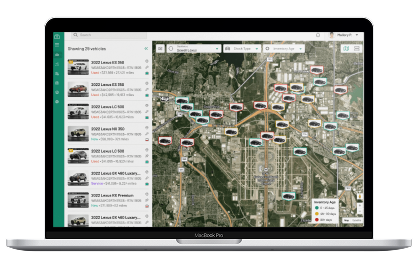
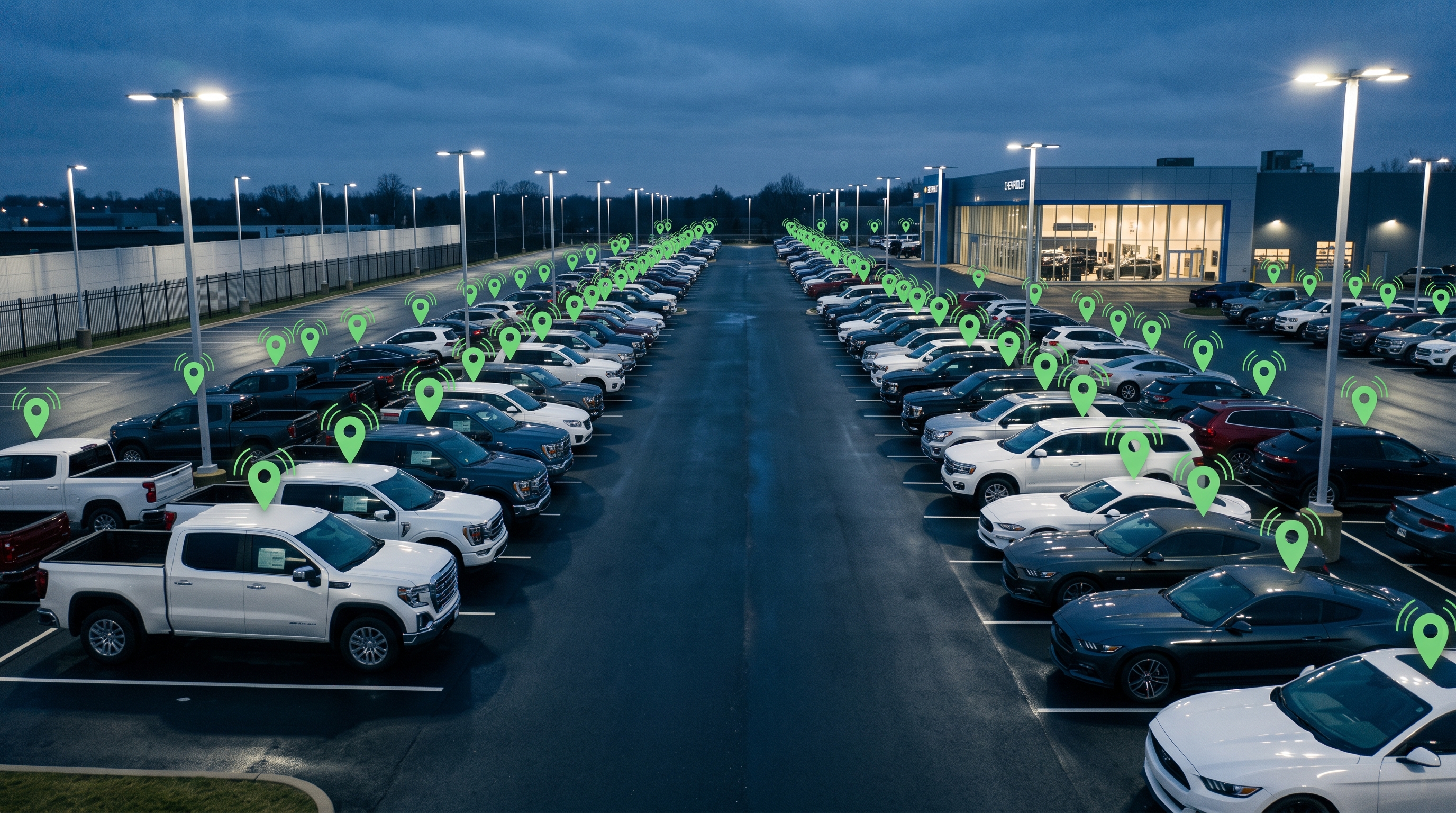
Master your lot. Locate cars and keys effortlessly to accelerate sales, check battery levels, run audit reports, view lot aging, all with no upfront device costs. We only make money when you do.
Ikon Lot Management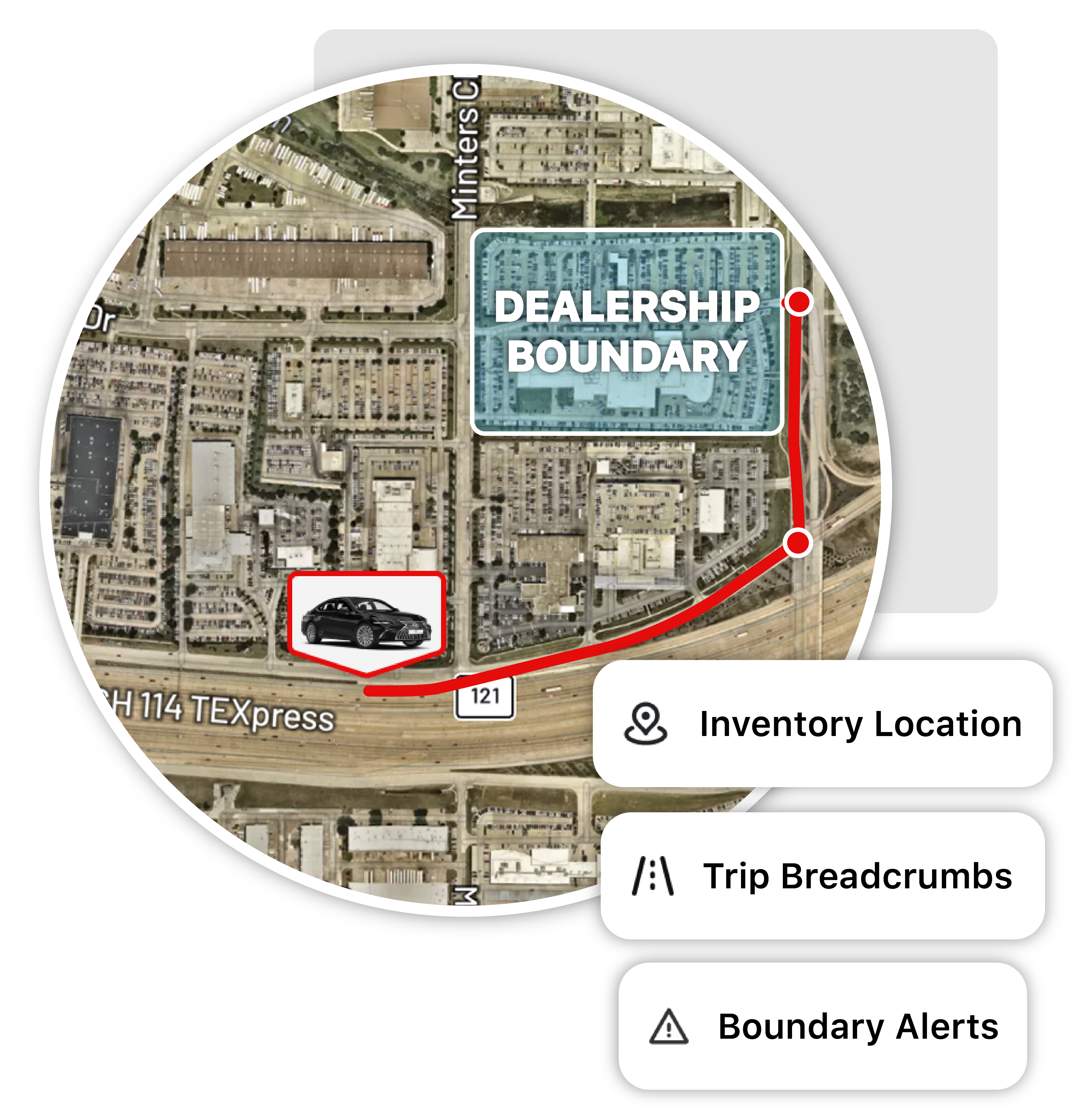
Stop inventory loss with near-real-time GPS tracking designed for rapid recovery. Ikon’s active theft recovery helps you secure your lot and lowers insurance premiums and deductibles.
Ikon Theft Recovery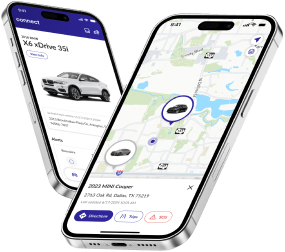
Get an avg. $323 PVR uplift by selling customers peace of mind and theft recovery featuring a $10,000 theft benefit. Your dealer-branded app keeps them connected to you, not the OEM.
Ikon Connected Car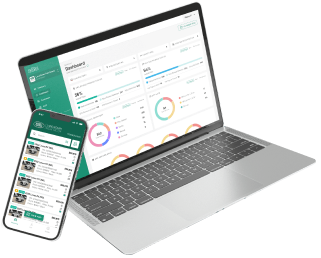
Maximize service retention and increase ROs with our mileage-triggered, automated text campaigns. We text customers at exactly the right time, driving them to your service scheduler.
Ikon Smart Marketing.jpg)



.jpg)