Unmanaged vehicle aging is a silent drain on dealership profitability, costing between $40 and $75 per day in holding fees while units over 60 days old shed roughly $750 in value every two weeks. Shifting from passive spreadsheets to real - time telematics and disciplined tracking is essential to protect front - end gross profits.
Inventory aging for a franchise new-car store comes down to one thing: how long each VIN sits in stock, read against model-year exposure, demand fit, floorplan cost, and showroom readiness. Done right, it converts days-in-stock into a named next action before an aged unit becomes a forced markdown. That is the operating model, not a retail theory.
The pressure is real heading deeper into 2026. New-car supply has normalized back toward 80 days, payments are squeezing buyers past $770 a month, and floorplan interest is once again a line item that punishes hesitation. When the lot fills back up and money stays expensive, the cost of letting a unit drift quietly from fresh to stale climbs week by week.
It starts with VIN-level visibility and a named owner for every next action, not with a markdown spreadsheet. Each unit needs an age, an aging bucket, a model-year flag, a read on local demand, and a manager whose job is to decide what happens next. Pricing is the last lever you pull, honestly, not the first thing you look at.
Most inventory-aging systems sort stock into the same familiar buckets, and the standard 0-30, 31-60, 61-90, and 90-plus structure still anchors the reporting logic. For a new-car store, the smarter adaptation is VIN-level 30/60/90/120-day action bands tied to model-year exposure. A 75-day-old current-model-year unit with strong lead flow is a completely different animal than a 75-day-old outgoing-model-year unit sitting in a segment that just refilled. Same age, very different risk.
A strong aging view pulls several signals together for every VIN at once. Age, days' supply for that nameplate, model-year status, current price and incentive position, floorplan exposure, and recent lead activity belong on one line, not scattered across four reports. When those fields sit together, a manager catches the unit that needs attention today. Otherwise you find it during the next floorplan curtailment, which is the worst time to find it.
Thresholds are policy, not law, and they shift with brand allocation, segment supply, OEM program timing, and local demand. One published example is useful: Rick Case Automotive Group ran a twice-monthly report flagging new vehicles over 120 days and used vehicles over 60 days. That was a store rule that fit that group, not a national ideal days-in-stock benchmark, because no OEM-neutral universal number exists. Your bands should reflect how fast your brand turns and how your allocation actually shows up.
Good to know: The aging bucket tells you a VIN needs a decision. It does not tell you the decision. A 90-day unit in a tight, high-demand segment may just need better merchandising, while the same age in an oversupplied segment may call for a real price move. The owner of the band decides which.
Aged new cars hurt more in 2026 because supply, affordability, and floorplan cost are all working against patience at the same time. The new-vehicle market reached April 2026 with 2.86 million units available, 78 days' supply, and an average listing price around $49,025, a far cry from the shortage years when almost anything sold itself. When the lot is full again, a slow VIN no longer hides behind scarcity.
And this is a big, crowded field to compete in. NADA's 2025 figures count 16,990 franchised light-vehicle dealers that sold 16.2 million light-duty vehicles and generated more than $1.3 trillion in total sales. With a 2026 SAAR running near 16.1 million in May, volume is flat enough that you defend gross unit by unit. An aged car is gross leaking out the back.
Affordability decides how long you can realistically wait. Experian put the average new-vehicle payment at $770 a month in early 2026 on loan amounts near $43,925, and KBB pegged the average transaction price at $49,220 in May. Buyers at those numbers shop hard and finance long, with more than a third of new loans now stretching past six years. The pool of customers who can absorb a stale, full-price unit keeps shrinking.
Then the carrying math turns waiting into a measurable cost. AutoNation's 2025 10-K reported $181.1 million in new-vehicle floorplan interest expense and roughly $38.3 million of annual sensitivity for every 100-basis-point rate move. New vehicles drove 49% of that retailer's revenue but only 13% of gross profit, so every extra day of floorplan interest eats a thin margin even thinner. The read for a new-car manager is simple: an aged unit bleeds interest against a gross line that was never fat to begin with. So you act before the discount conversation, not after.
The dashboard that catches aging risk is built around decisions: every field should trigger an action a manager can take today. A franchise aging view should combine VIN age, days' supply, model-year status, price and incentive position, floorplan exposure, lead activity, physical location and key status, battery readiness, audit status, and a manager-owned next action. If a number doesn't change what someone does this week, it doesn't belong on the dashboard.
The floorplan fields deserve their own respect, because rate exposure is anything but abstract. AutoNation carried $3.8 billion of variable-rate floorplan at a 5.4% weighted-average rate, which is exactly the kind of exposure that turns an aging VIN into a finance problem, not just a sales problem. Readiness fields matter just as much: a unit you cannot locate, with a missing key or a dead battery, ages while it sits invisible to the very team trying to sell it.
You escalate on bands, not on a single markdown formula, treating 30/60/90/120 days as checkpoints where merchandising gets reviewed before price gets cut. The early bands trigger questions, not discounts: are the photos live, is the unit priced to market, is it even findable on the lot. By 90 and 120 days the conversation shifts to real action, and the published Rick Case practice of flagging new units past 120 days is a reasonable outer marker for a store policy.
Model-year transition is what makes some VINs age faster than the headline days' supply would suggest. Cox reported MY2025 supply down 36% month over month in April 2026, with roughly 93% of total inventory already MY2026 product, so outgoing-year units were being actively cleared. That mix tells managers to run two separate playbooks instead of blanket-discounting the whole lot.
None of these bands override the model-year and supply picture for your specific brand. A high-allocation domestic truck store and a supply-constrained import store will escalate the same age very differently, which is exactly why escalation ownership beats any one-size waterfall.
Our role in aging control is the execution layer for everything above. We turn dashboard fields into something a porter or salesperson can act on in seconds. Ikon Lot Management maps every vehicle and key, sets geofences for movement exceptions, runs floorplan audits, surfaces lot-aging views, and reports battery levels daily so units stay test-drive ready. The platform saves an average of 15 minutes per sale, cuts audit time by 56%, and carries $0 upfront device cost.
Each capability maps to a specific aging field. Car and key location speeds up appointment readiness, geofencing flags a unit leaving an approved area, audit tools hand floorplan lenders physical proof, and battery alerts keep an aged VIN from dying the moment a buyer finally wants to drive it. Lot visibility does not move metal by itself, but it removes the friction that lets a sellable unit age in the dark. If you are weighing platforms, our breakdown of what a lot system should actually prove on the lot is a practical starting point.
Connected lot visibility touches your data obligations, especially if you finance or lease. The FTC treats most financing and leasing dealers as financial institutions that must maintain written information security programs, with a breach-reporting amendment effective May 2024. That makes any connected tool a vendor-management question around security-program fit, access controls, breach processes, and data governance. No single lot tool checks the compliance box on its own, which is why pairing technology with a disciplined cybersecurity posture matters.
Aged inventory becomes a financial problem only after information, readiness, and ownership have already slipped. The VIN that surprises you at 110 days was usually invisible at 40, mispriced at 60, and unassigned the whole way through. By the time floorplan interest and a shrinking buyer pool force a markdown, the cheap decisions are long gone.
Pulling aging control together means running pricing, floorplan exposure, and physical lot visibility as one workflow instead of three separate departments. The concrete next step is a recurring, manager-owned aged-VIN review that pairs the dashboard fields with assigned actions and a physical lot check on every flagged unit. Tools like our Lot Management platform belong in the execution, not the strategy, giving that review verified location, key status, and audit proof instead of guesses.
One last reminder as the lot fills and connected visibility grows: pair those tools with real data governance under the Safeguards Rule, so the same system that protects your gross also protects your customers' information.
Not automatically, but 90 days is escalation territory that needs a manager's decision, not a wait-and-see. Many stores set 120 days as a public flag point, mirroring dealer practices that report new units past that mark. Whether 90 days is truly "old" depends on brand allocation, segment supply, OEM programs, and local demand for that specific unit.
No single universal number exists, no matter how often one gets quoted. For context, Cox put April 2026 at 78 days' supply across 2.86 million units, while NADA's 2025 data showed inventory normalizing near 2.6 million units on the ground. Your store target should weigh brand, segment, allocation pipeline, sales pace, and lead activity instead of chasing a national average.
Yes, in most cases. Keep outgoing model-year merchandising separate from current-year price protection so you sell down older stock without eroding fresh gross. Cox reported MY2025 supply falling 36% month over month in April 2026 as roughly 93% of inventory became MY2026 product. The emphasis belongs on targeted incentives and inventory mix, not blanket discounting of the whole lot.
On a fixed, manager-owned cadence, not whenever someone happens to remember. A published example is the twice-monthly aged-unit report some dealer groups run, tied to a named owner for each flagged VIN. Fast-moving stores or those carrying heavy variable-rate floorplan often need weekly or more frequent review, since carrying cost accrues every day a decision waits.
Yes, as an operational-friction risk. A unit nobody can locate, with a missing key or a dead battery, ages while it stays invisible to the team trying to sell it. Connected lot tools tie key location, vehicle location, and battery readiness together so cars stay test-drive ready, with Ikon citing 15 minutes saved per sale and a 56% reduction in audit time.
Floorplan exposure, audit evidence, and true carrying cost. Gross inventory age is not the same as net carrying expense: AutoNation reported $181.1 million in floorplan interest against $134.8 million in assistance, netting a $46.3 million carrying expense in 2025. Accounting should track that net cost per aged unit and keep clean audit evidence ready for floorplan lenders, where faster audits reduce labor and curtailment risk.
.jpg)
.jpg)
32%+ average service reminder response rate. 74% higher chance that a service customer will buy their next vehicle from you.
Watch the Webinar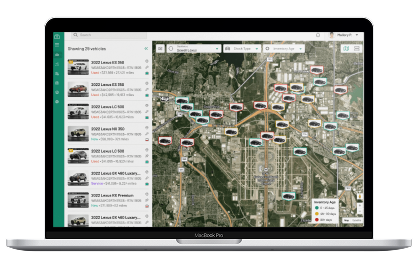
Master your lot. Locate cars and keys effortlessly to accelerate sales, check battery levels, run audit reports, view lot aging, all with no upfront device costs. We only make money when you do.
Ikon Lot Management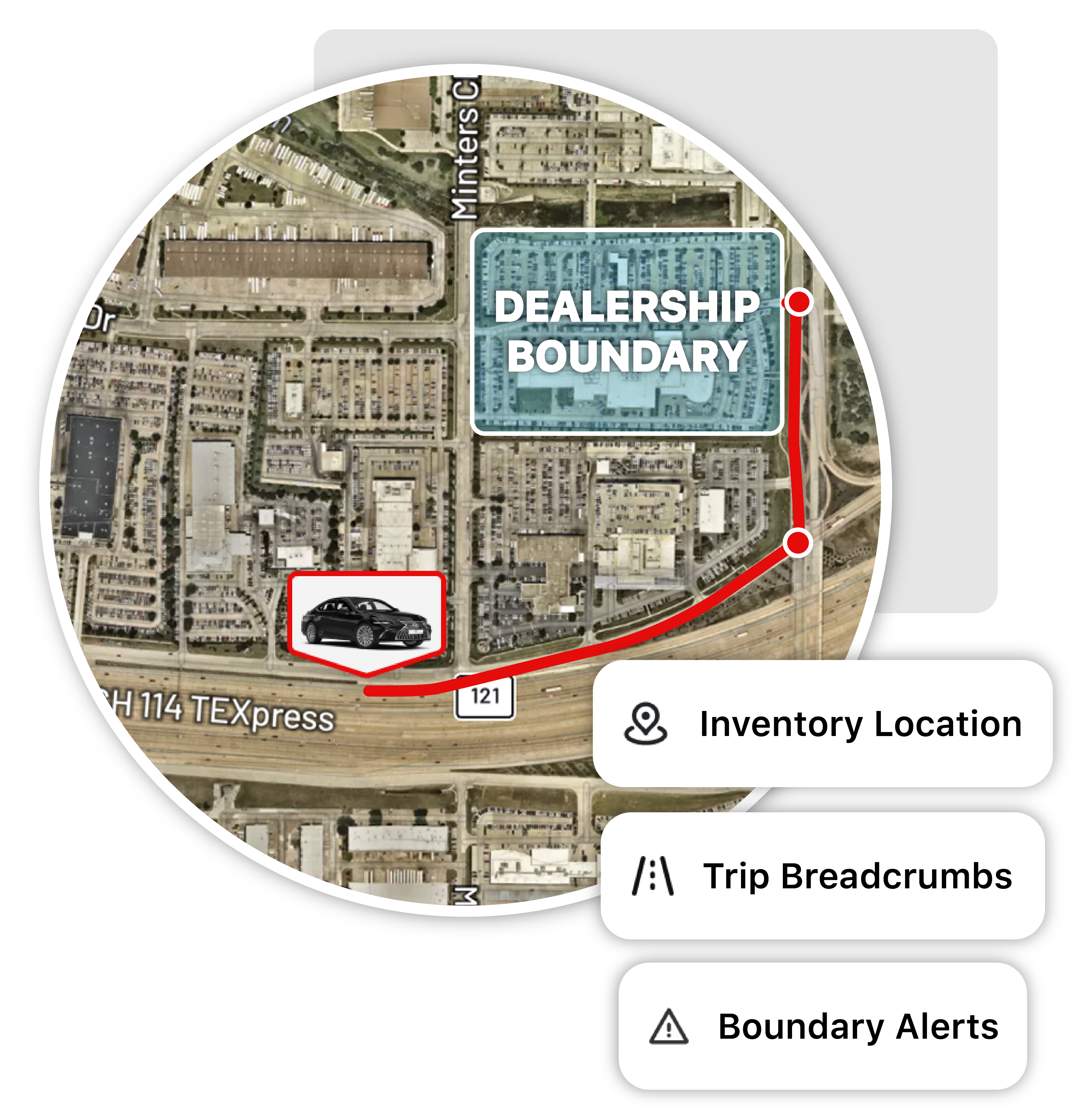
Stop inventory loss with near-real-time GPS tracking designed for rapid recovery. Ikon’s active theft recovery helps you secure your lot and lowers insurance premiums and deductibles.
Ikon Theft Recovery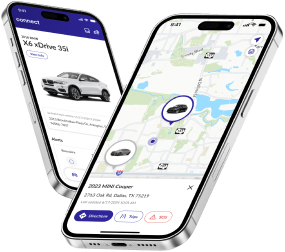
Get an avg. $323 PVR uplift by selling customers peace of mind and theft recovery featuring a $10,000 theft benefit. Your dealer-branded app keeps them connected to you, not the OEM.
Ikon Connected Car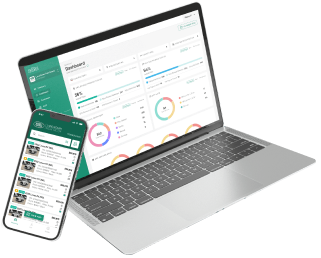
Maximize service retention and increase ROs with our mileage-triggered, automated text campaigns. We text customers at exactly the right time, driving them to your service scheduler.
Ikon Smart Marketing.jpg)
.jpg)
.jpg)
.jpg)