A dealership inventory tracking system earns its keep when the store stops asking where the car is. It should show the current location of every unit, preserve the event trail behind each move, and route exceptions to the person who can close them. The practical test sits on the lot, not in the demo deck.
Used inventory tightened fast in early 2026. Cox Automotive moved from 49 days of supply at the start of January to 37 days by March, and NADA still points used-vehicle managers toward a 30-day guide. Hidden waiting time now shows up faster in turn rate, which changes how a GM reads a tracker.
Before the criteria, the stakes worth naming up front:
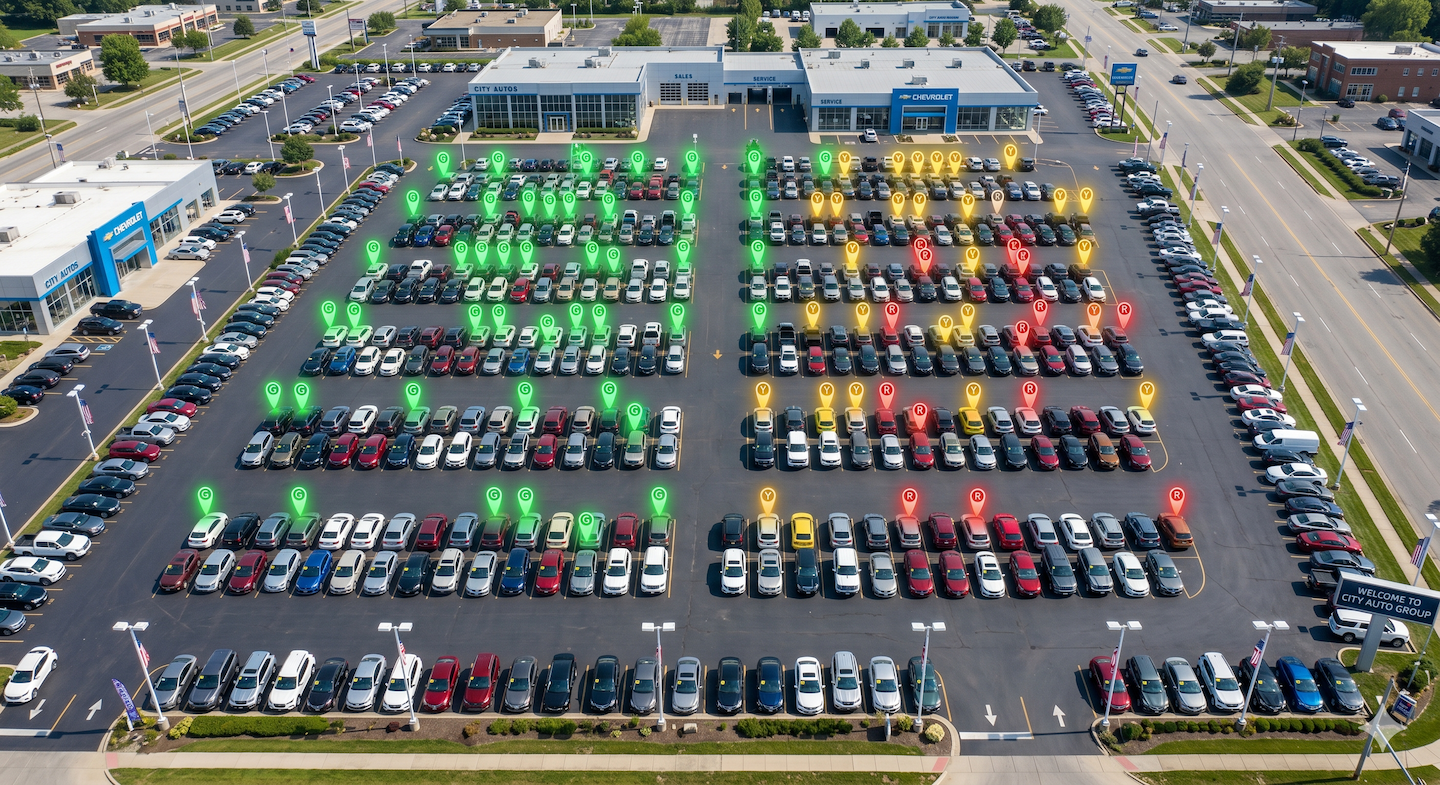
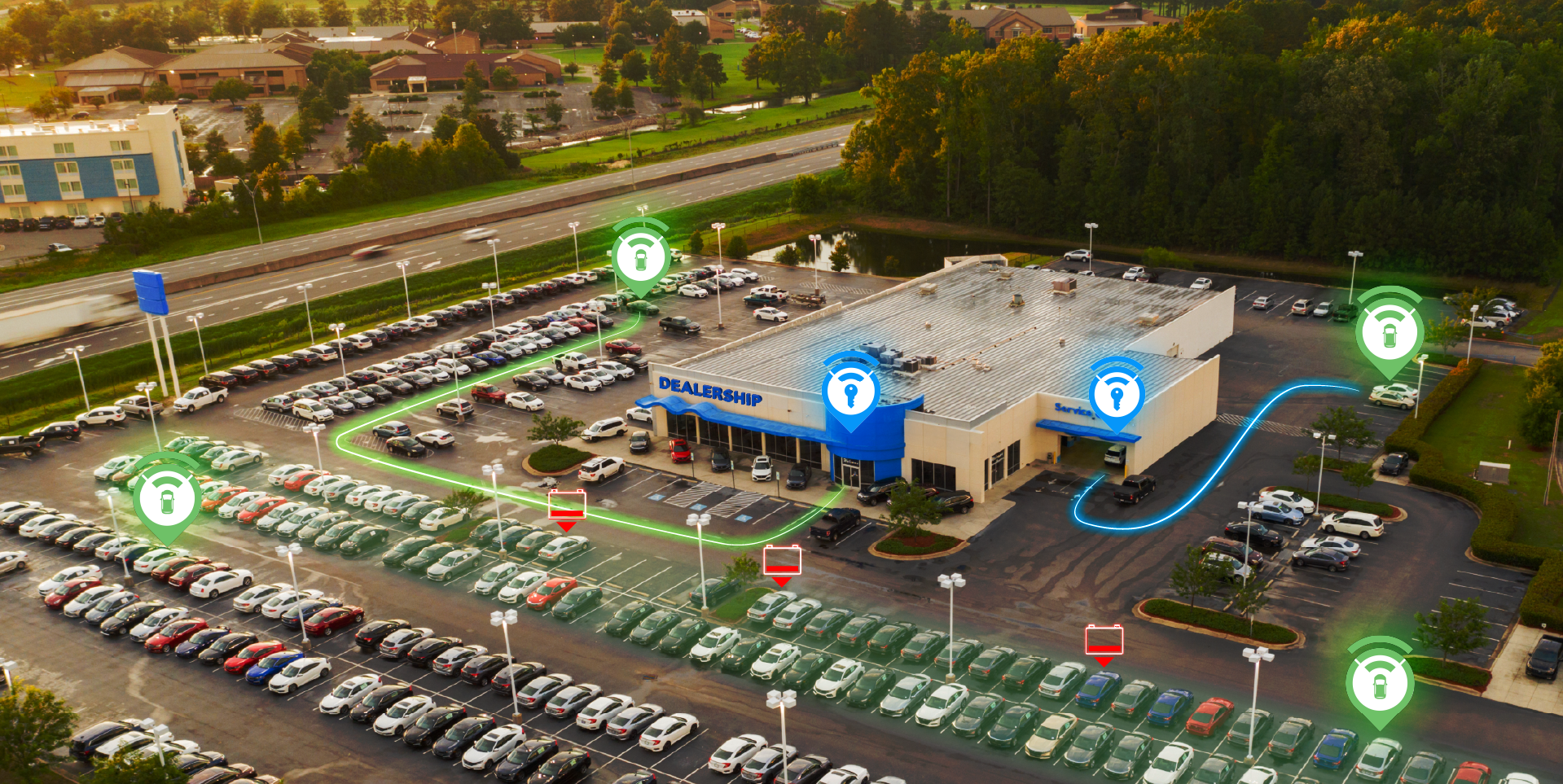
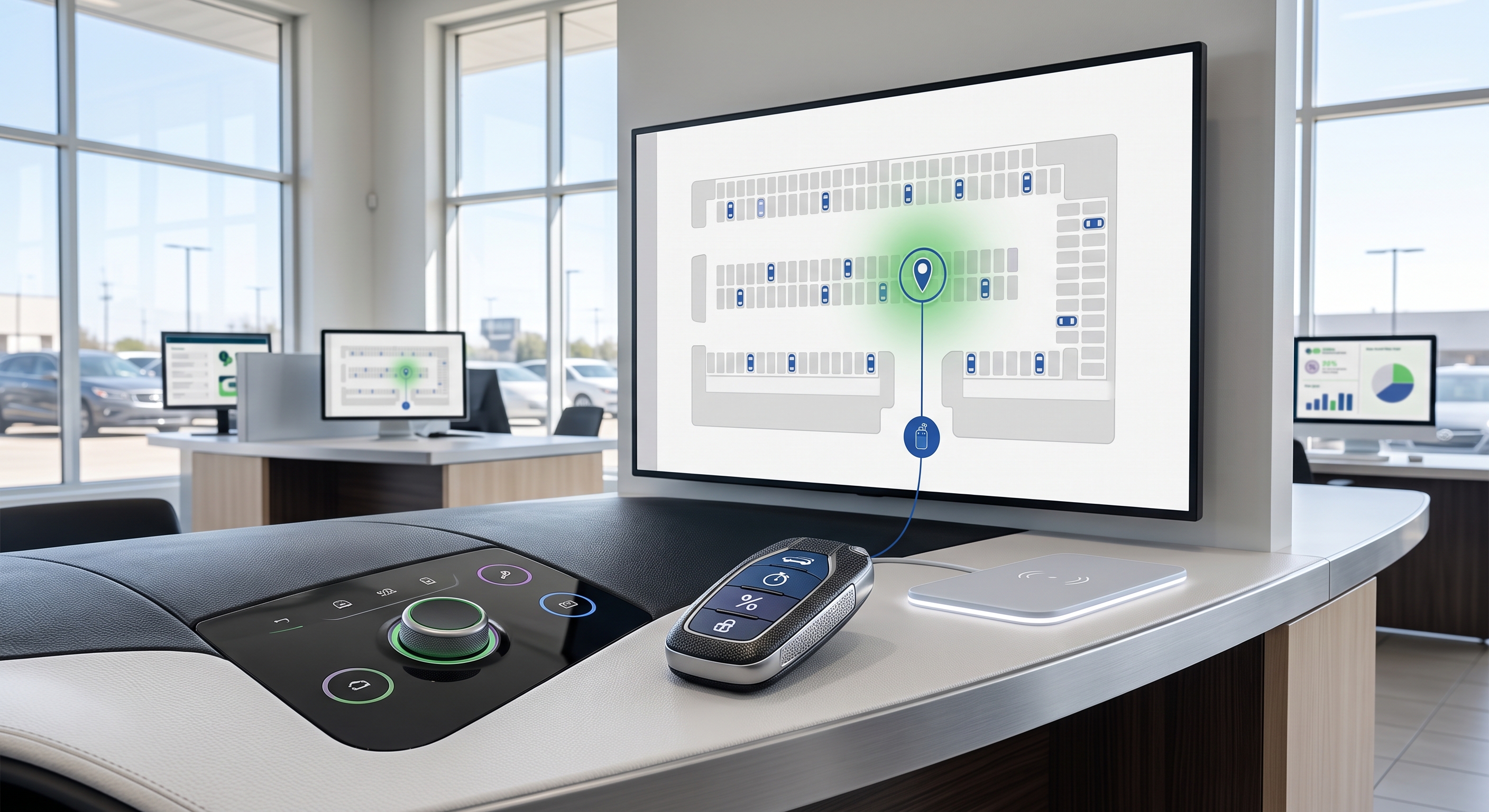
Start with the job the store feels every day: a salesperson should find the car and its key before the customer waits at the desk. The live map has to resolve a VIN or stock number to a spot someone can walk to, and it has to do that on a phone, because the person searching is almost never at a desk. Keys deserve the same treatment as the vehicles, since a found unit cannot move without the fob.
A status field matters as much as a coordinate. A car sitting in recon should look different from a car that is ready for the front line, and off-lot storage should appear as a known location rather than a mystery. Group stores need the same zone names everywhere, so a service writer in one rooftop reads the map the same way as a porter in another.
Inventory-marketing tools should not be confused with physical tracking unless they actually show where the unit sits. The 30-second lookip is a useful yardstick for what "fast enough" looks like in practice.
Current location solves only the first handoff. Movement history is what shows whether a unit went to service, when a vendor had it, and when a lot boundary was crossed after closing. Without that trail, every dispute about "who moved it last" turns into a hallway conversation that nobody wins.
Every move should carry a time stamp and a user attribution, and photo-backed logs help when a unit changes hands between departments. An alert is only useful if it goes to the person who can close it rather than blasting the whole floor. Geofence rules should catch off-lot movement after closing, and unauthorized-use alerts only carry weight once the store has decided who may move demos and loaners.
Sub-foot accuracy claims, like the one MDD markets for verified vehicle moves, sound impressive on crowded service lanes. The honest test is still whether staff can walk directly to the unit on the first try.
Tracking earns a GM's attention when it removes dead time that aging reports usually hide. A car that is technically in stock but stuck between recon stages drags the same turn-rate math as a car nobody wants. Tighter supply makes that lost afternoon more expensive than it was a year ago.
Cox's used-car KPI guidance puts a great inventory turn rate at 16, with top performers turning every 20 days and holding reconditioning to 3 days. Set against the March 2026 supply read of 37 days and NADA's 30-day used-vehicle guide, the operational gap is obvious: the tracker cannot fix pricing or demand, but it can show which cars are present but not ready.
An aging unit with no recent movement should trigger a manager conversation. A ready unit still parked in recon points to a handoff problem, not a market problem, and that is the distinction the dashboard has to make easy.
Recon delay hides because each department remembers a different start date. Dealer trade coverage of the recon bottleneck shows stores expecting a 5 to 7 day cycle and then measuring 15 to 16 days once the workflow is actually tracked.
The acquisition date should start the clock, because cash is already tied up the moment the unit is bought. Location data only helps when it is paired with stage status. A car at a body vendor cannot look the same on the map as a car waiting for photos, and parts waits need their own owner so the unit does not vanish inside service.
A daily review focused on units with no recent progress is the habit that bends this curve. A consistent 3 to 5 day recon cycle is a more useful internal target than a vague promise to speed things up.
The rollout works when baseline measures move in the store's own numbers. The most useful dashboard ties lookup time to audit labor and recon speed, because those three numbers track whether sales, accounting, and the used-car desk all stopped chasing the same questions.
Exception closure rate matters more than raw alert volume; an ignored alert becomes noise within a week. Key-loss incidents belong on the same view as vehicle moves, because car tracking and fob tracking only pay off when they are managed together. Theft recovery sits in the risk view, where our published recovery rate of 99.8% with an 18-minute average gives the GM a concrete number to test against the store's own incident history.
Deployment is not finished when the devices are installed. The store still has to map zones, train people, and decide who responds when a unit or key breaks expected flow. The lot map should use the names employees already say aloud, not the labels a vendor's template suggests.
The daily habit has to cover appointment lookup before a customer arrives and stage updates before recon parks a car. Trade and wholesale units need a device-removal routine so hardware does not leave the store unnoticed, and permission settings should reflect job roles rather than giving every user the same control. When the platform touches customer data or connected systems, the FTC Safeguards Rule pulls vendor oversight into the buying conversation; our standard setup covers on-site installation, staff training, and inventory mapping as store-level work for that reason.
Worth knowing: AutoSuccess trade coverage cites dealerships saving $2,000 to $5,000 or more per month on key replacement once pinpoint key tracking is in place, against a common assumption of five lost keys per month at roughly $350 each.
The real gain sits between the map and the manager meeting. One record that already explains why a vehicle is unavailable closes the question before anyone starts asking around, and that only happens when the daily review is rebuilt around the system instead of next to it.
Cox's 37-day March 2026 read makes hidden waiting time more expensive for used-vehicle managers than it was last year. Recent neutral side-by-side vendor studies remain thin, so dealer baselines should carry more weight than vendor comparison charts, and FTC-style vendor oversight belongs in the buying process whenever tracking data connects to customer systems.
Run a two-week baseline before any demo so the store sees lookup time and audit labor in its own numbers. Add recon days to frontline and key incidents to that baseline before vendors present savings claims, then judge the platform against what the store actually measured.
Walk-to accuracy is the right default, because the staff member needs to reach the vehicle without a second search. Ikon's lot guide uses about a 3-foot radius and MDD markets sub-foot accuracy. A crowded service lane often needs tighter location than an open overflow lot, so match the radius to the densest zone.
Yes. Keys belong with cars by default, because a found vehicle still cannot be shown without the fob in hand. Ikon's key material says fobs can be paired with vehicles in under 20 seconds, and dealer trade coverage consistently ties missing keys to recurring replacement costs that hit the parts ledger every month.
Yes. Audit time should be a core rollout metric, since it shows whether floorplan checks have become less manual or just digitally renamed. Ikon reports a 56% audit-time reduction, which gives the GM a concrete claim to test against current local audit labor before signing off on the savings.
Off-lot movement and geofence breaches are the default after-hours alerts, because they catch the events nobody is on site to see. Speeding and tamper events can matter for demos and loaners, but the store should route each alert type to one accountable owner so nothing dies in a shared inbox.
Yes, when the platform includes connected-car or telematics features. Ikon and Zubie both position post-sale data as a fixed-ops bridge: mileage can time service outreach, maintenance signals can flag upcoming work, and diagnostic data can support customer contact that keeps the relationship with the selling dealer rather than the OEM app.
Treat them as testable targets rather than guarantees. Ikon's 15 minutes saved per sale and 99.8% recovery numbers only carry weight once the store has recorded current lookup time and audit labor; the recovery process needs its own baseline too, since theft response varies with local law enforcement and lot layout.
.jpg)





.jpg)