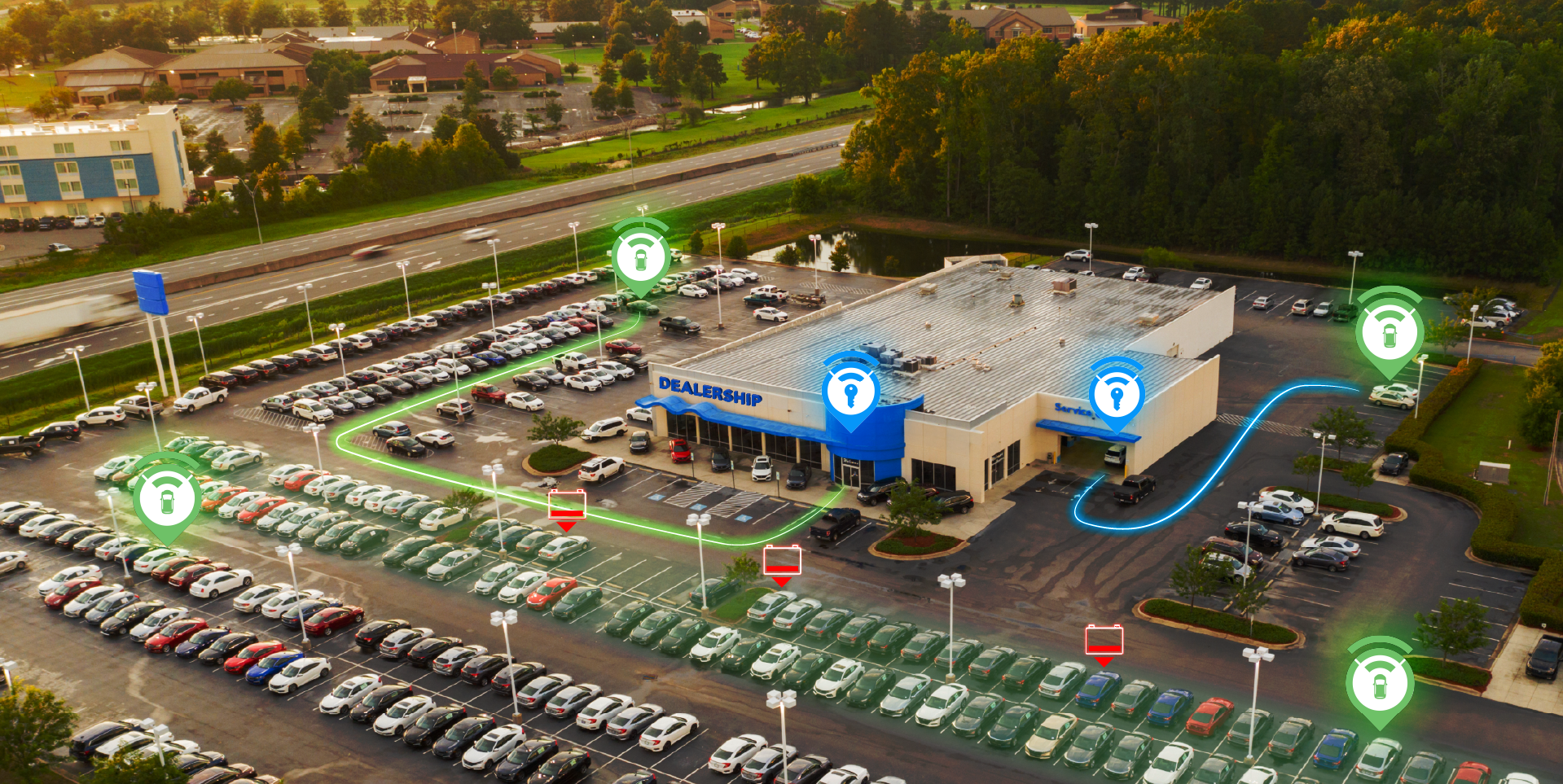
For a fixed-ops team, connected car technology takes live mileage and vehicle-health signals and turns them into booked service work.
It fires dealer-branded outreach, routes the customer into your scheduler, and ties the visit back to a customer-pay repair order worth an average of $494. The payoff is repair orders and retention you can count, not consumer infotainment features.
And the timing pressure is real. Cox Automotive's fixed-ops research shows dealer service revenue climbing, but the dealer share of service visits slid from 33% to 29% since 2018. So stores are pulling more revenue out of fewer retained customers. That makes the timing, routing, and attribution of every service signal a direct profit question.
ROI shows up in the service drive as repair orders you can count, not as a feature list. The national numbers set the frame: in one year, U.S. franchised dealers wrote 276,128,228 repair orders and $164.6 billion in service and parts sales. Every connected-car program lives or dies by how many of those ROs it pulls back under your roof. Same logic that drives turning new-car sales into six-figure service revenue.
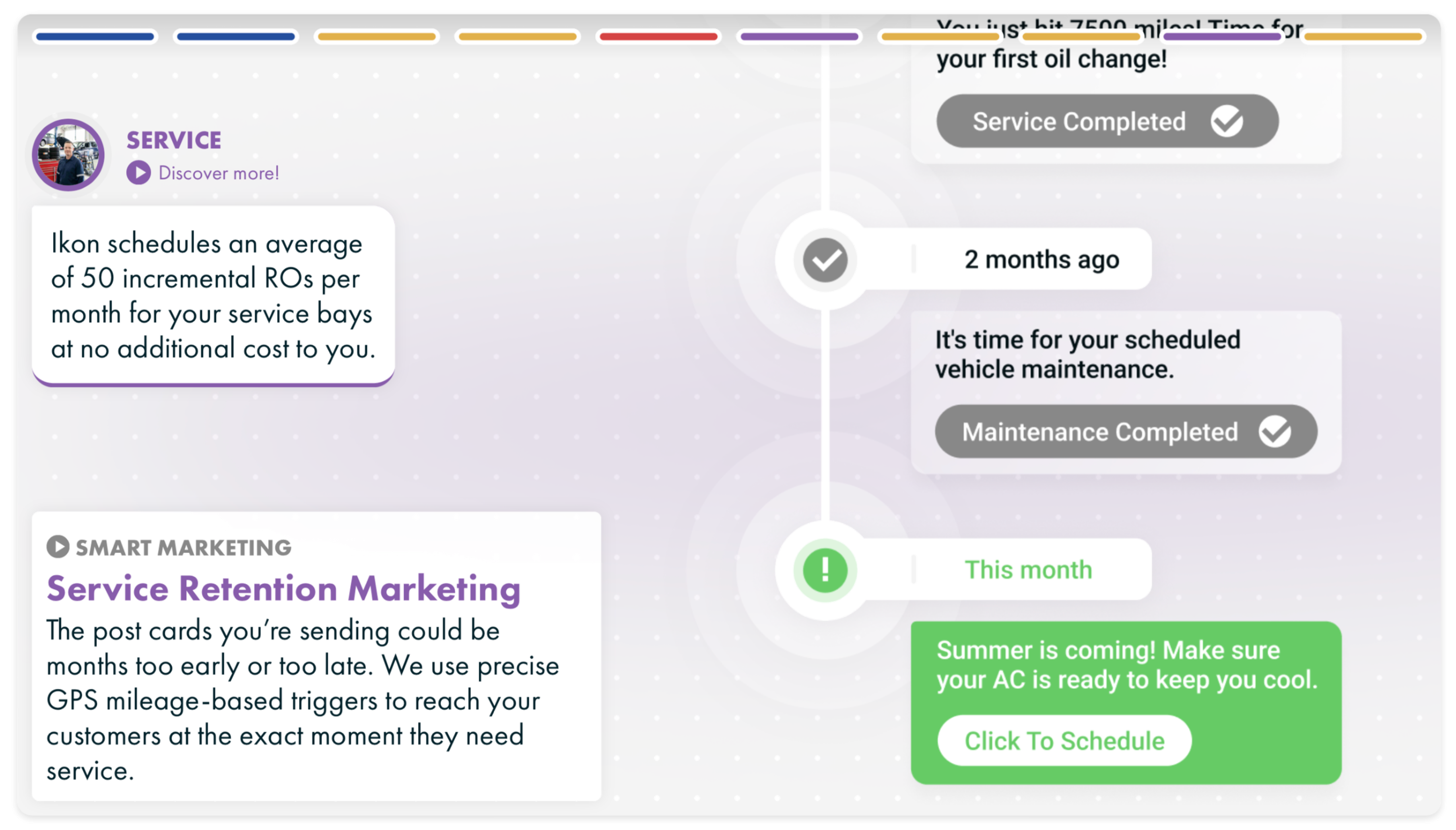
The unit economics are straightforward. Each customer repair order averages $494 in service and parts sales, against $551 for a warranty RO. In our experience, a service department typically picks up around 50 additional customer-pay ROs per month once telematics-driven retention is running. Run those Ikon-reported ROs against the NADA benchmark and you model roughly $24,700 a month, or about $296,400 a year, in incremental service and parts sales. Treat that as a modeled business case, not a guaranteed number, because the multiplier is an average and your mix will vary.
The longer scoreboard is repurchase, and it runs on a different clock than the monthly RO count. Cox reports that 74% of customers who return for service are likely to repurchase from the same dealer, versus 44% of those who service elsewhere. After a single dealership service visit, 89% of customers consider coming back, while only 20% of those servicing elsewhere consider switching to a dealership. So the first scoreboard pays you this month. The retention scoreboard protects the next vehicle sale and every RO behind it.
The signals worth acting on come in two buckets: routine mileage prompts and exception-based health alerts. Routine signals follow a predictable maintenance calendar. Exception alerts fire when the car flags a real problem. Some OEM platforms provide access to these signals to dealerships, but most do not. So dealers need to get this information from third-party devices like the Ikon Technologies program.
Mileage and age-based reminders earn priority for a simple reason: 80% of dealership servicers find personalized reminders based on mileage or vehicle age helpful. The fixed-ops value is in owning the timing and the routing under your store's name. The alert reaches the customer when the work is actually due, and it lands in your scheduler instead of a quick-lube's.
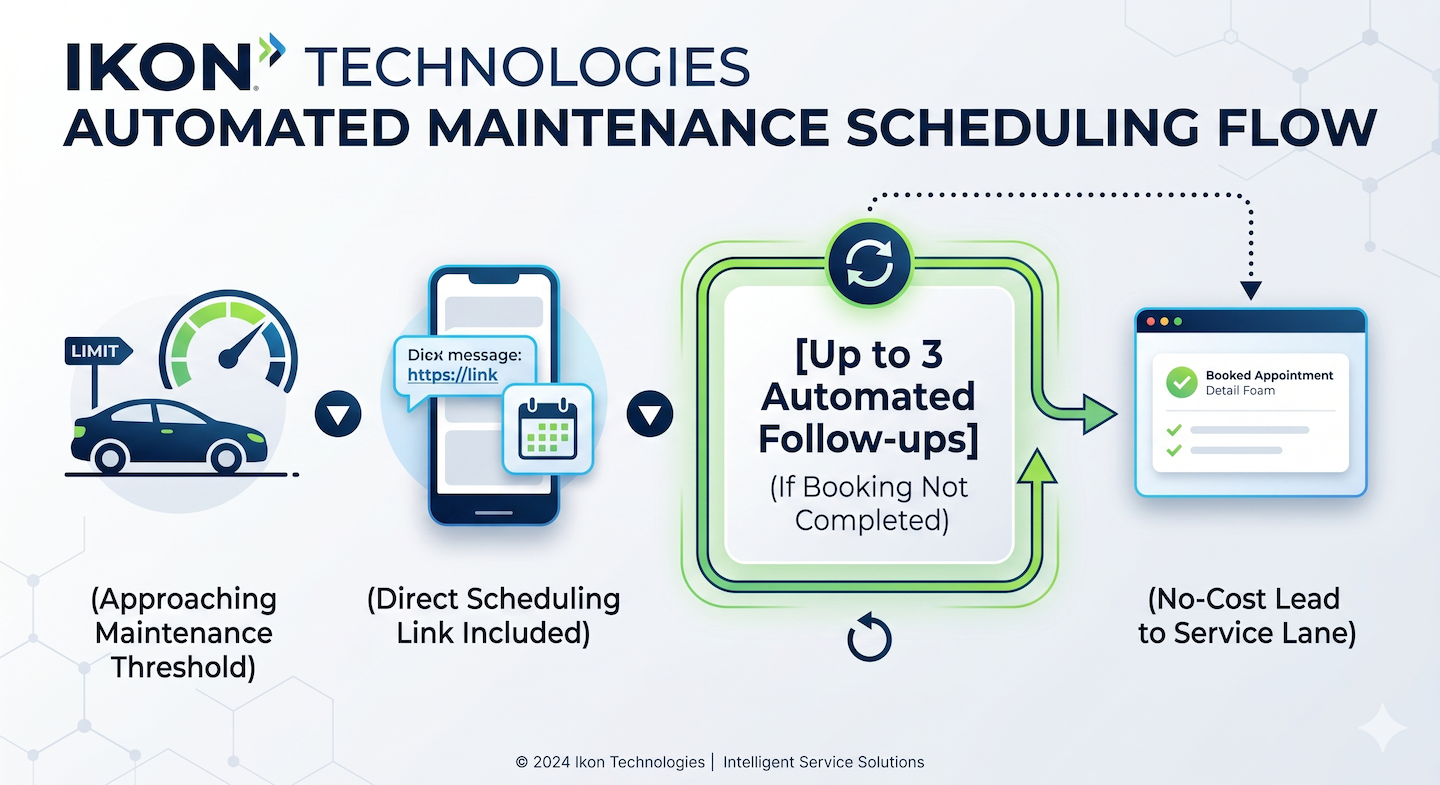
A telematics alert like Ikon's turns into a booked appointment when every handoff in the chain has a clear owner.
The mileage trigger, dealer-branded message, and route into your scheduler is exactly the workflow we built. And the same connected vehicle data shows that GPS belongs in the service drive, not just on the sales lot. Most alerts never become booked work because no one clearly owns one of these handoffs. Ikon changes all of that and puts RO scheduling on autopilot.
The thread across every section is ownership. The signals are real, the economics are clear at $494 a customer RO, and the handoff is well documented. But none of it pays unless your store owns the path from alert to attribution under its own brand, NOT the OEM's.
The concrete next move is an audit. Pick one mileage alert, one health alert, and one open recall, then trace each one from signal source through outreach, scheduling, and the closed RO. Wherever the trail goes dark, you have found your leak.
Start with mileage thresholds and oil-life or maintenance indicators, because they reach the largest pool of due customers. Active health alerts and open recalls come next: they carry urgency and a clear reason to book. Lower-urgency app engagement signals stay secondary, worked only after the high-intent service triggers are handled.
Yes, but only with documented consent for that outreach. FCC rules treat automated texts as calls under TCPA, so you need prior express consent and a working opt-out. Consented service reminders to a customer who opted in are a very different thing than broad tracking or automated texting without proof of consent, which is exactly what the FTC has now penalized. Ikon puts the whole process on autopilot.
Review opt-in or activation rate, eligible vehicle count, and outreach response first. Then track appointment set rate, show rate, customer-pay ROs, and RO dollars to measure the money. Add recall completion and retention by cohort for the longer view, and always confirm attribution back to the original signal so you know which alerts actually produced work.
It can model incremental customer-pay ROs, but the public proof is limited. Using NADA's $494 per customer RO and our reported benchmark of about 50 added CP ROs monthly, you can build a defensible business case worth roughly $296,400 a year. Independent research is thin on a direct telematics-caused shift between customer-pay and warranty mix, so treat the projection as modeled rather than proven.

.jpg)





.jpg)