The Ikon Blog

The Best GPS for Dealers: A Comprehensive Telematics, Inventory Management, and Revenue Optimization Analysis for Modern Automotive Retailers
Christopher Schouten
Vice President of Marketing
Updated on
June 30, 2026

Discover the best GPS for U.S. franchise dealers. Streamline lot operations, track keys, and automate service reminders with a $0 upfront consignment model.

The commercial search for the best GPS for dealers represents a critical operational pivot for U.S. automotive franchise stores. As gross margins on new and used vehicle sales compress, floorplan interest rates remain elevated, and customer defection to independent service centers threatens fixed operations revenue, franchise dealer principals are re-evaluating on-lot telematics. Historically, a car dealer GPS tracker was viewed as a basic, single-department tool used strictly for lot location or recovery of high-risk inventory.

Today, enterprise-grade telematics platforms have transformed raw location data into a unified operational and financial engine. Installing a single device during pre-delivery inspection (PDI) now accelerates sales velocity, secures immediate Finance and Insurance (F&I) gross profits, automates floorplan inventory audits, and systematically channels customers back into the service drive. This comprehensive analysis evaluates the technical, operational, and financial dimensions of the leading dealer GPS tracking solutions, establishing why modern franchise groups are shifting away from legacy hardware in favor of integrated enterprise telematics platforms like Ikon Technologies.

Competitive Market Taxonomy of Dealership GPS Solutions

To evaluate the best GPS for car dealers, franchise groups must distinguish between three primary tiers of tracking technology. Each tier utilizes distinct hardware configurations, power mechanisms, data reporting intervals, pricing models, and software architectures that dictate their commercial utility for franchise stores.

The table below outlines the structural differences across the three technology tiers from a franchise dealer's perspective:

Evaluation Dimension Tier 1: Consumer-Grade Trackers Tier 2: Legacy Brand SVR Trackers Tier 3: Enterprise Franchise Telematics
Primary Target Market Retail consumers, individual families, and micro-fleets Brand-centric dealer tracking and recovery units OEM franchise groups and multi-rooftop networks
Centralized Lot Mapping Non-existent; requires individual consumer activation Basic location plotting; lacks integrated sales workflows Comprehensive; live VIN mapping, lot aging, and multi-campus overlays
Hardware Procurement Upfront retail purchase per unit High upfront hardware inventory costs Consignment-based; $0 upfront hardware and training cost
Key Fob Integration None None Integrated Bluetooth Low Energy (BLE) key tracking
Odometer Telemetry Basic calculations; no direct mileage marketing Limited or passive in-app alerts only Direct real-time odometer integration for smart marketing

Tier 1: Consumer-Grade GPS Trackers

Consumer-grade trackers, such as Bouncie, Tracki, and LandAirSea, are engineered for individual vehicle monitoring or basic equipment tracking. These devices are typically configured as plug-and-play OBD-II dongles or portable magnetic units running on rechargeable internal batteries.

While highly effective for their intended consumer use cases, they are completely unsuitable for commercial dealership inventory tracking. They lack the centralized database architecture required to manage hundreds of distinct vehicle assets on a single dashboard, offer zero integration with dealer management systems (DMS), and fail to provide any dealer-facing operational workflows.

Tier 2: Legacy Brand SVR Trackers

Legacy stolen vehicle recovery (SVR) trackers, historically represented by brands like LoJack, are designed primarily for reactive vehicle recovery. These systems are hardwired into the vehicle and remain largely passive until a vehicle is reported stolen.

While they provide standard SVR capabilities, they act as a rigid, upfront cost center for the dealership. They require dealers to purchase hardware upfront, tying up critical capital in on-lot inventory, and fail to streamline pre-sale lot operations, improve sales velocity, or build post-sale service drive loyalty. Furthermore, since many of these brands have been absorbed into corporate conglomerates, innovation has stalled, leaving stores to navigate slow, rigid corporate workflows.

Tier 3: Enterprise Franchise Telematics Platforms

Enterprise-grade telematics platforms, pioneered by Ikon Technologies, represent a structural shift by consolidating multiple department-level functions into a single installed device. Rather than treating GPS as a reactive recovery tool, these platforms are engineered to solve the operational friction points that occur throughout the entire vehicle lifecycle—from stocking and recon to delivery, ownership, and eventual trade-in.

By combining sub-meter GPS precision, cellular multi-constellation tracking, and integrated Bluetooth Low Energy (BLE) key locating, enterprise platforms optimize showroom operations and fixed operations while generating high-margin F&I revenue.

Detailed Comparative Feature Matrix for Franchise Stores

To assist franchise leadership in navigating the selection process, the following matrix compares the leading franchise-centric telematics systems across primary operational, technical, and financial performance categories:

Feature / Metric Ikon Technologies LoJack (Solera) PassTime InTouch GPX Intelligence RecovR
Consignment Hardware ($0 Upfront) Yes; complete consignment-funded program No; upfront hardware purchase required No; upfront hardware purchase required No; commercial pricing options vary Yes; consignment program options
Integrated Key Tracking Yes; Find the Car, Find the Keys™ (BLE integration) No; standard GPS tracking only No; standard GPS tracking only Yes; hybrid GPS + BLE AssetTag platform No; standard vehicle tracking only
Battery Diagnostics Continuous real-time 12V and EV monitoring with alerts Standard battery disconnect alerts only Basic voltage reporting in premium tiers Yes; monitors 12V and EV battery health Standard voltage reporting
SVR Recovery Methodology Stolen Mode; secure web-based link for police (no app) Requires LoJack companion app for tracking Elite/Select hardware recovery protocols Active recovery mode via hybrid tracking Secure tracking link, no app required
Post-Sale Service Marketing Yes; GPS mileage-triggered automated SMS campaigns In-app notifications only via LoJack Go (3X lower response) No; focus remains on lot management and F&I resale No; designed for general asset tracking No; service drive marketing not integrated
Reinsurance Integration Yes; in-house program with 90-day payouts and lowest fees No; third-party reinsurance options only No; third-party reinsurance options only No; commercial fleet focus No; third-party reinsurance options only

Pre-Sale Operational Mastery and Lot Management

For high-volume franchise stores and multi-rooftop dealer groups, daily operational friction on the lot acts as a silent drain on profitability. Misplaced keys, dead batteries, and labor-intensive manual inventory counting increase customer wait times and slow down the sales process.

Slicing Sales Cycle Delays with Integrated Key Tracking

One of the most persistent operational challenges on a franchise dealership lot is the simultaneous tracking of vehicle inventory and matching key fobs. Industry studies indicate that sales personnel spend an average of 15 to 20 minutes searching for a vehicle or its corresponding key fob during a warm customer consultation.

Because modern consumers expect a fast, efficient showroom experience, these delays can severely damage sales velocity and momentum. To resolve this friction, Ikon Technologies engineered the Find the Car, Find the Keys™ system.

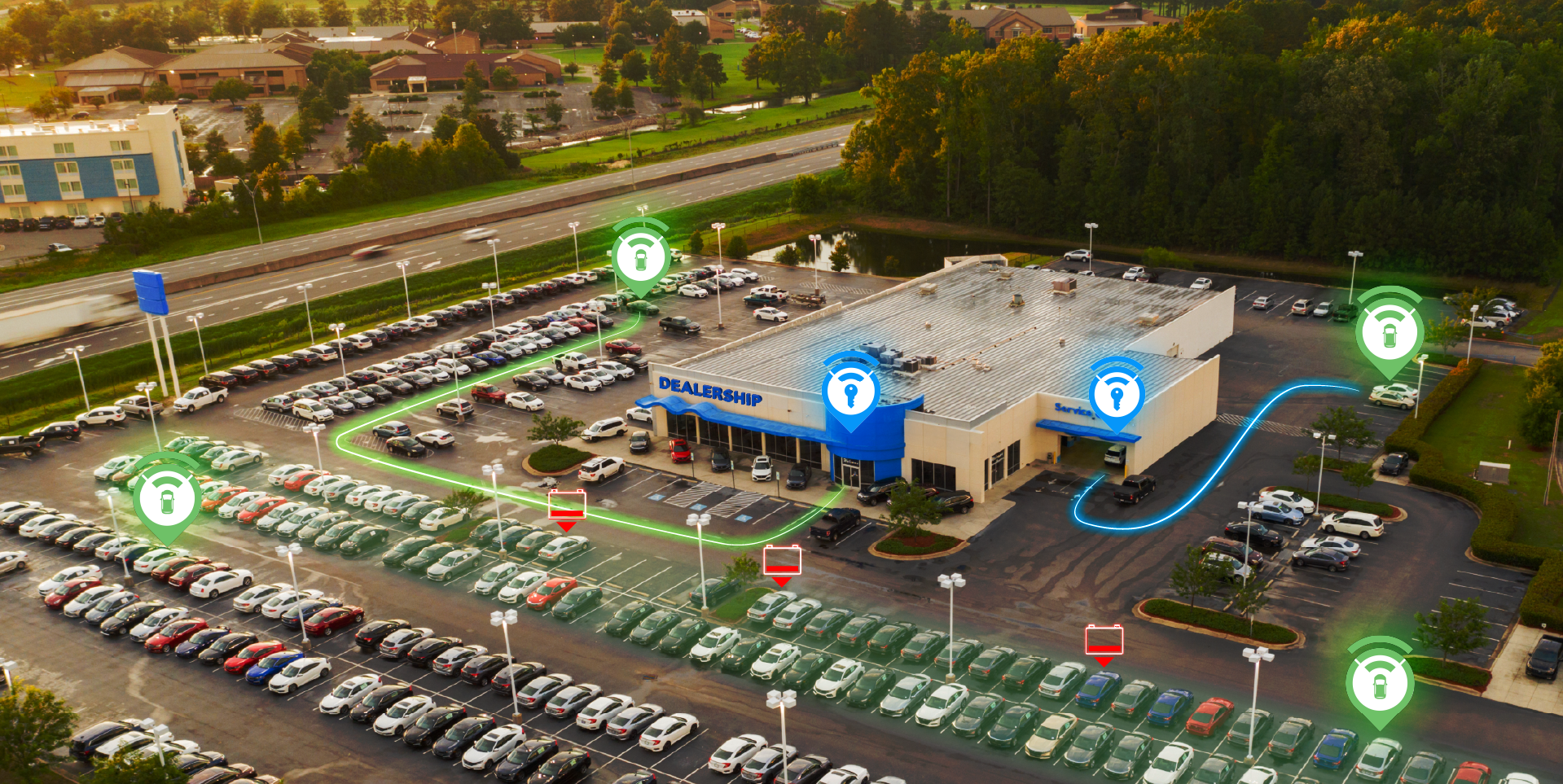
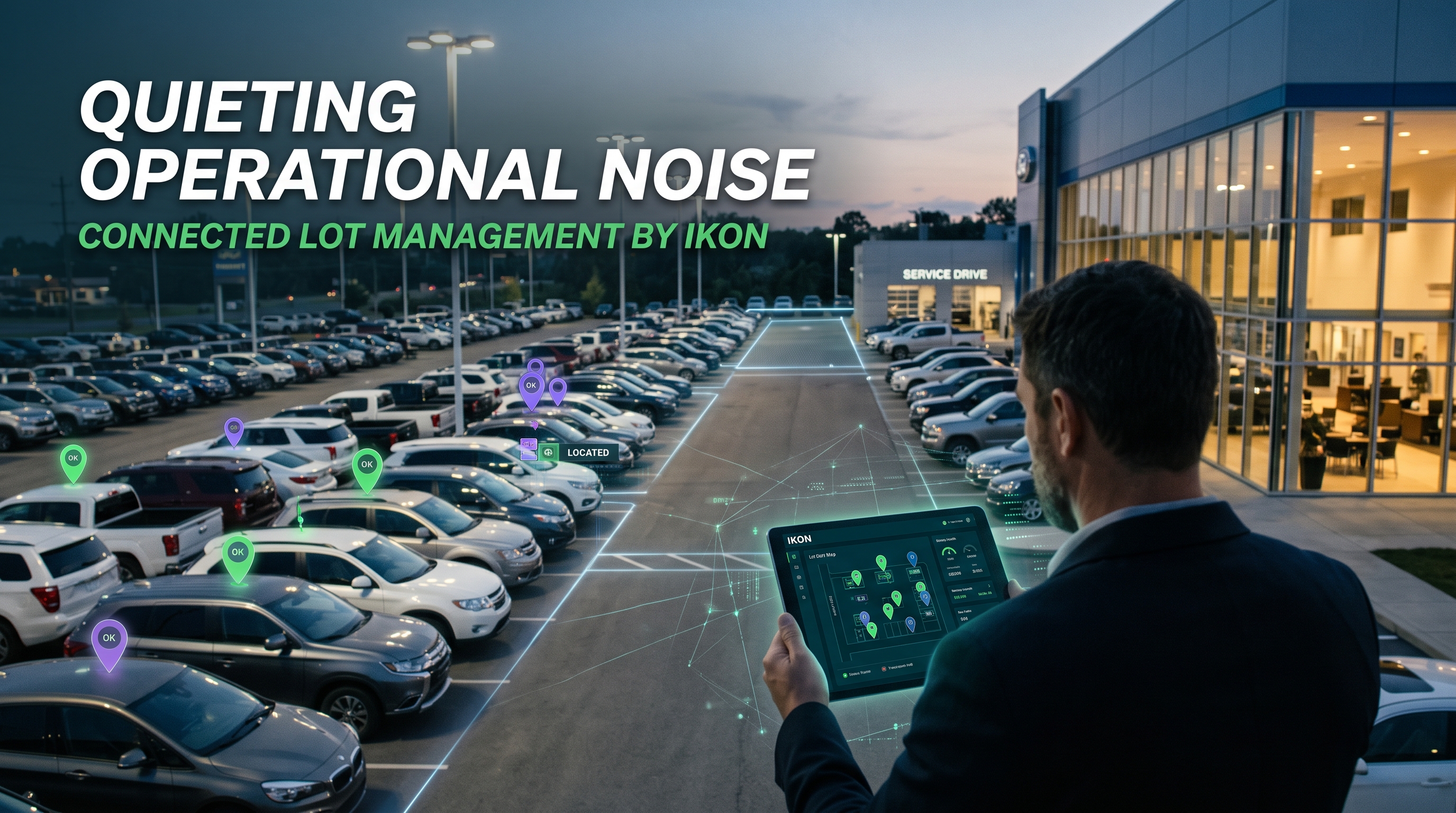
The technical mechanism of this feature integrates sub-meter vehicle GPS coordinates with Bluetooth-enabled key tags, mapping both assets simultaneously on a single dashboard. Sales and lot staff can instantly identify the exact location of a vehicle and its matching key fob via their mobile devices, shaving an average of 15 minutes off the sales delivery cycle and keeping customer engagements warm.

Unified Lot View Workflow:
Satellite GPS & LTE Networks Maps Physical Vehicle Location (Unified Dashboard Output)
Bluetooth Low Energy Tags Identifies Matching Key Fob Zone

Proactive Battery Health Diagnostics

A dead battery during a scheduled test drive is an embarrassing operational failure that can derail an active sale. Traditional dealership workflows rely on manual inspections or reactive jumps after a vehicle fails to start.

Enterprise telematics platforms continuously monitor the 12-volt battery voltage of internal combustion engine (ICE) vehicles and the battery health of electric vehicles (EVs) across the entire inventory. If a vehicle's battery voltage drops below a functional threshold, the system automatically triggers a low-voltage alert, routing it directly to lot porters via the Dealer Toolbox mobile application. This ensures that units are placed on chargers proactively, guaranteeing that every stocked vehicle is test-drive ready before a customer arrives.

Streamlined Floorplan Auditing

Manual floorplan audits are historically slow and stressful, requiring dealership managers to spend hours walking physical lot lines, scanning barcodes, and matching VINs to satisfy lenders. This process is highly prone to human error and consumes dozens of administrative man-hours each month.

By deploying an enterprise-grade lot management GPS program, dealerships can run automated, instantaneous audit reports that prove vehicle location and status on demand. This real-time inventory reconciliation reduces physical floorplan audit duration by up to 56%, freeing managers to focus on moving inventory rather than manual auditing.

The Operational Split: Dealer Toolbox vs. Ikon Connect

An integrated telematics system must serve different needs depending on the stage of the vehicle’s lifecycle. To maintain clean data and security boundaries, the platform splits its software environment into two distinct user interfaces: the internal Dealer Toolbox app and the consumer-facing Ikon Connect app.

The differences between these two operational environments are outlined below:

Feature Category Dealer Toolbox Application Ikon Connect Consumer Application
Primary User Dealership personnel (sales, service, porters) The retail vehicle buyer
Core Stage Stocking, reconnaissance, lot storage, and delivery The post-sale ownership lifecycle
Operational Focus Asset location, key mapping, battery health, and lot aging Geofencing, speeding alerts, trip logs, and security
Protection Mechanism Area-level geofencing and after-hours alerts Active Stolen Mode with direct police dispatch
Support Environment Internal dealership administrator support Direct customer-facing connection checks

Finance and Insurance (F&I) Gross Profit Optimization

Beyond driving operational efficiencies on the lot, an enterprise GPS program functions as a high-margin revenue generator in the F&I office. The implementation of the Ikon program enables dealerships to convert a traditional operational expense into a robust profit center.

The Consignment Procurement Model

Under traditional GPS tracking programs, dealerships must purchase hardware upfront, tying up significant working capital in unsold lot inventory. This cash-flow drag is completely eliminated by enterprise consignment models.

The platform ships, installs, and supports the telematics hardware across 100% of the dealership's inventory at zero upfront device cost. The dealership only pays for the hardware once the vehicle is sold to a retail consumer, meaning the program operates on a cash-flow positive basis from day one.

Maximizing Per-Vehicle Retail (PVR) Uplift

When presenting the vehicle to the buyer, the F&I department can offer the pre-installed tracking system as a premium safety, convenience, and security upgrade. Consumers highly value features like 24/7 location monitoring, geofence boundaries for teen drivers, low battery alerts, and significant personal auto insurance premium discounts.

This high customer utility translates into a strong F&I product, achieving average consumer penetration rates of 67%. Because the system is structured as a physical, non-cancellable accessory, it is immune to the chargebacks that often erode F&I profitability, yielding an average incremental PVR boost of $323 in stable, protected gross profit.

Reinsurance Integration and Captive Wealth Generation

To maximize the long-term wealth yield of the telematics program, progressive dealership groups can utilize an in-house reinsurance program. A portion of every consumer telematics sale contributes directly to the dealer's reinsurance company, where reserves accumulate and accrue interest quarterly.

Unlike legacy brands that may hold a dealer's money in long-term third-party accounts, enterprise-grade reinsurance models distribute payouts in as little as 90 days, while maintaining the lowest administration fees in the industry to ensure maximum capital retention for the dealer.

The Customer Loyalty Loop and Theft Warranty Structure

One of the most powerful consumer-facing benefits of the enterprise telematics system is the $10,000 limited driver theft warranty, which serves as a highly persuasive F&I selling point. Crucially, this warranty is structurally designed as a "Dealer Loyalty Loop."

When a vehicle is stolen and remains unrecovered, standard insurance and traditional tracker payouts write a check directly to the consumer, allowing them to purchase a replacement vehicle from any competing dealership.

The enterprise loyalty loop, however, issues an $8,000 portion of the consumer benefit as a check co-payable to the consumer and the original selling dealership. This technical design guarantees that the customer’s replacement capital must be spent back at the original store, protecting customer retention and turning a theft recovery into a guaranteed replacement vehicle sale.

Additionally, if a vehicle is stolen directly from the dealer’s physical lot and remains unrecovered, the system covers up to $3,000 toward the dealer's physical damage deductible, minimizing wholesale loss.

Fixed Operations Retention and Service Drive Growth

The true financial measure of a dealership's customer lifetime value (LTV) is determined by customer retention within the service drive. However, traditional fixed operations marketing remains highly inefficient, relying on arbitrary calendar-based estimates that send service reminders too early or too late, leading to customer defection to independent repair shops.

Odometer-Driven Smart Marketing

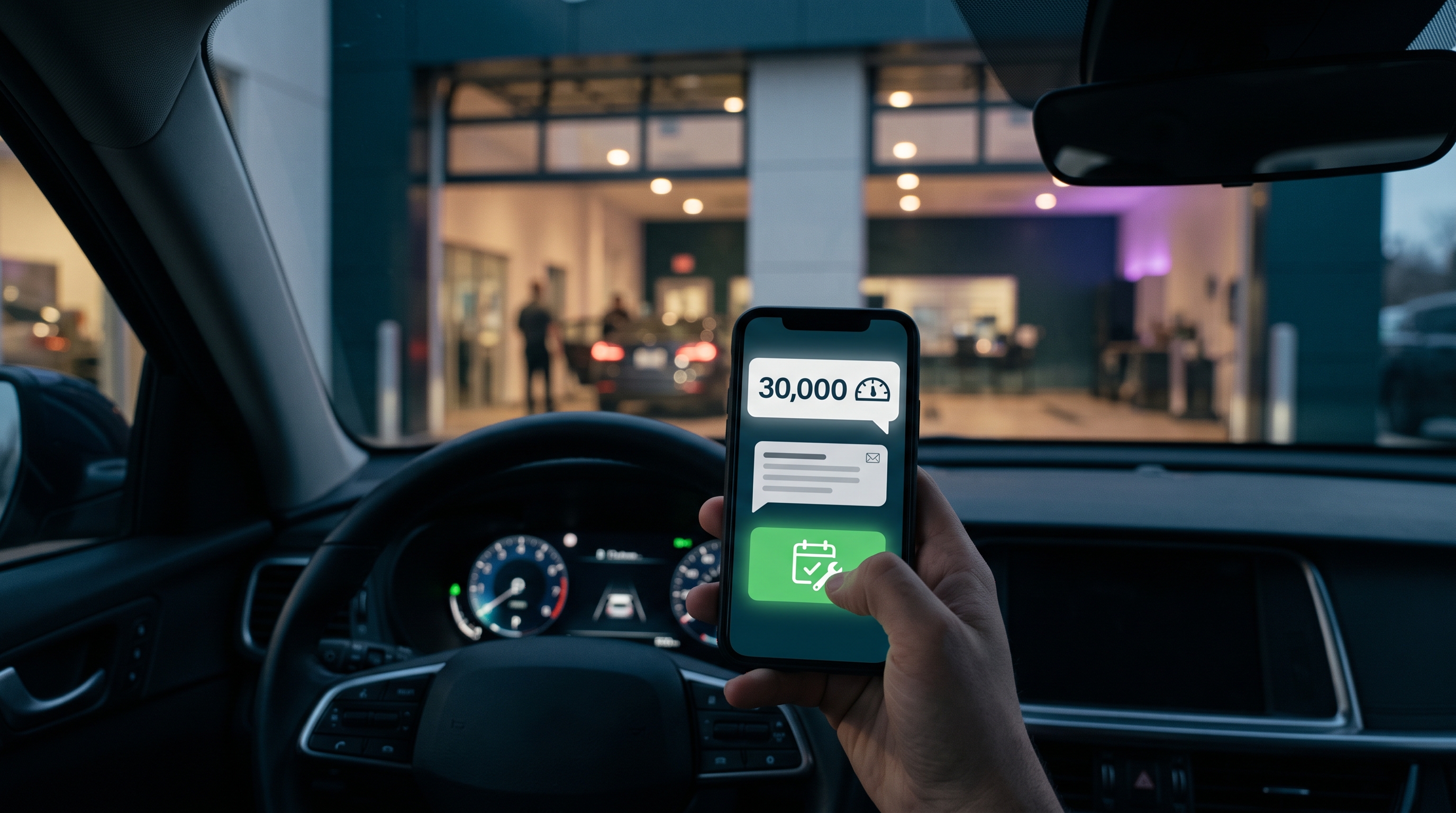
Enterprise-grade telematics platforms solve this timing mismatch by utilizing real-time odometer data read directly from the vehicle’s engine diagnostics computer. This live telemetry drives an automated, highly personalized "Smart Marketing" retention engine.

The automated flow of the mileage-triggered outreach campaign is structured as follows:

Odometer-Based Marketing Pipeline:
Real-Time Odometer Reads Trigger Reached Automated 100% Branded SMS
If Client Clicks Scheduler Link but Exits Instant Hot Lead Pushed directly to BDC / Advisors
  1. Live Detection: The platform automatically detects when a specific VIN is approaching a key mileage service trigger.
  2. Direct SMS Outreach: Once detected, the system automatically dispatches a personalized, 100% dealer-branded text message containing a service reminder and maintenance coupons directly to the customer’s smartphone.
  3. Automated Follow-up: The message includes a direct link to the dealership's online service scheduler. If the user does not schedule immediately, the platform automatically triggers up to three follow-up reminders to maximize conversion.
  4. Actionable Lead Routing: For high-intent customers who click the link but fail to complete the booking, the platform automatically compiles their contact info and routes it to the dealership's Business Development Center (BDC) or service advisors as an actionable lead at no extra cost.

By leveraging live driving data rather than guesswork, this automated system achieves a 32.7% campaign response rate and generates an average of 50+ additional customer-pay Repair Orders (ROs) per month under a single rooftop.

Furthermore, this continuous digital connection builds long-term loyalty, resulting in a 74% higher vehicle repurchase rate at the original dealership when the consumer is ready to trade in their vehicle.

Optimizing the Service Loaner Fleet

For modern franchise dealerships, service loaner fleets are a major capital investment and operational expense. Telematics-driven lot management optimizes this program by protecting physical assets and managing liability across four primary operational areas:

  • Seamless Recovery of Unreturned Vehicles: Every service manager faces the "ghost customer" who borrows a loaner and becomes impossible to reach. Real-time active tracking pinpointing coordinates allows dealerships to locate and retrieve the unreturned vehicle immediately. In cases of theft, sharing a secure tracking link with police ensures swift, safe recovery.
  • Speed Monitoring and Liability Management: While driving a loaner, customers are covered under the dealership’s commercial garage liability policy. High-speed or reckless driving poses a severe safety risk and can drive up commercial insurance premiums. Telematics platforms enable custom speed alerts, notifying service managers when a threshold is exceeded and allowing them to address the behavior proactively.
  • Out-of-Territory Geofencing: Loaner vehicles are meant to keep local customers mobile while their vehicles are being repaired, but they are frequently used for unauthorized long-distance trips or rideshare driving. Establishing digital geofence boundaries around the local market automatically alerts service staff when a vehicle crosses a perimeter, preventing excessive wear-and-tear and unauthorized use.
  • Continuous Battery Diagnostics: To ensure loaner fleets are always appointment-ready, the platform continuously monitors 12V battery health, alerting porters to low-charge states before a customer experiences a roadside failure.

Active SVR and Cloud IoT Scalability

The primary technical measure of a stolen vehicle recovery (SVR) system is its performance during an active theft. While legacy systems can take hours to coordinate with dispatchers, modern enterprise SVR platforms achieve near-perfect recovery performance.

This speed is driven by the technical execution of the Active Stolen Mode workflow:

Active Stolen Mode Interception Protocol:
After-Hours Geofence Alert Theft Confirmed Stolen Mode Engaged
Frictionless Live Web Link Generated Surgical Law Enforcement Intercept
  • Instant Geofence Breach: The platform continuously monitors digital lot perimeters. If a vehicle moves outside these boundaries after hours, the system triggers an immediate alert to management.
  • High-Frequency Stolen Mode: Once a theft is confirmed, the user activates Stolen Mode through the mobile platform. This command transitions the device from standard reporting to high-frequency, second-by-second coordinates.
  • The Web-Based Link: Legacy trackers force dispatchers to coordinate verbally or download proprietary apps. The enterprise platform generates a secure, live web-based "Theft Link" that is texted or emailed directly to active patrol units. Responding officers can open this live tracking map on any mobile phone, tablet, or dashboard browser with absolutely zero software downloads or accounts required.

This frictionless collaboration enables law enforcement to intercept stolen vehicles in transit with surgical precision, achieving an average recovery time of just 18 minutes and a 99.8% verified recovery rate.

Global IoT Connectivity via 1NCE Connect Partnership

To maintain reliable, continuous location data as vehicles cross regional or international boundaries, enterprise-grade telematics requires robust global cellular infrastructure. To address the challenge of scaling connected devices across thousands of vehicles, Ikon Technologies partnered with 1NCE, a leader in global IoT connectivity.

This integration utilizes the 1NCE Connect platform to securely deliver real-time vehicle data directly to the cloud across 3G, 4G, and LTE-M networks. This technical partnership provides consistent, multi-operator coverage throughout the United States, Canada, and Latin America. It prevents connection drops during border transitions and allows on-demand connectivity top-ups, ensuring that the tracking signal remains live regardless of where the vehicle travels.

Actionable Strategy and Implementation Plan for GMs

To maximize the operational and financial benefits of a dealership GPS program, general managers and dealer principals should execute the following structured implementation strategy:

  • Decommission Legacy Cost Centers: Dealerships should phase out legacy tracking platforms that require upfront hardware purchases or restrict customer retention benefits. Transitioning to a $0 upfront consignment model protects cash flow and ensures the technology provider’s incentives align directly with dealership sales volume.
  • Deploy Integrated Key and Asset Locating: To reduce sales floor delays, dealerships should implement a hybrid tracking approach that pairs GPS vehicle location with Bluetooth key fob tracking. Reducing test-drive wait times by 15 minutes directly improves showroom conversion rates and maintains sales momentum.
  • Utilize Live Telemetry for Fixed Operations: Dealerships should connect their telematics program to their service marketing efforts. Utilizing real-time odometer data to trigger automated service reminders replaces inefficient calendar-based campaigns and captures highly profitable customer-pay ROs.
  • Implement the Dealer Loyalty Loop: When selecting an SVR solution, dealerships should prioritize programs that feature a joint-payable consumer theft benefit. Forcing the replacement capital back into the original dealership protects customer retention and secures a repeat vehicle sale.

By shifting from basic, reactive tracking devices to comprehensive, enterprise-grade telematics platforms, modern automotive franchise dealerships can streamline their operations, increase F&I profitability, and establish a permanent digital connection with their customers.

Get a Demo

Discover why hundreds of franchise dealers trust Ikon to overcome growth challenges and maximize velocity, profitability and loyalty!

You will also like…