The Ikon Blog
Maximize Lot Readiness: How to Leverage Ikon Technologies Battery Alerts to Protect Inventory
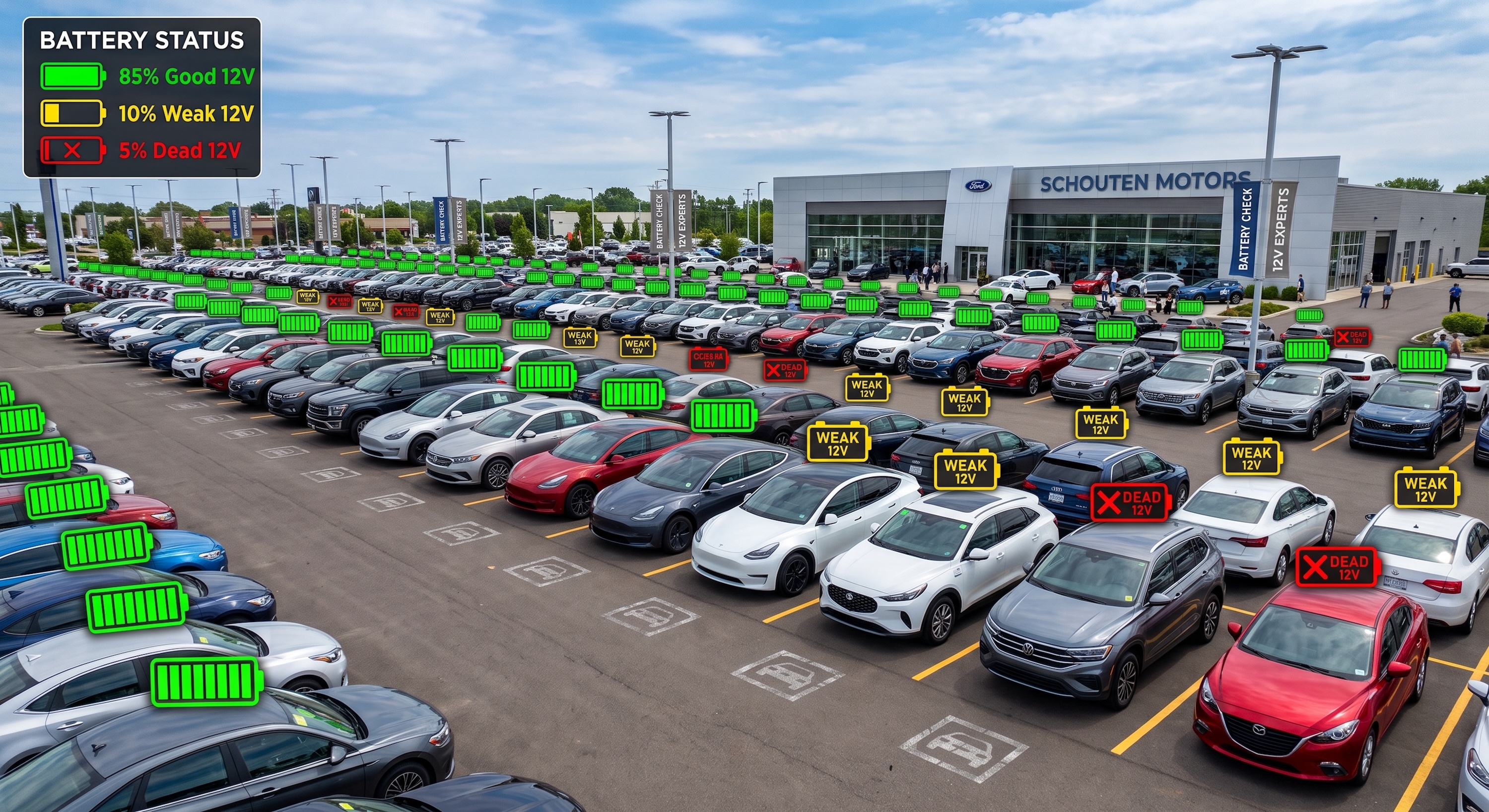
How telematics can ensure every vehicle is appointment ready
A real-time telematics battery health alert on your dashboard flags one specific VIN that needs a physical lot check before anyone touches a wrench. A low-voltage signal can mean a low 12V state of charge on a vehicle, a unit that has gone quiet on its reporting, or a tracker that has lost external power. When managing an expansive lot, the first move is to verify the car using real-time data rather than instantly condemning the battery.
Units sit on the lot longer than they used to. Automakers opened 2026 with an average 76-day supply of new cars, and CDK's 2025 Friction Points Study found more than half of shoppers experienced frustrating delays waiting on a test drive. A car that won't crank at delivery isn't just a back-shop inconvenience - it is an immediate CSI problem that lands squarely on the lot manager.
Neglecting inventory health comes with a steep price tag. With the average cost of replacing a single standard car battery hovering around $200 (and electric vehicle battery packs scaling radically higher), a mid-sized lot replacing just a fraction of its stagnant inventory faces over $11,000 in unnecessary annual replacement costs.
Every time a vehicle battery drops below 10.5 volts, the internal sulfate begins to crystallize, causing permanent, irreversible degradation to the battery's lifespan. With Ikon Technologies, lot readiness is won or lost in the gap between an automated notification and a car that's ready to show.
Elo GPS
Automotive dealer battery alerts powered by Ikon Technologies read connected-vehicle data and flag VINs whose charge has dropped or whose reporting has gone dark. The platform watches the inventory 24/7; your lot staff simply executes the verification. What a manager actually sees on their desktop dashboard or mobile app is a centralized list of stock numbers that need attention, ranked dynamically by how far dealer battery levels have fallen across the lot.
The Ikon GPS device installed in the car measures the 12V state of charge (SOC) and sends it to the Ikon dealer dashboard. From that data, the platform raises separate flags, such as low state-of-charge alerts at or below 50% SOC or a vehicle is no longer reporting its status. A silent VIN is its own readiness exception, because a car that stopped talking may be sitting with a battery you can no longer see.
An "External Power Lost" or "Tamper Alert" is about the tracker, not the car's 12V dealer batteries. Ikon’s platform keeps these events strictly separated to provide clear risk mitigation.
A low vehicle voltage event means the car needs a charge. Conversely, an external power loss alert means the tracking device may have been unplugged, unwired, or tampered with, forcing the device to drop back onto its own internal backup battery to maintain location tracking. For a lot manager, this distinction provides immediate operational clarity: an unplugged device tells you to check the hardware install, while dropping dealer battery levels tell you to send a porter with a charger.
An alert confirms a low charge or a missing signal, serving as an early warning system that a unit needs a hands-on check. It doesn't instantly mean the battery is permanently dead, that a manual test is valid, or pinpoint exactly what drained it.
Voltage is a rough orientation for charge. A healthy voltmeter reading should sit between 12.4V and 12.7V when the engine is off. Reference tables put 12.2V to 12.4V near 50% charge, but battery specialists warn that voltage alone misses overall state of health and conductance. Probing at remote jump posts instead of the battery posts can return a false "Replace Battery" result, and testing right after a discharge or a fast charge, or on a battery below freezing, skews the call. The final condition verdict belongs to an approved tester after a proper charge, not to the automated alert that started the conversation.
Parasitic draw deserves the same restraint. Automated dealer battery alerts are not immediate evidence of an abnormal drain. Modern vehicles all carry normal parasitic loads, and modules need 15 to 20 minutes to enter sleep before any current reading means anything. Real diagnosis happens with an amp clamp at the negative lead after the car has settled.
If you want to eliminate the guesswork, Ikon's intelligent platform allows you to monitor these trends over time to see if a vehicle is experiencing a true, ongoing drain or simply standard lot dwell exhaustion. Resist the urge to just start it up - Nissan explicitly warns stores to stop cranking an engine simply to see if a battery is "good," since a weak battery can still start a car while taking further internal damage if it isn't recharged completely on a dedicated charger.
Proactively managing dealer batteries belongs to a structured lot process, with a named owner for every step from the Ikon dashboard to the delivery line. The fastest way to let alerts pile up is to treat them as an occasional service-department cleanup. By using Ikon's lot management features to assign the work like any other readiness task, the queue stays short and manageable. OEM inventory bulletins already model the ideal cadence: Nissan's process calls for a 12V check-in test within 72 hours of arrival, approved-tester checks every 30 days, and display vehicles checked every other day.
Tie that chain to the sales floor and the payoff shows up at the appointment. When a flagged unit is charged, verified, and green before the customer walks in, nobody is hunting for jumper cables during a presentation. The same speed logic behind finding the car and its keys in seconds with Ikon applies here - the 15 minutes a store saves per sale vanishes the moment a delivery stalls on a dead battery.
Ikon Technologies helps you turn raw vehicle data into derived best practices built from OEM alert and status workflows. Managing your portfolio by exception means watching a handful of numbers that tie straight to delivery, keeping your lot completely optimized.
Running these metrics as part of your daily lot rhythm ensures your inventory stays retail-ready. Ikon's lot-management ecosystem folds readiness exceptions into the same exception-based discipline that keeps inventory turning.
An automated alert is the start of a readiness task, and the value lives entirely in the steps after it: a named owner, an approved charge, a verified result, and a status that closes the loop. Stores that skip verification end up replacing perfectly good dealer batteries and chasing phantom drains. Stores that use Ikon to measure and maintain clearance keep their delivery line moving seamlessly.
Start small. Review today's open alert queue on your Ikon dashboard, define the close condition that clears a VIN, and track three numbers for the first month: open alerts, oldest alert, and same-day clearance. That short set turns dealer battery alerts into a profitable readiness routine your next delivery customer will quietly thank you for.
No. A low battery alert usually means the charge dropped from lot dwell time, not that the battery has failed. Use Ikon to identify the low unit, charge it, and then confirm its condition with an approved tester.
It depends on the alert's designation on your dashboard. A low vehicle voltage alert is about the car's 12V battery. An "External Power Lost" or "Tamper Alert" means the tracking device itself was likely unplugged or unwired and has switched over to its internal backup battery, signaling a hardware check is needed.
There's no universal number, because thresholds vary by platform, vehicle type, and ambient temperature. Ikon allows you to monitor these thresholds intelligently, matching OEM standards - like GM triggering on a state of charge below 50% rather than a pure voltage number, or common alerts triggering if a battery sits below 11.9V for more than 30 minutes.
No, not on their own. A drain is a measured key-off current condition, and modules need roughly 15 to 20 minutes to enter sleep before any reading is valid. However, Ikon's platform helps you track history over time to help service advisors differentiate between a one-time lot discharge and a chronic vehicle draw issue.
OEM inventory guidance varies - Nissan calls for a 12V check-in within 72 hours of arrival and approved-tester checks every 30 days, while Volkswagen and Audi utilize rigid 30-day dealer stock maintenance logs. Ikon Technologies eliminates the manual guesswork of these timelines by alerting you via text, email, or push notification the exact moment a specific vehicle dips below established parameters.
No. Idling or a quick start-up is not a true readiness process. Manufacturers explicitly note that engine idling is not recommended for deeply discharged batteries, as a weak battery can still crank while taking further internal damage. Use approved charging to bring the unit back up to a green status on your dashboard, then verify the result before the car goes back on the line.

.jpg)





.jpg)