The Ikon Blog
The Battery-Only Myth: Why Real Dealership Protection Demands a Full-Service Partner, Not a Single-Tool Vendor

.jpg)
.jpg)




When a GPS vendor sells only wireless battery pucks, they are only meeting a fraction of the dealership needs a GPS solution should be providing. Learn why wireless trackers fall short on real-world theft, lot diagnostics, and service gross profit - and why full-service dealership serve every department in the dealership.
Every vehicle parked across your frontline and overflow lots represents tens of thousands of dollars in exposed working capital. In the race to safeguard that inventory, single-product GPS vendors often present store operators with a false dilemma: spend twenty minutes splicing wires into every vehicle, or toss a battery-powered "slap-and-track" beacon into the glove box or under the floor mat.
When a GPS vendor sells only wireless trackers, it is easy to see why they push this narrative. When your company manufactures and sells just one single hardware type, you have no choice but to attack wired telematics solutions. Their marketing leans heavily on convenience - sub-minute placement, no wire splicing, and zero vehicle battery draw - while warning dealers that wired systems drain batteries, void OEM warranties, or get ripped out of OBD ports.
On the surface, "no wires and under sixty seconds" sounds like an attractive operational shortcut. But when you examine how professional auto theft actually unfolds - and how profitable franchise dealerships drive revenue across Sales, F&I, and Service - relying exclusively on a wireless beacon reveals critical structural blind spots.
Here is the operational reality behind the claims made by wireless-only vendors, and why enterprise dealerships choose a full-service technology partner with multiple deployment architectures over a single-tool vendor.
There is an old saying in automotive retail: when a vendor only sells hammers, every challenge looks like a nail. Vendors that offer only battery-powered trackers cannot provide connected-car telemetry, diagnostic feeds, or service drive automation. Because their hardware physically cannot tap into vehicle electronics or provide frequent location updates without depleting its internal battery, they are forced to convince dealer principals that deep vehicle integration is a liability rather than a revenue generator.
A true full-service dealership telematics partner does not force your operations into a one-size-fits-all box. Rather than pushing a single piece of hardware, enterprise platforms like Ikon Technologies engineer three distinct installation solutions tailored to how stores actually operate:
Deeply concealed under the hood, drawing constant 12V vehicle power while maintaining its own internal emergency battery for uninterrupted tracking if vehicle power is severed.
Rapid, non-invasive connections that plug directly between factory junctions without cutting, splicing, or altering factory wiring, draining minimum power and providing rich, dealer-owned telematics.
For dealerships that only want location tracking, Ikon also offers rechargeable locator devices so that this specialized use case is completely covered as well.
Crucially, none of these options void OEM factory warranties, and none cause parasitic battery drain. Modern commercial telematics draw micro-currents far below normal vehicle parasitic thresholds and feature automated low-voltage cutoffs to protect vehicle starter batteries at all times. Indeed, battery-connected devices provide dealers with a constant view of battery levels, so depleted batteries can be recharged BEFORE the customer arrives for a test drive. Wireless trackers just can’t do that.
A centerpiece argument from wireless-only vendors is that wired installations place an unnecessary, costly burden on store personnel. They paint an intimidating picture of backlogged service bays where master technicians spend 15 to 20 minutes per car cutting into dashboard wiring harnesses, delaying frontline readiness.
In the modern automotive retail environment, this is pure fiction.
With modern commercial telematics engineered specifically for high-volume intake, skilled installers can install any of Ikon's device options in less than 5 minutes.
Trading away connected vehicle technology simply to save 3 or 4 minutes during intake is a massive operational miscalculation. A loose battery beacon tossed into a glove box saves a couple of minutes on day one, but it immediately deprives the dealership of years of continuous customer retention value, real-time diagnostic alerts, and high-margin service drive appointments. Investing under five minutes at intake unlocks years of gross profit on the back end.
The physics of battery-powered tracking cannot be negotiated: battery life is inversely proportional to reporting frequency. A compact wireless beacon claiming multiple years of battery life cannot maintain continuous cellular connections or active GPS satellites. To survive, it spends upwards of 95% of its operational existence in deep "sleep mode," waking up a few times per hour to broadcast a check-in ping, or relying on basic accelerometer motion triggers.
If a vehicle disappears on Friday night after closing, a lot manager relying on a sleeping beacon often does not realize the unit is missing until it has been off the lot for up to 15 minutes. When the tracker finally wakes up, law enforcement is handed cold, outdated location pings.
The Full-Service Advantage: Continuous 12V vehicle power provides live breadcrumbing, real-time geofence alerts, and battery disconnect updates. When an engine cranks at 2:30 AM outside operating hours, dealer management and security dispatch receive an immediate notification - not when a sleeping beacon finally decides to check in.
Wireless-only vendors routinely claim that hardwired systems represent "the first thing a thief finds and unplugs." This argument deliberately confuses cheap, consumer-grade diagnostic dongles with enterprise-grade commercial telematics:
| Architecture | Installation Method | Vulnerability to Thieves | Telematics & Service Retention |
|---|---|---|---|
| Consumer / Budget OBD | Hanging directly out of open diagnostic port | High Risk Discovered and pulled in seconds | Yes, until physically removed |
| Single-Product Wireless Tag | Tucked under floor mats, seats, or trunk liner | Easy to Locate Found with quick cabin sweep or foot check under driver's seat | Intermittent pings only; no telematics to drive service retention |
| Ikon Enterprise Architecture | Covertly integrated behind dash or under hood; OEM pass-through harnesses | Covert & Protected Completely invisible; triggers instant tamper alarm; switches to internal backup battery | Real-time continuous breadcrumbs, starter battery health, live odometer, and DTC feeds |
Because wireless-only vendors are restricted to basic location pings, they frame telematics solely as a lot audit and recovery tool. But viewing vehicle connectivity through that narrow lens leaves substantial dealership gross profit uncaptured. A standalone wireless tag sitting silently under a carpet is functionally blind to what is happening inside the vehicle's computer systems.
Another common talking point from wireless-only vendors is that hardwired units remain in the car after delivery, supposedly exposing dealerships to consumer privacy liabilities if customer location data continues to be tracked.
This is not a hardware limitation - it is an excuse for inadequate software automation. Enterprise dealership telematics platforms are built on automated inventory lifecycles integrated directly with major Dealer Management Systems (DMS):
Comprehensive lot tracking, geofencing, dwell-time analysis, and battery health tracking for dealership staff.
The second the vehicle deal is funded and marked sold in the DMS, store-level tracking privileges terminate automatically.
When selected in F&I, the account transfers directly to the retail customer with end-to-end encryption. Store personnel no longer have visibility into personal driving routes or home addresses.
If the consumer opts out, the device shuts down or de-provisions instantly without manual technician intervention unless the consumer positively opts in for retention marketing.
Wireless beacons depend entirely on internal chemical batteries. While marketing brochures quote multi-year lifespans under controlled room-temperature laboratory tests, automotive dealership lots are exposed to real-world extremes:
Filter the matrix below to compare capabilities across key dealership departments:
| Operational Feature | Single-Product Wireless Vendors | Ikon Technologies Enterprise Partnership |
|---|---|---|
| Available Hardware Options | Single Form Factor Single wireless tag only | Three Solutions Covert terminal-connected, pass-through OBDII, and rechargeable wireless |
| Installation Speed & Complexity | Under 1 minute (tossed under seat or carpet) | Under 5 minutes for skilled installers; zero wire splicing, plug-and-play or quick-terminal |
| Factory Warranty Impact | None | None (Non-invasive OEM-grade harnesses; zero wire cutting) |
| Starter Battery Protection | Not applicable | Zero battery drain (Micro-draw design + automated low-voltage cutoffs) |
| Tracking Latency | Intermittent Periodic ping intervals (sleep mode) | Real-Time Continuous breadcrumbs and live trip tracking |
| Tamper & Disconnect Alerts | None (silent until manually moved) | Instant power-cut tamper alerts with seamless backup battery switchover |
| Engine & Battery Diagnostics | Incompatible (no vehicle data bus connection) | Real-time starter battery voltage monitoring and DTC fault codes |
| Fixed Ops & Service Retention | None | Automated DMS-integrated service drive reminders driven by live mileage |
| Customer App Branding | Vendor Brand Promotes tracker vendor's logo to buyer | Dealer Branded White-labeled with dealership logo and phone number |
| F&I Consumer Utility | Passive locator-only app | Feature-rich connected car app (Health, boundary, crash, and curfew alerts) |
Single wireless tag only.
Three distinct solutions: Covert terminal-connected, pass-through OBDII, and rechargeable wireless.
Under 1 minute (tossed under seat or carpet).
Under 5 minutes for skilled installers; zero wire splicing, plug-and-play or quick-terminal.
Intermittent periodic ping intervals due to deep sleep mode.
Real-time continuous breadcrumbs and instantaneous geofence alerts.
Incompatible with vehicle telemetry or diagnostic trouble codes.
Real-time starter battery monitoring and live DTC fault code alerts.
Vendor-branded app that promotes the tracker vendor's company.
Dealer-branded mobile app promoting your dealership's logo and contact info.
Installation speed is a convenient metric, but asset recovery, operational health, and dealership profitability are the metrics that define sustainable success.
While tossing a battery beacon into a vehicle takes only sixty seconds, it forces store operators to forfeit live vehicle telemetry, automated service drive retention, frontline battery health monitoring, and immediate theft intervention.
Franchise dealerships deserve a technology partner whose capabilities match the complexity of their business - offering multiple installation architectures engineered to protect inventory, generate F&I gross profit, and drive long-term customer loyalty without risking factory warranties or vehicle battery health.
Stop compromising your dealership operations with single-tool wireless vendors. Connect with the Ikon Technologies team today to discover how our three non-invasive solutions deliver comprehensive lot security, F&I profitability, and automated service drive retention.
Schedule an Inventory Audit32%+ average service reminder response rate. 74% higher chance that a service customer will buy their next vehicle from you.
Watch the Webinar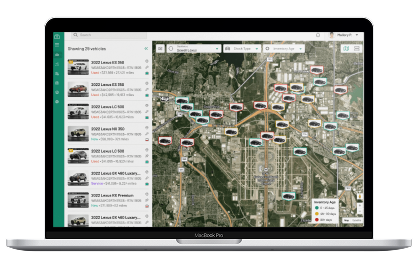
Master your lot. Locate cars and keys effortlessly to accelerate sales, check battery levels, run audit reports, view lot aging, all with no upfront device costs. We only make money when you do.
Ikon Lot Management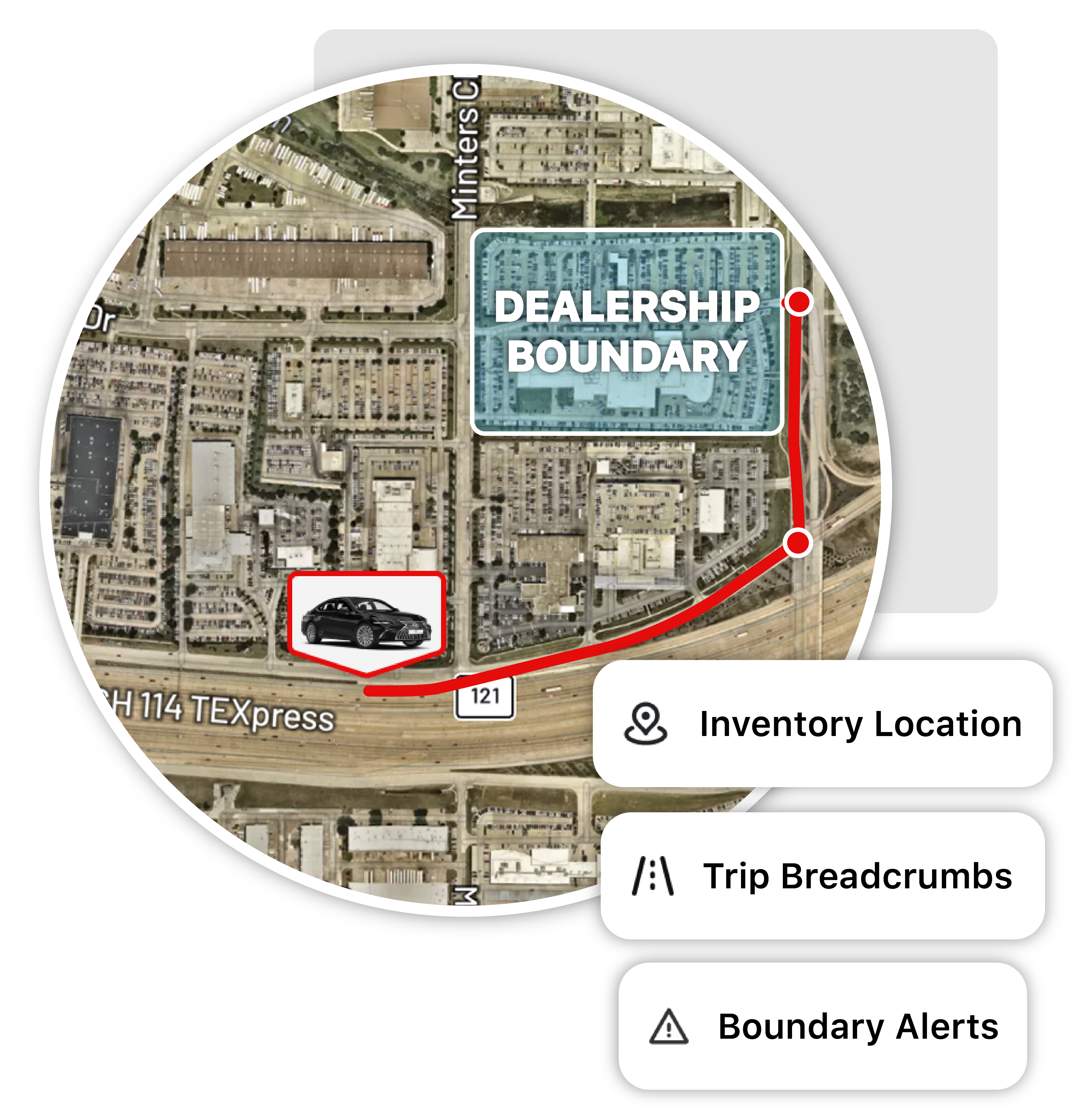
Stop inventory loss with near-real-time GPS tracking designed for rapid recovery. Ikon’s active theft recovery helps you secure your lot and lowers insurance premiums and deductibles.
Ikon Theft Recovery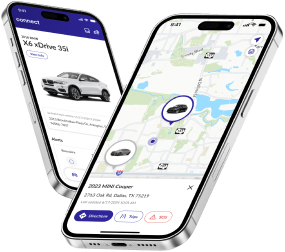
Get an avg. $323 PVR uplift by selling customers peace of mind and theft recovery featuring a $10,000 theft benefit. Your dealer-branded app keeps them connected to you, not the OEM.
Ikon Connected Car
Maximize service retention and increase ROs with our mileage-triggered, automated text campaigns. We text customers at exactly the right time, driving them to your service scheduler.
Ikon Smart Marketing.jpg)
.jpg)
.jpg)
.jpg)