Dealer lot management is the daily discipline of tracking every VIN, every key, and every reconditioning stage from acquisition to delivery.
It covers physical lot location, key custody, the aging clock, recon throughput, and test-drive logging—all tied directly into your Dealer Management System (DMS) so gross stays protected and units turn inside 60 days.
The stakes have climbed fast. U.S. new-vehicle inventory hit 2.89 million units, up 55% year-over-year, and floorplan rates are squeezing every aged unit on the line. When a sales manager has to pull two porters off the desk to walk eight acres looking for a Tahoe, that gross is already gone.
Cars and keys go missing daily at most stores, Customer Satisfaction Index (CSI) scores take the hit, and nobody on the organizational chart owns the leak. Transitioning from basic physical coordination to an automated car lot management system is the only way to close this operational gap.
To build a bulletproof lot workflow, you must first define the responsibilities of the role. When dealers ask, "What should the lot manager do?", they are often looking for a way to move beyond chaotic fire-fighting and into a structured routine.
At a high-performing store, a lot manager is not just someone who parks cars; they are the custodian of the physical inventory lifecycle. Their primary duties include:
By establishing these responsibilities, a dealership turns a chaotic car lot into a structured, predictable pipeline.
Five core workflows run a modern dealership lot every single day:
Each of these workflows must throw off an automatic, digital accountability log. That log is the foundation of any reliable car lot management system.
This isn’t a simple parts locator, a DMS replacement, or a basic anti-theft tracker. Real-time visibility translates to seamless operations, reduced carrying costs, optimized labor, and a cleaner customer handoff.
As dealerships grow, physical inventory logistics compound in complexity. One of the most common friction points in modern automotive retail is coordinating inventory between a main lot and satellite locations.
When managing a three-location dealership group or a multi-level facility, the lack of real-time visibility creates major blind spots. Common challenges include:
To resolve these bottlenecks, your car lot management system must integrate directly with your existing DMS (such as CDK Global, Reynolds & Reynolds, or Dealertrack).
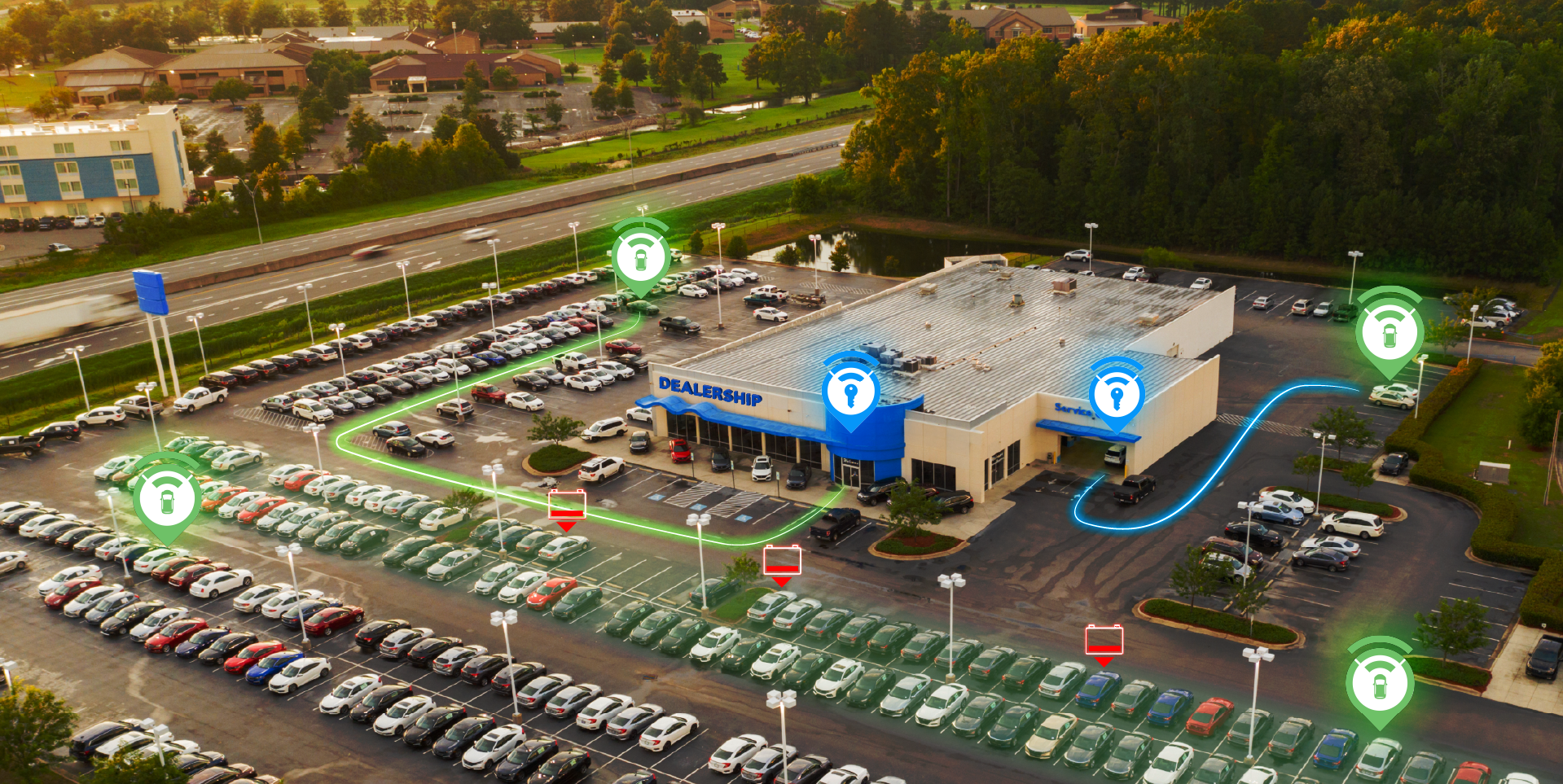
When a vehicle is acquired at auction and entered into the DMS, the tracking tag is mapped immediately. Whether the vehicle is parked at the main showroom, a satellite lot, or a multi-level parking garage, the system updates its location in real time.
If a sales rep at Location A looks up a stock number, they don’t just see "In Stock"—they see "Row 4, Satellite Lot B, Battery Level: 12.6V, Key in Box 3." This cross-site synchronization eliminates the communication lag that stalls deals and inflates labor expenses.
According to industry data from KeyTrak, the average key search takes roughly 10 minutes. With smart key replacements running between $84 and $200 per key (and scaling past $500 for luxury fobs), the financial impact of poor key control is massive.
Run that math against your own store:
This equation represents a direct, recurring payroll leak.
The second-order costs are even more damaging. A buyer standing on the curb while three porters check pockets and pegboards is a buyer writing a one-star review on their way to your competitor. Every moment a shopper waits while staff scramble for keys widens the rift between the customer and your dealership.
Without an automated log, there is no recourse when a fob disappears between sales and service. A monthly key replacement line item above $500 is not a hardware problem—it is a process problem.
The fix is straightforward:
The baseline rule that highly profitable dealers enforce is maintaining under 60 days of supply, with a recon-to-front-line target of five days flat.
Once a vehicle crosses the 60-day threshold, holding costs skyrocket. Industry analyses peg daily carrying costs at $40 to $75 per unit when factoring in floorplan interest, insurance, and depreciation. Used cars are particularly vulnerable, losing roughly $750 in wholesale value for every 15 days they remain unsold.
Monthly Key Waste = (Avg. Search Time x Hunts per Week x Labor Rate) + Replacement Costs
This equation represents a direct, recurring payroll leak.
The second-order costs are even more damaging. A buyer standing on the curb while three porters check pockets and pegboards is a buyer writing a one-star review on their way to your competitor. Every moment a shopper waits while staff scramble for keys widens the rift between the customer and your dealership.
Without an automated log, there is no recourse when a fob disappears between sales and service. A monthly key replacement line item above $500 is not a hardware problem—it is a process problem.
The fix is straightforward:
The baseline rule that highly profitable dealers enforce is maintaining under 60 days of supply, with a recon-to-front-line target of five days flat.
Once a vehicle crosses the 60-day threshold, holding costs skyrocket. Industry analyses peg daily carrying costs at $40 to $75 per unit when factoring in floorplan interest, insurance, and depreciation. Used cars are particularly vulnerable, losing roughly $750 in wholesale value for every 15 days they remain unsold.
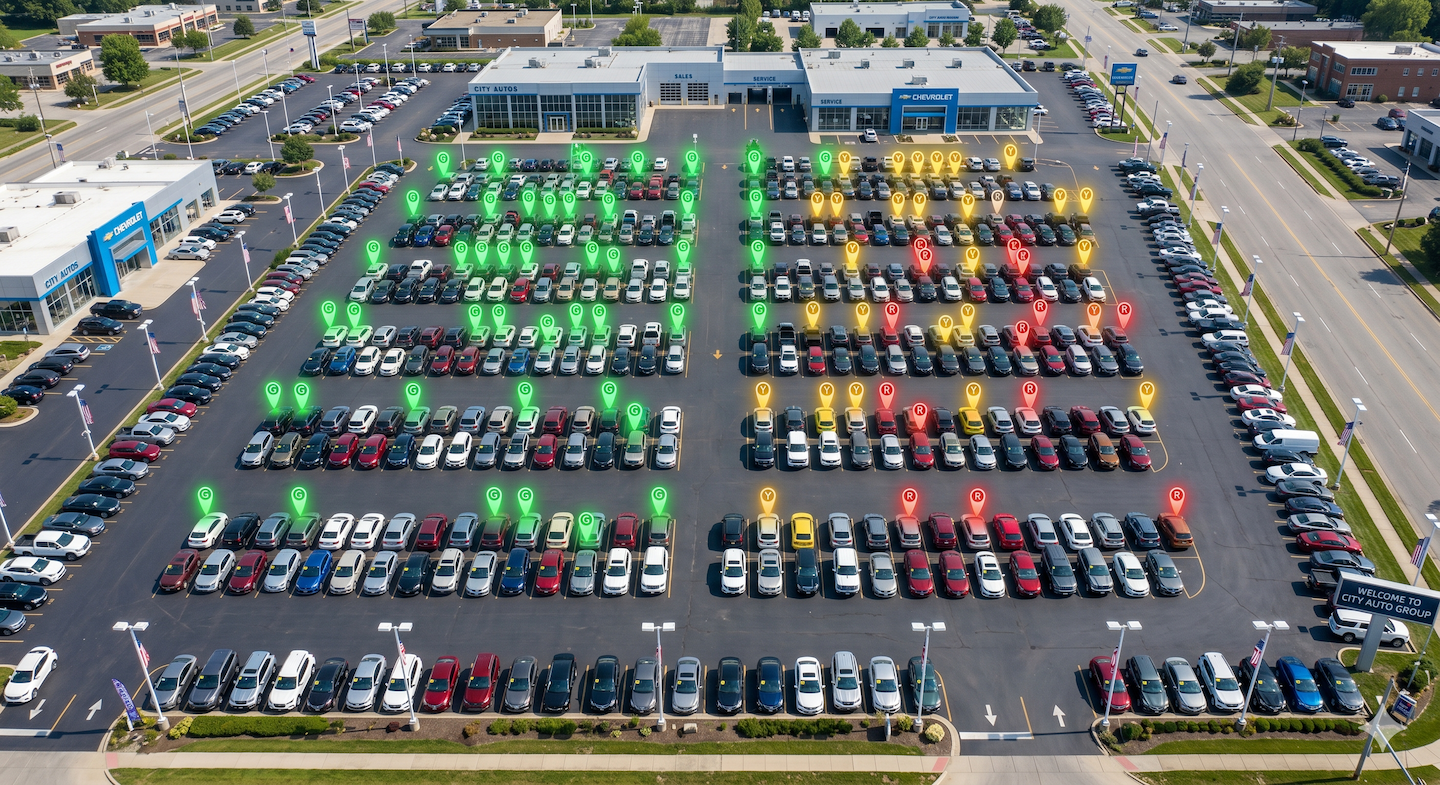
Velocity wins in today's high-interest environment. This requires monitoring aging buckets daily:
There is a direct connection between physical lot mechanics and inventory aging. If your team cannot physically locate a vehicle, its aging clock is running on a fiction. A car you cannot find is a car you cannot photograph, price down, or wholesale out.
Data from field case studies shows that implementing digital key and vehicle tracking can drop the average test-drive wait time from 15 minutes to under 2 minutes.
This operational shift directly lowers dealership labor expenses by eliminating the need for dedicated "key hunters" and manual inventory audits. Instead of paying porters and sales staff to wander the lot, those hours are redirected toward active customer engagement.
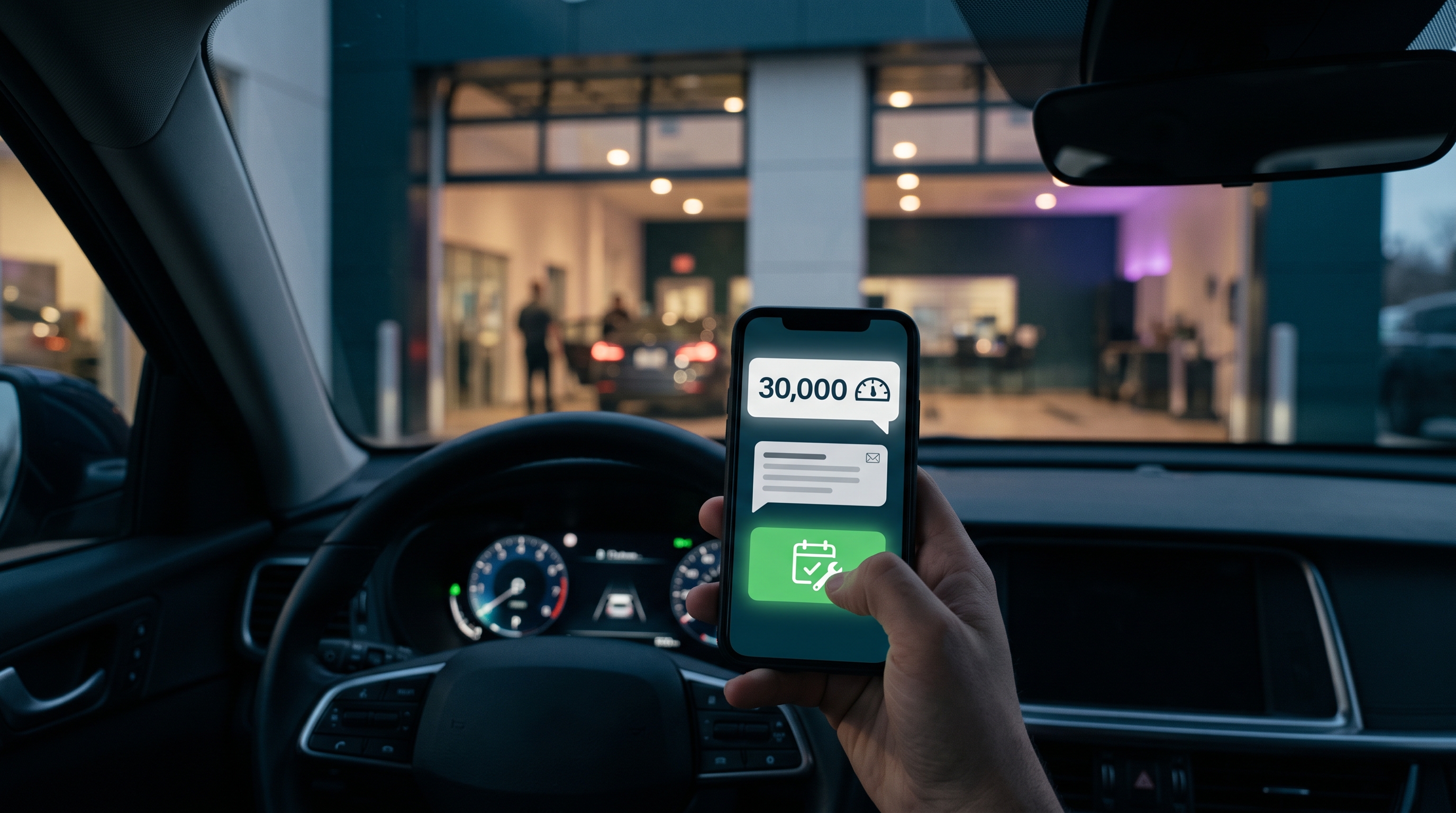
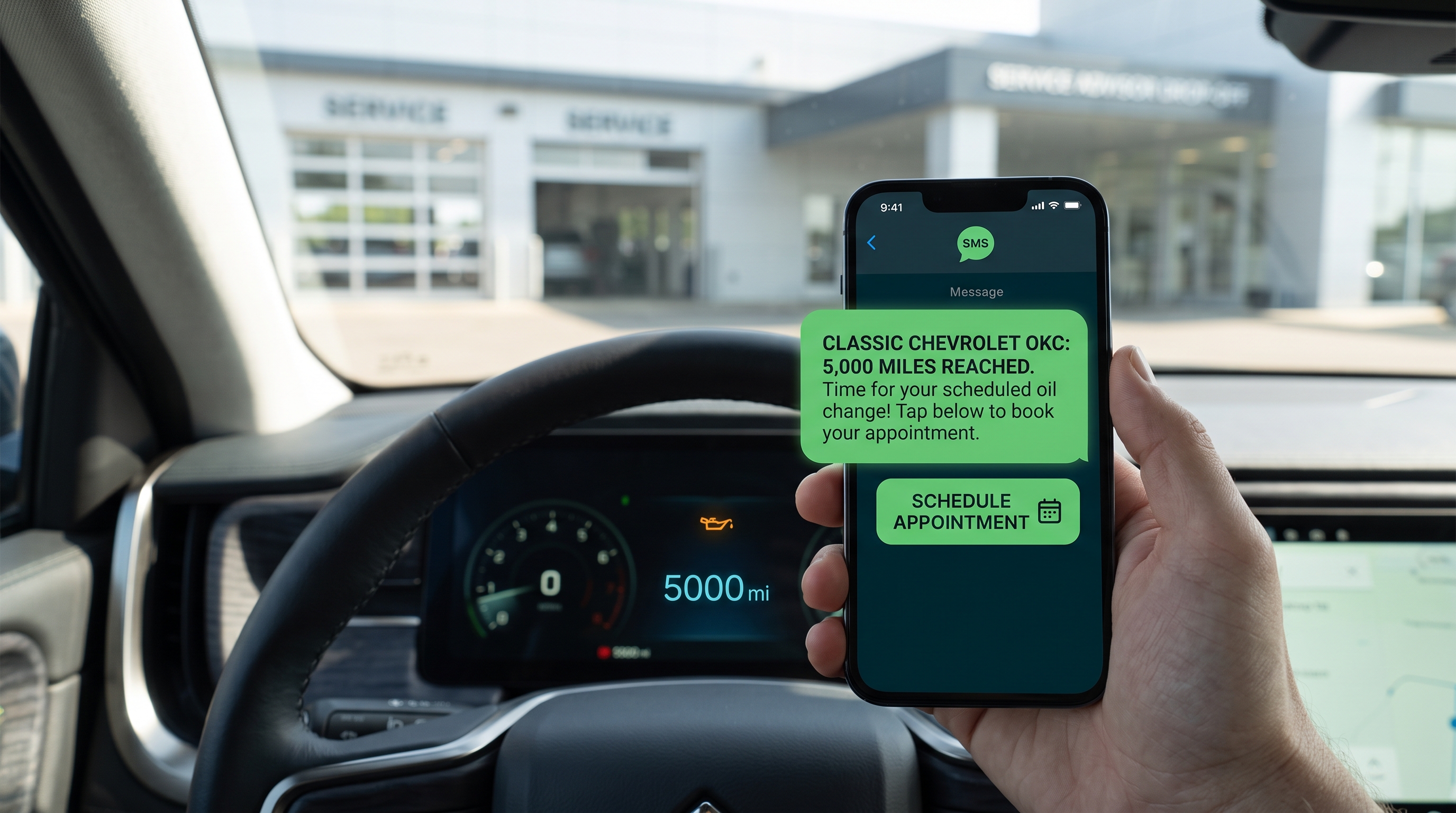
On the fixed-ops side, telematics-enabled lot management allows dealers to leverage connected-car data. When a sold vehicle's onboard diagnostics detect a fault code or reach a mileage threshold, the system can automatically trigger a service alert back to the selling dealer. This tightly integrates your sales pipeline with your service bays, keeping customers in your ecosystem long after the initial sale.
Transitioning away from the clipboard-and-honor-system model is essential for protecting your inventory. Automated tracking ensures every vehicle movement is logged with a timestamp and a user ID.
This accountability framework eliminates common operational issues, including:
Additionally, dealerships that pair active GPS tracking with rapid law enforcement coordination report vehicle recovery rates exceeding 99% in theft situations. Preventing just one total loss easily offsets the annual cost of the lot management system.
To prove the Return on Investment (ROI) of a car lot management system to a CFO or GM, baseline these six metrics over a 30-day period before rollout, and measure them again at the 90-day mark:
A car lot management system is a process accelerator, not a magical band-aid. The software, GPS tags, and electronic key cabinets will only deliver a return on investment if they are paired with strict operational discipline.
The most successful dealerships establish non-negotiable routines: a daily lot walk, a daily key cabinet reconciliation, and a weekly aging inventory review with mandatory manager sign-off.
When floorplan rates are high and inventory is expanding, "park-it-and-pray" management is a fast track to lost margin. Velocity, customer experience, and fixed-operations efficiency must work in harmony—and that harmony breaks down the moment a customer is left waiting on the blacktop for a missing key.
If your dealership group is struggling with multi-site coordination, lost keys, or sluggish recon times, it is time to evaluate your process. Book a 30-minute operational walkthrough with our team today to map these solutions to your store's specific numbers.
A lot manager tracks the physical status of every vehicle to prevent "invisible" inventory. They ensure that incoming trades and auction buys move through the recon pipeline (inspections, detailing, photos) in under 5 days, keeping the vehicle's turn rate high and reducing floorplan carrying costs.
Modern systems use real-time GPS or cellular-enabled tracking tags mapped directly to your DMS. This allows staff at any location to instantly see if a vehicle is at the main lot, an off-site detail center, or a satellite showroom, including its exact row location and key status.
The lot manager should immediately reference the electronic key cabinet's digital log to see who last checked out the fob. If the key was equipped with a tracking tag (such as the Ikon Key Finder), they can use the mobile app to pinpoint its physical location within the dealership or service bays.
Manual lot walks require multiple porters or managers to physically walk the lot with clipboards, taking hours per week. A digital car lot management system automates this audit process, saving thousands of dollars in monthly labor costs and reducing inventory audit times by up to 400%.
Yes. Leading lot management solutions integrate directly via API with major DMS platforms like CDK Global, Reynolds & Reynolds, and Dealertrack. This ensures that when a vehicle is marked as sold or transferred in your accounting system, its status updates automatically across your lot management dashboard.
.jpg)





.jpg)